A multi-institutional effort to coordinate infrastructure, development, and investment at the district scale
Minneapolis–Saint Paul

A multi-institutional effort to coordinate infrastructure, development, and investment at the district scale
Minneapolis–Saint Paul
Overview
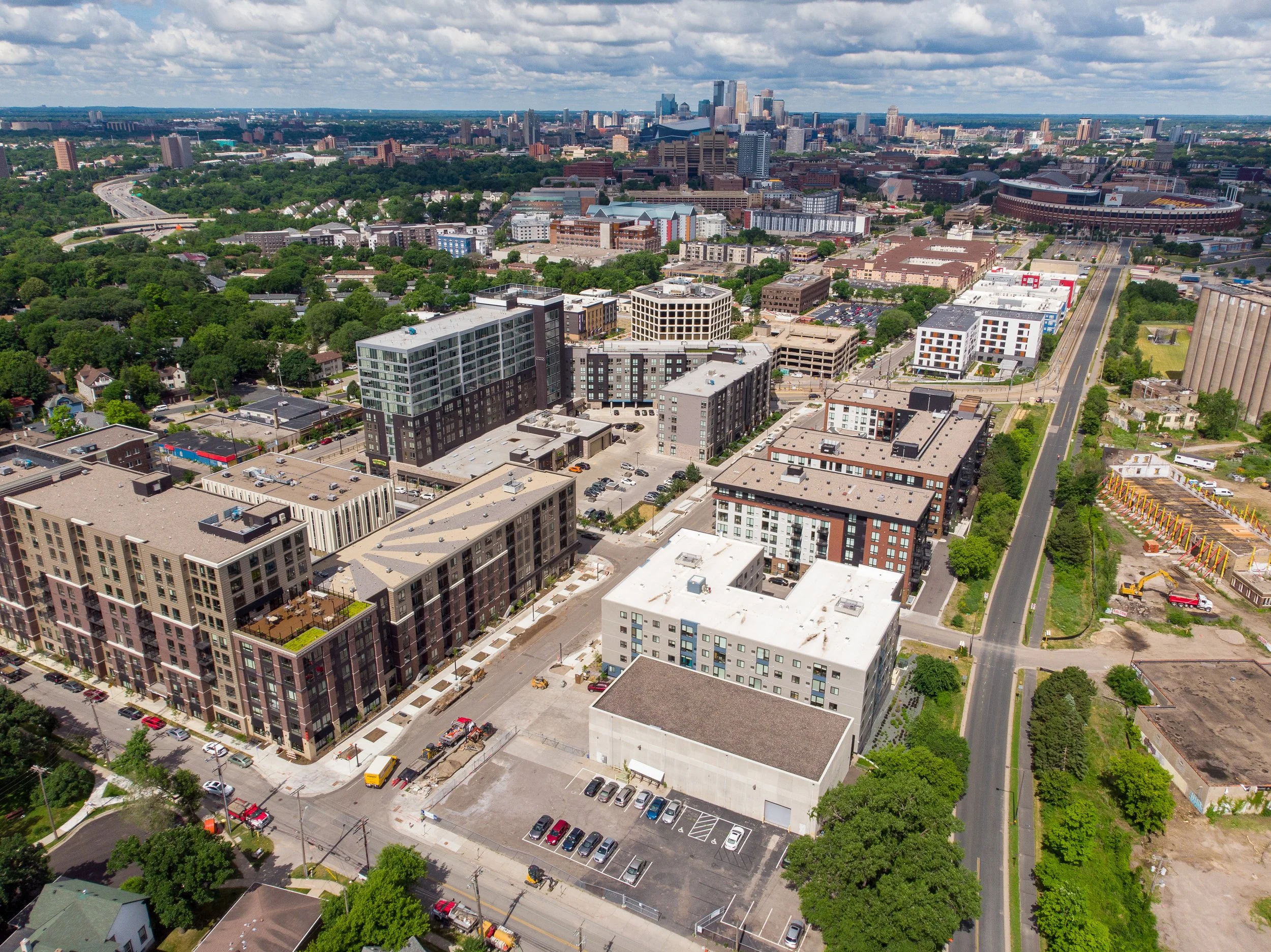
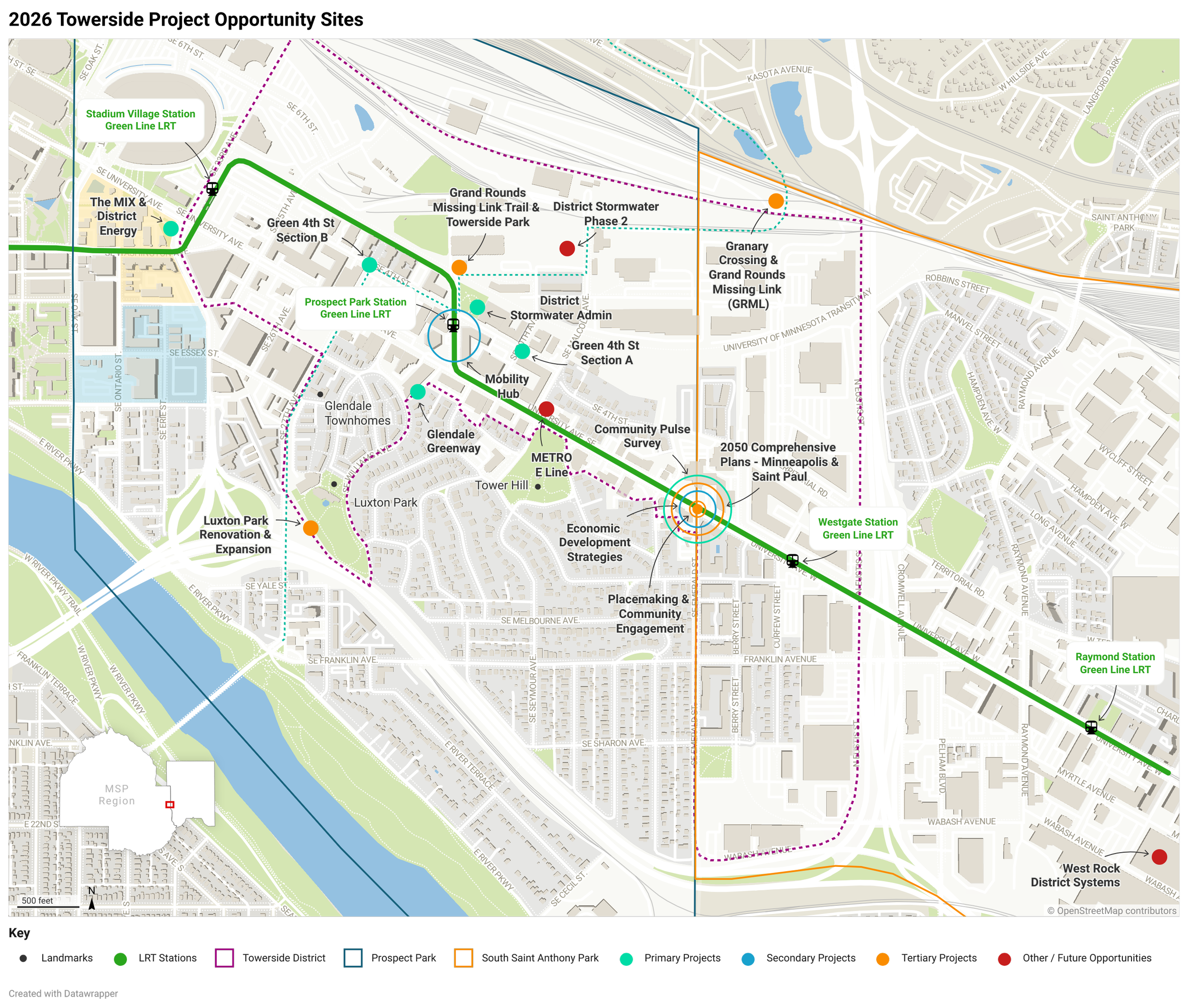
Towerside brings together small and large, long-standing and new businesses, residents, and institutions through multi-modal mobility, shared infrastructure, and vibrant public spaces. Its focus is on creating the next generation of places, services, and technologies that communities demand—moving beyond fragmented, unsustainable models of growth.
Roles: Executive Director, Project Manager
Organizations: The Cornerstone Group, Towerside Innovation District, Towerside Maintenance District
Timeline: 2015–2025
Focus Areas:
Urban development
Infrastructure systems
Partnerships
District strategy
Location: Minneapolis–Saint Paul
Towerside is a place, an idea, and an organization:
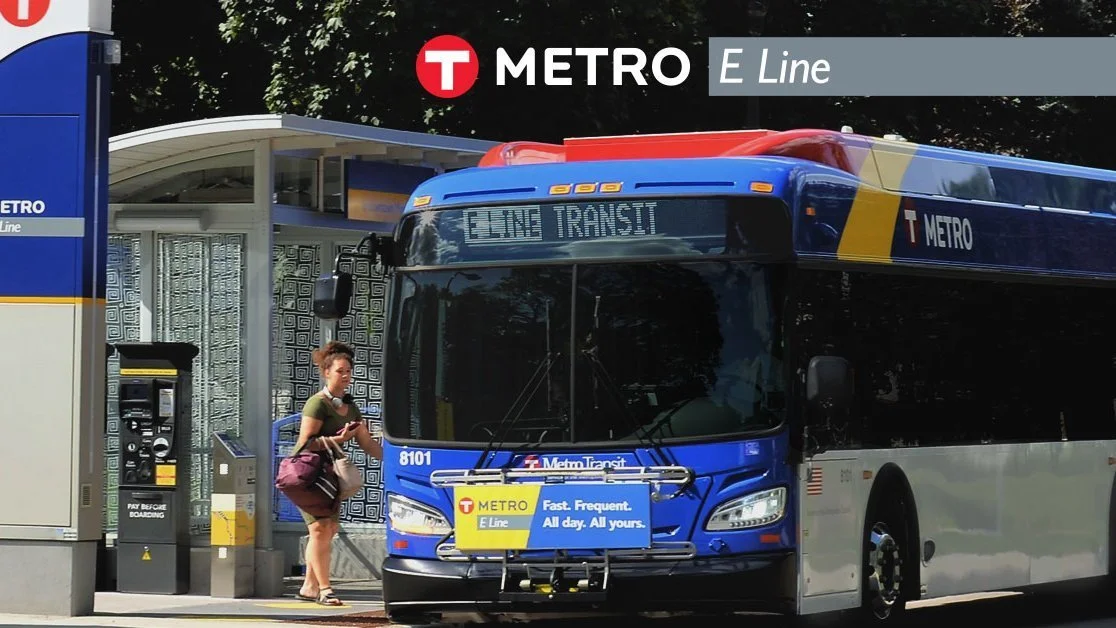
A transit-oriented community in the center of the region, catalyzed by Green Line LRT and E-Line BRT.
370 Acre Innovation District adjacent to the University of Minnesota Life Sciences campus & spans two cities and two counties.
A place-based partnership dedicated to creating a high-intensity, high-density district where living, working, and innovation intersect in an equitable, diverse, and sustainable community.
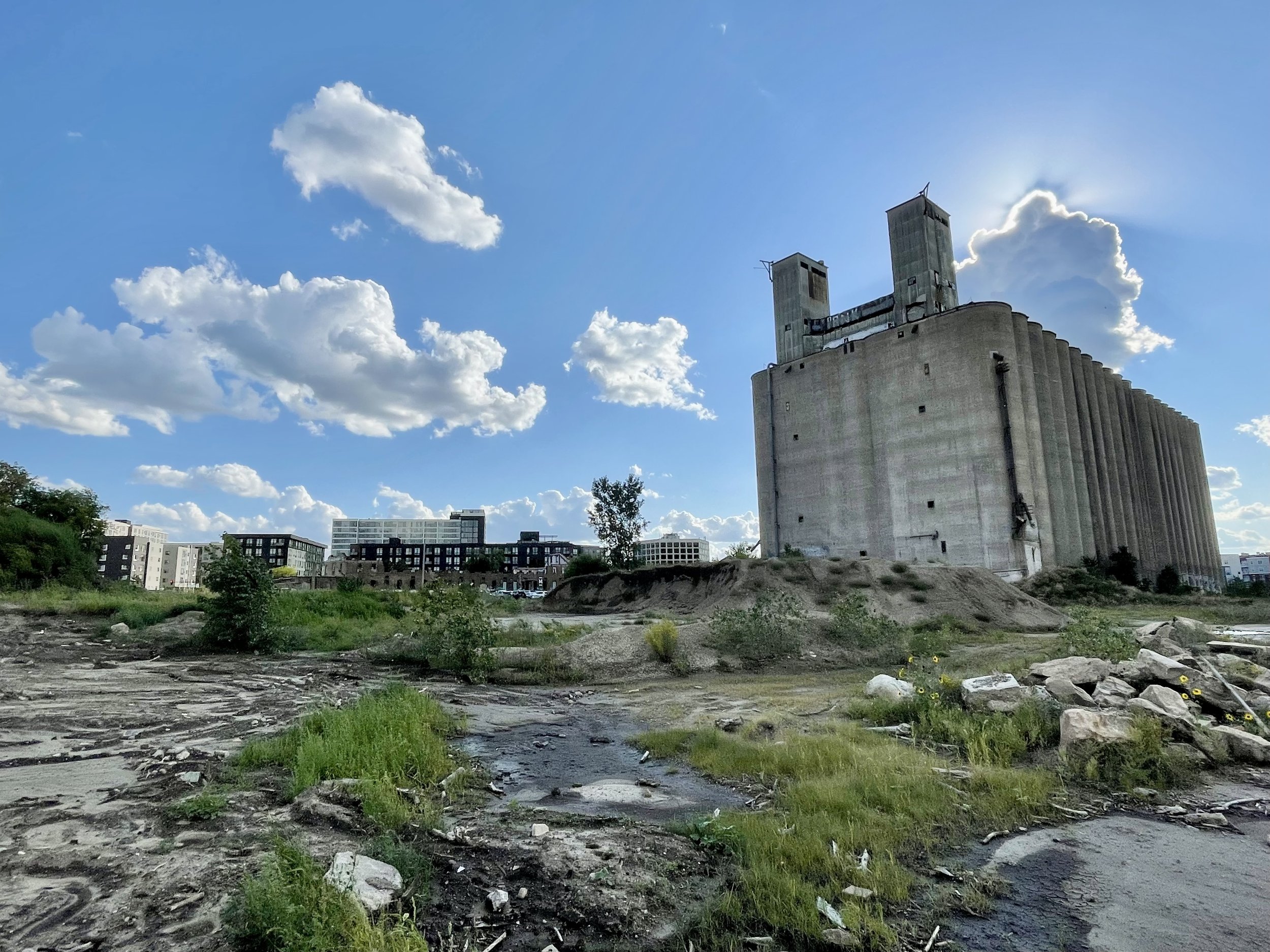
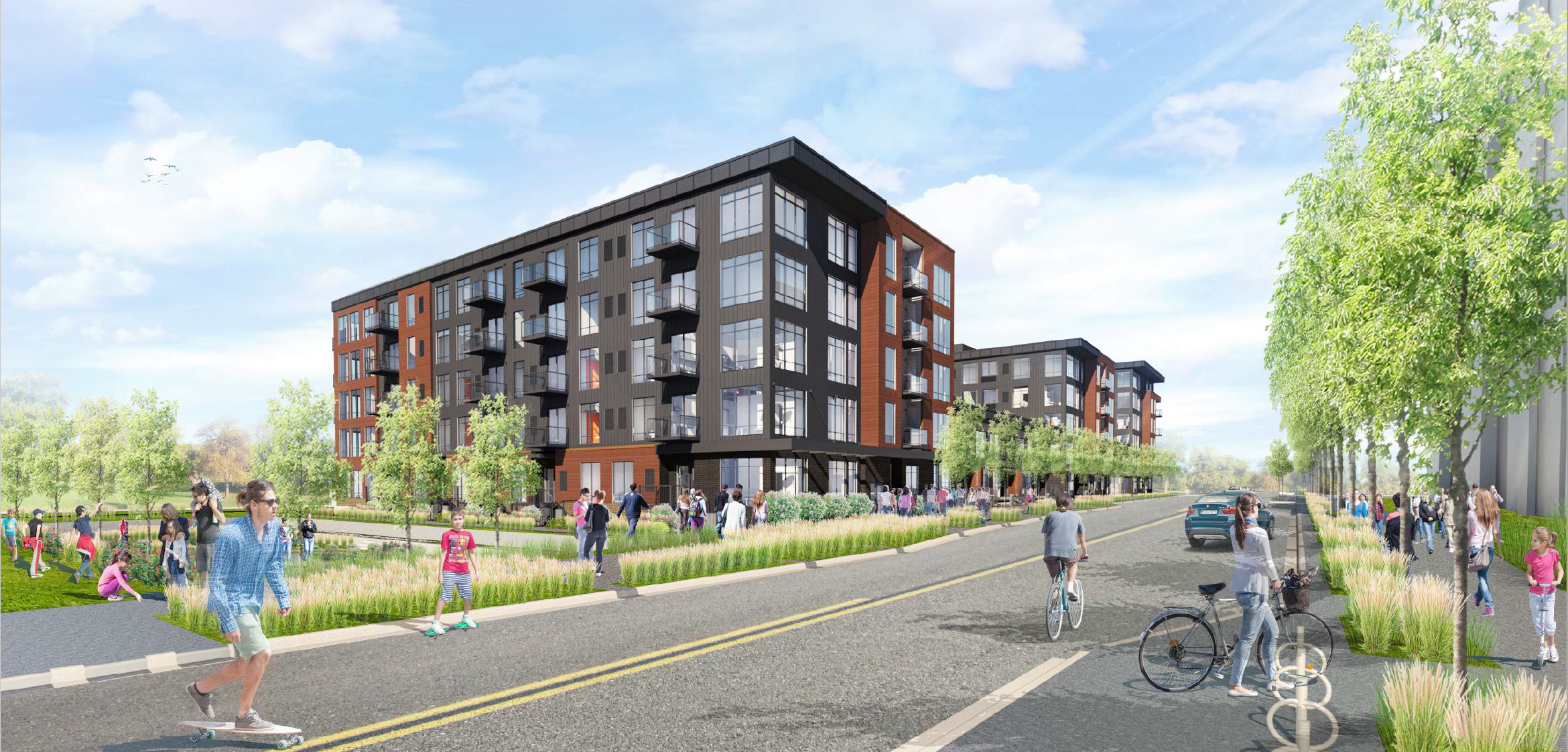
Rendering of Green 4th Street Enhancements & Green on 4th Apartments
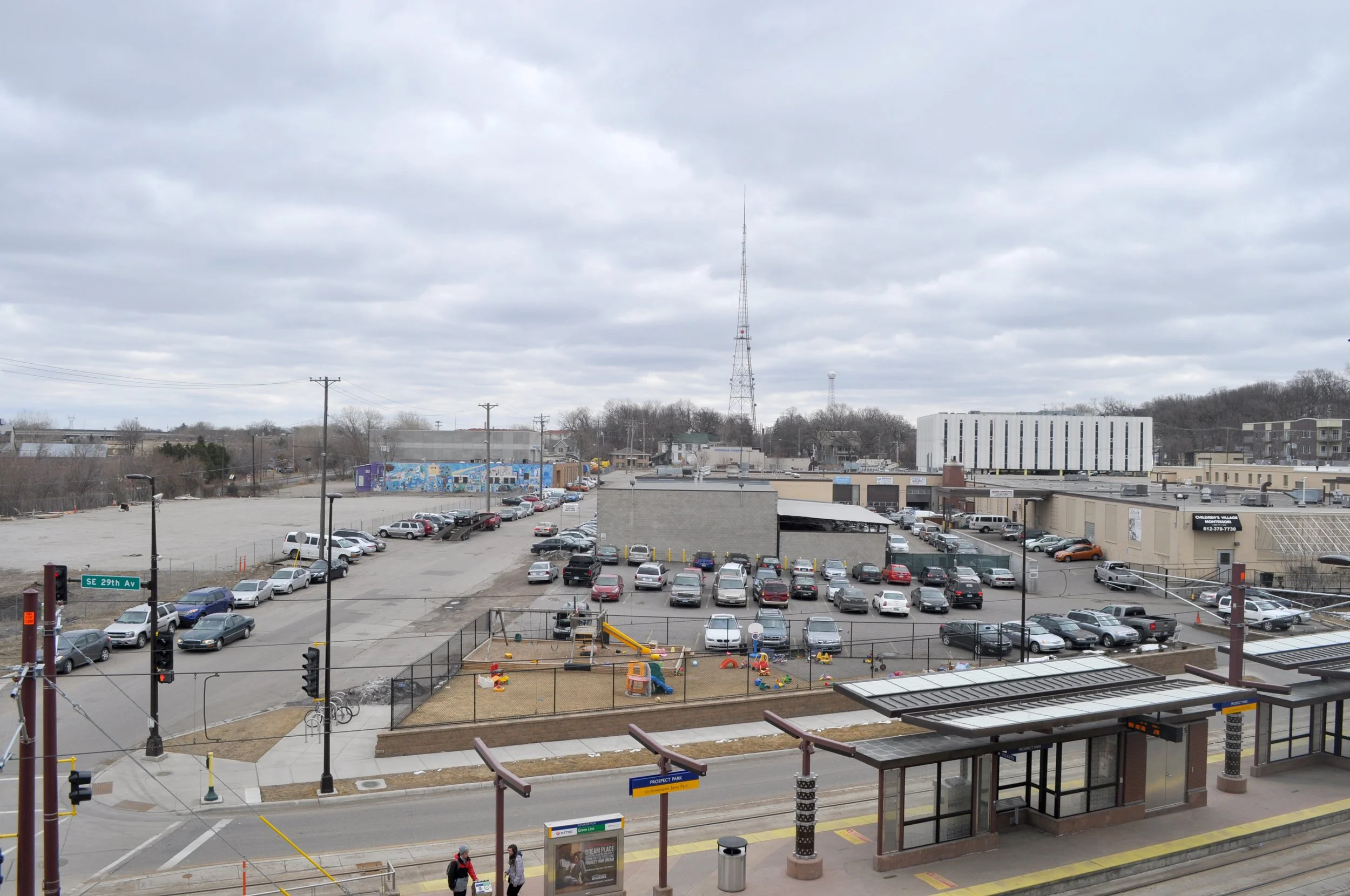
Prospect Park Station Area - 2015
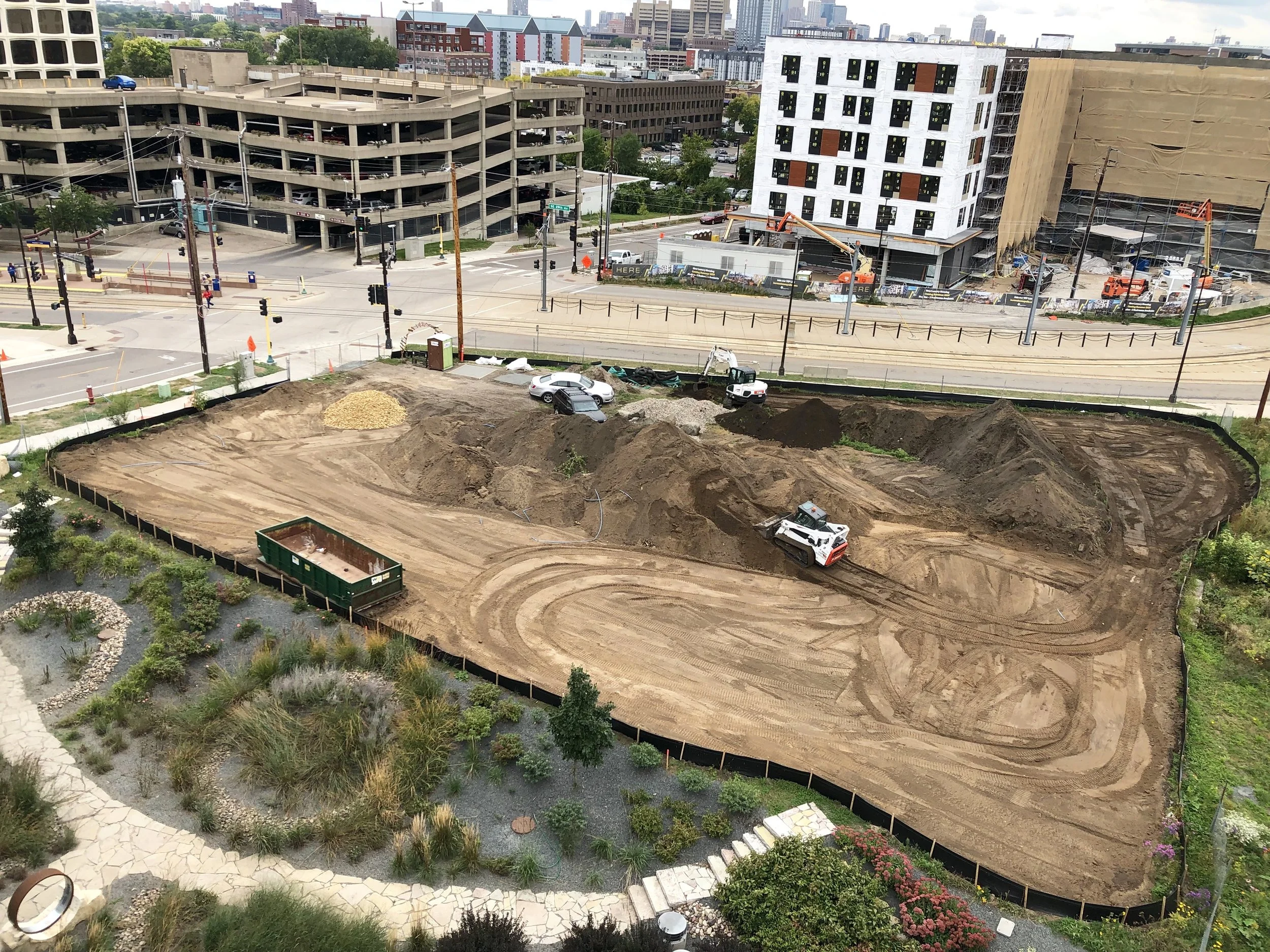
District Stormwater System construction - 2016
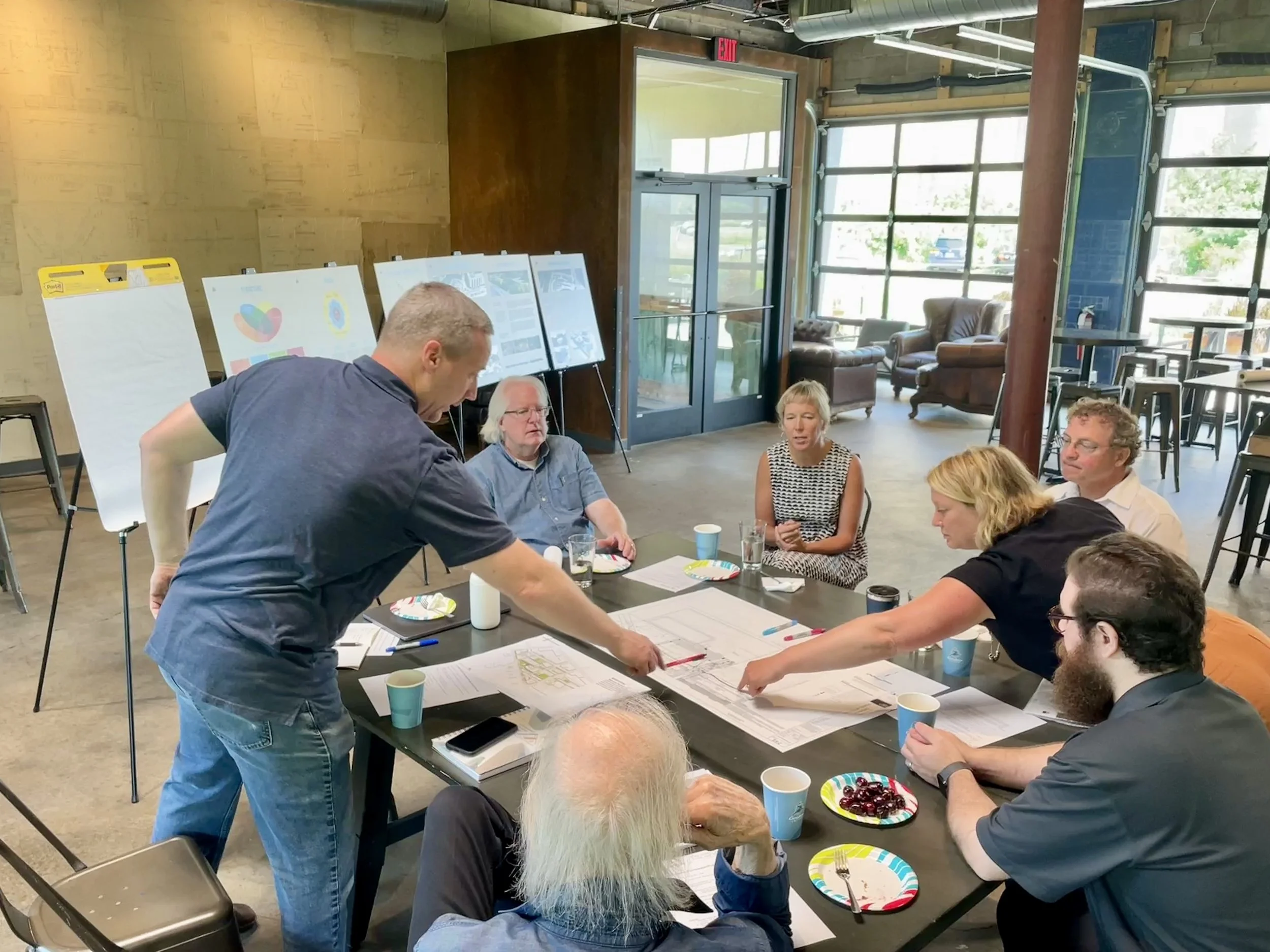
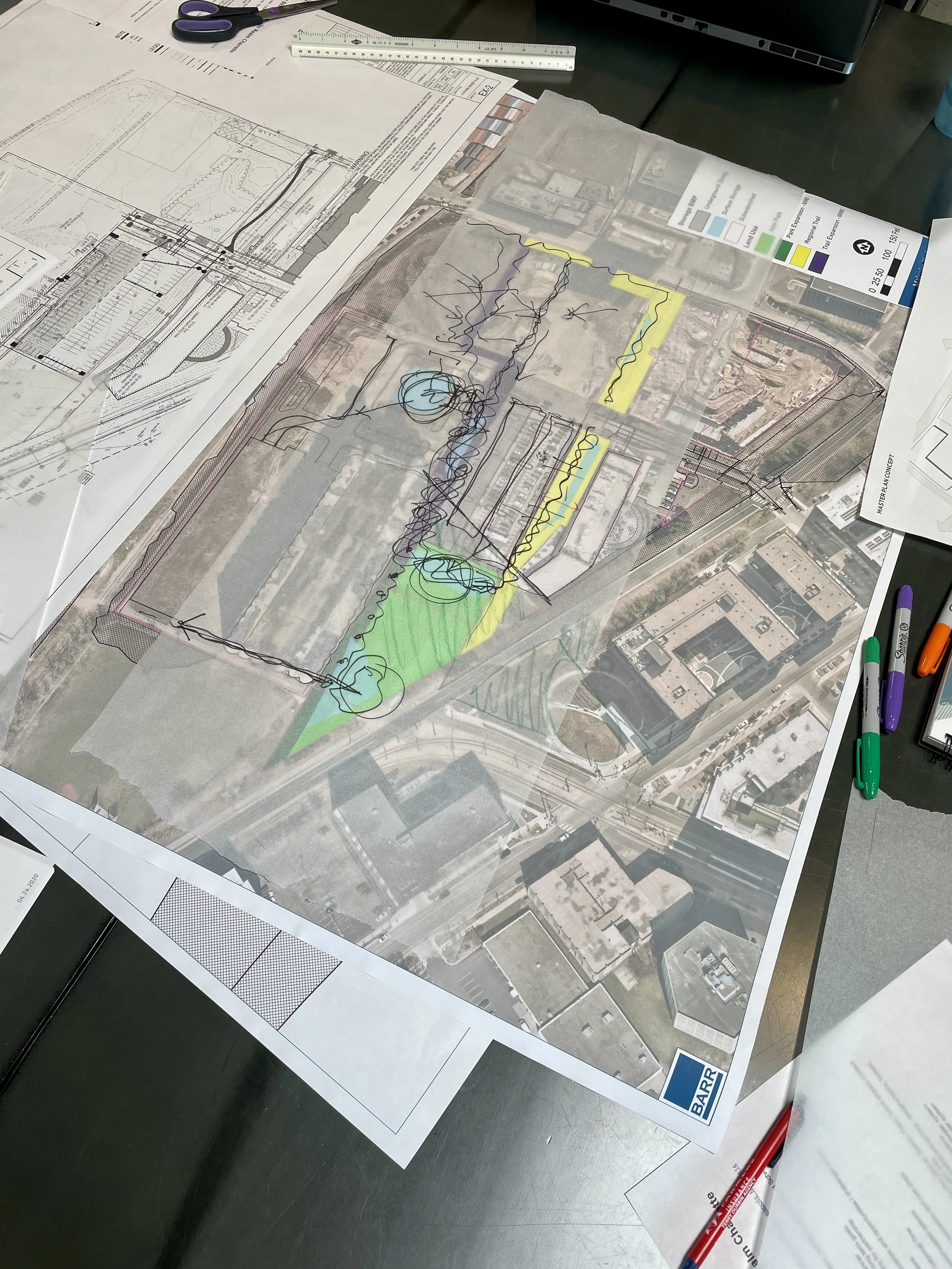
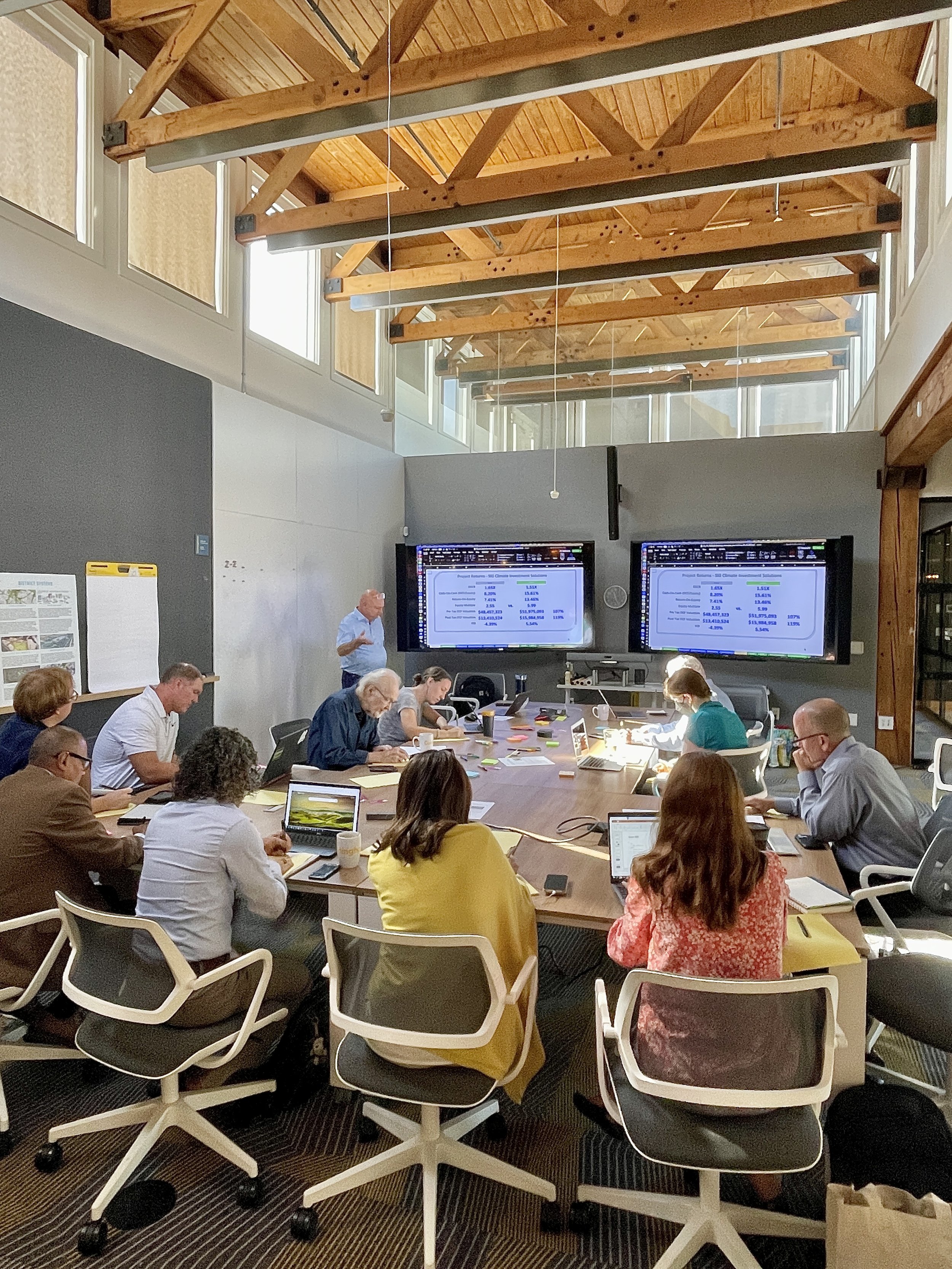
Partner Planning & Coordination Workshop
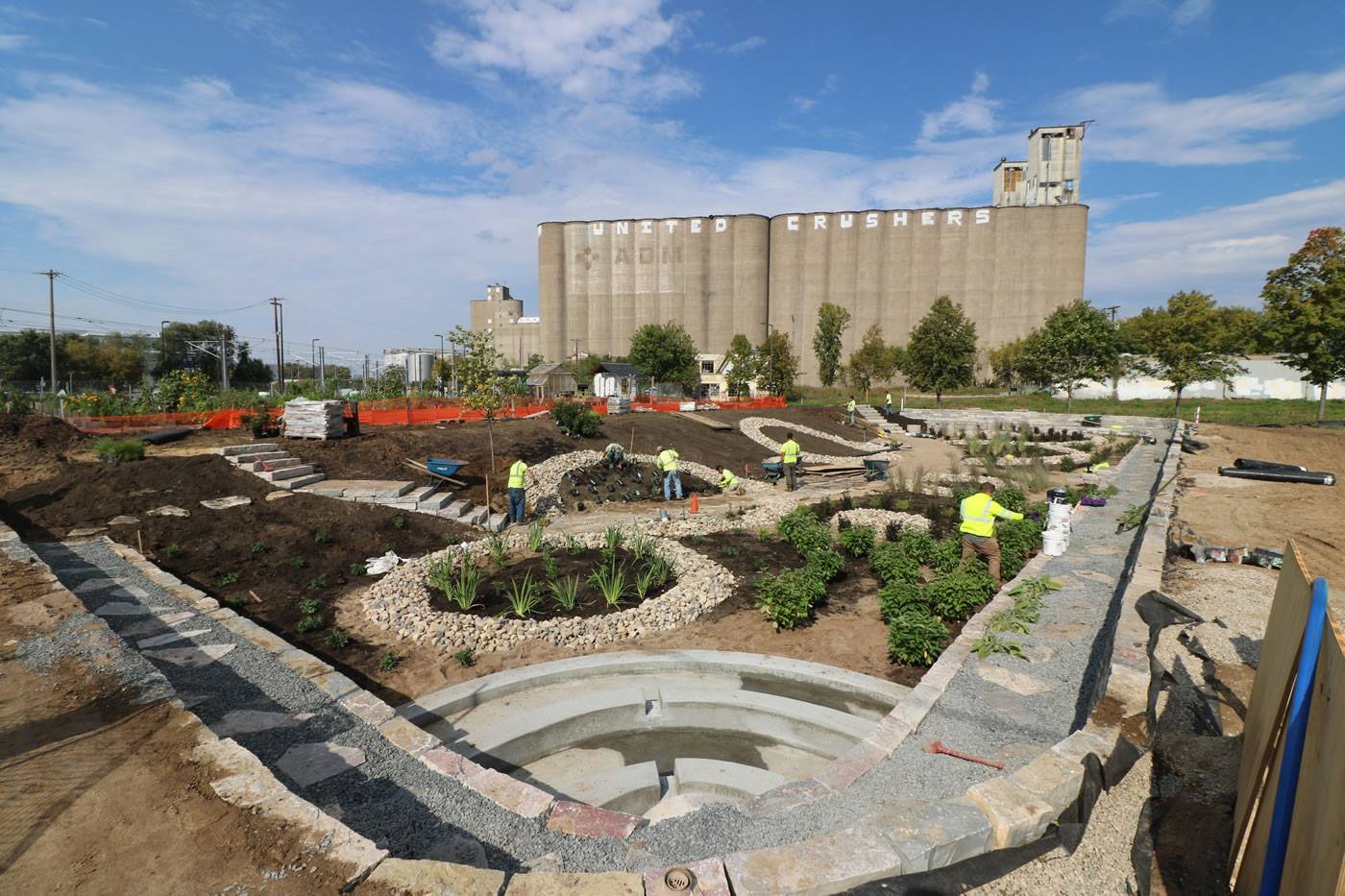
District Stormwater System construction - 2016
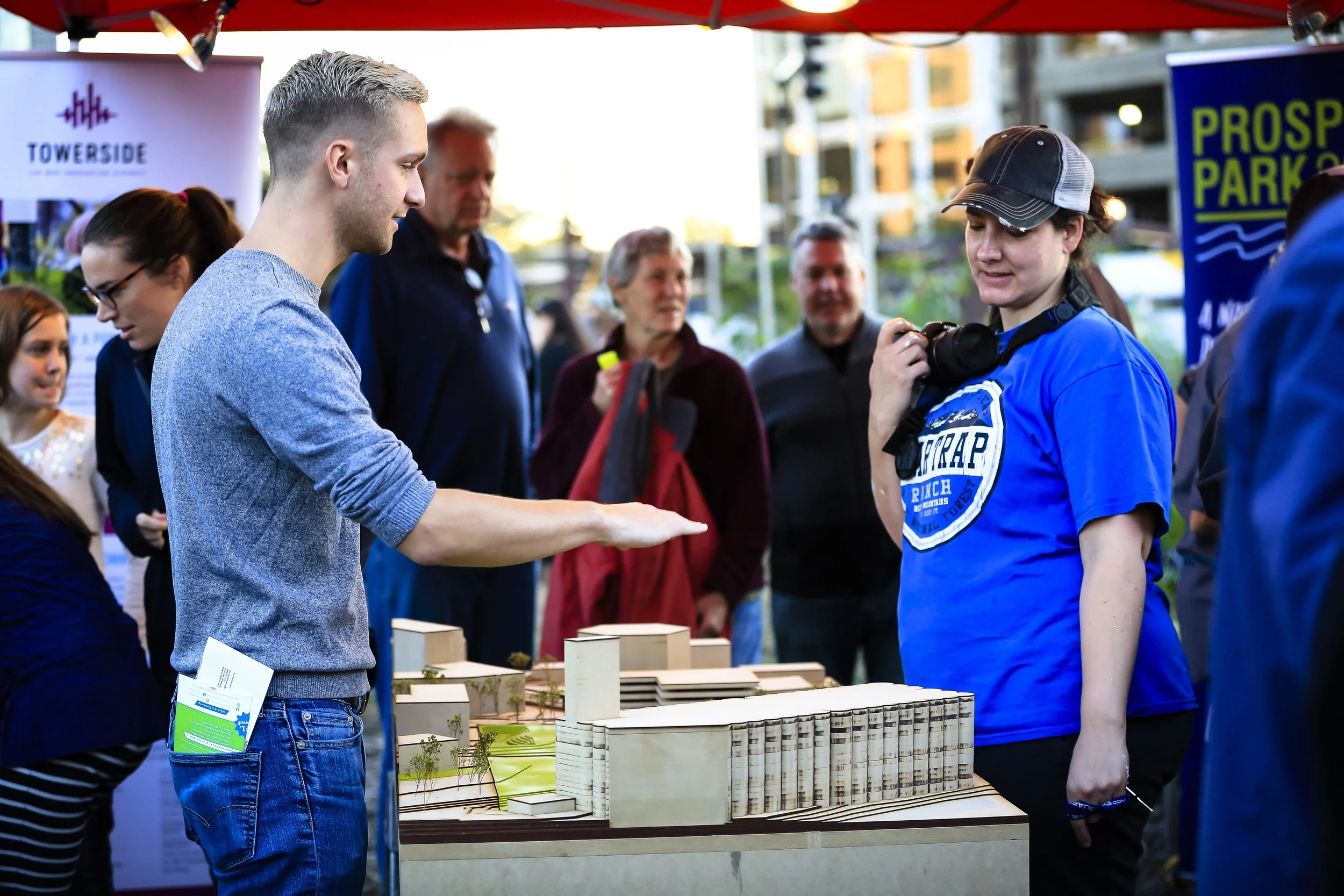
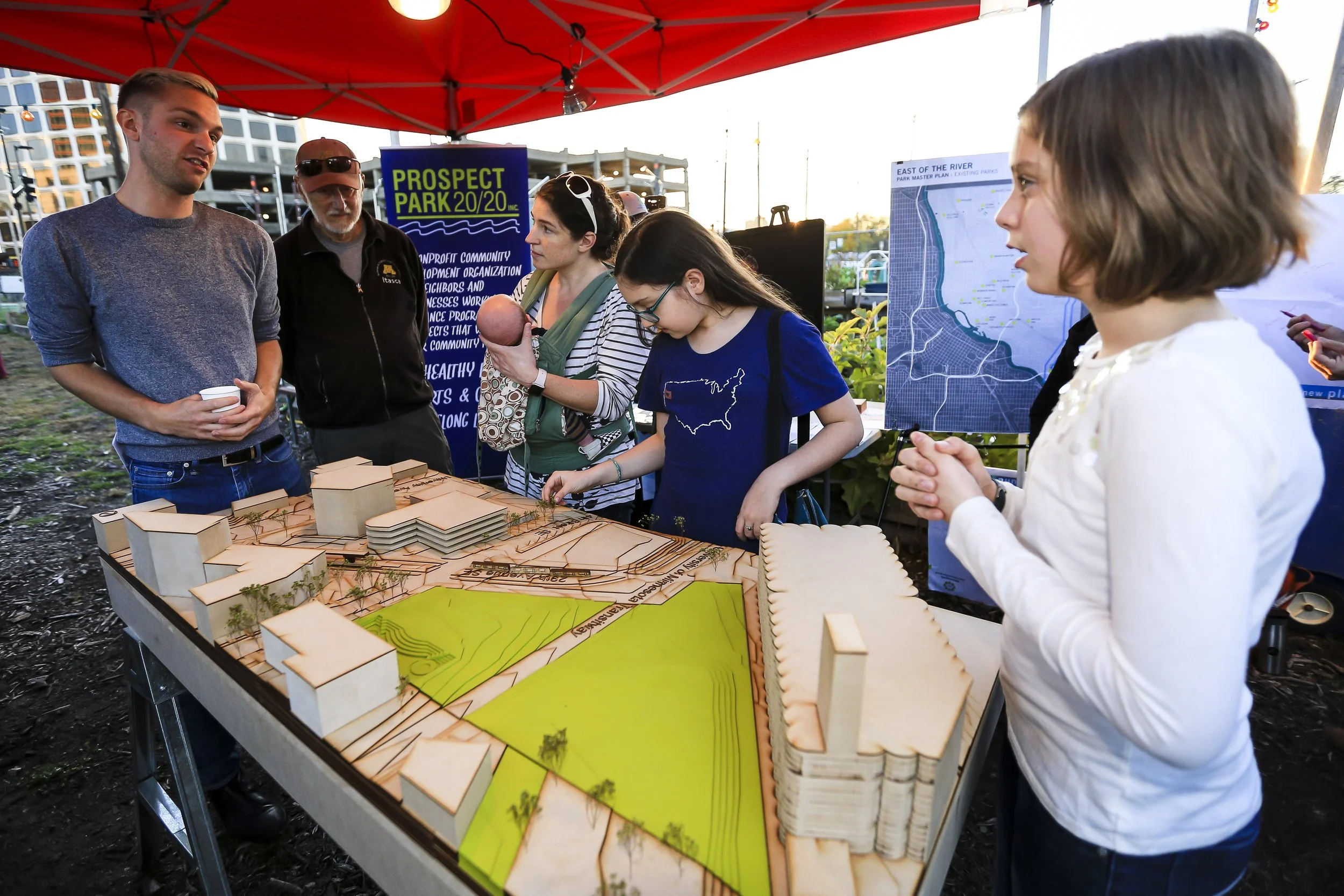
Annual Harvest Festival Pop-Up at future Bridal Veil Gardens site
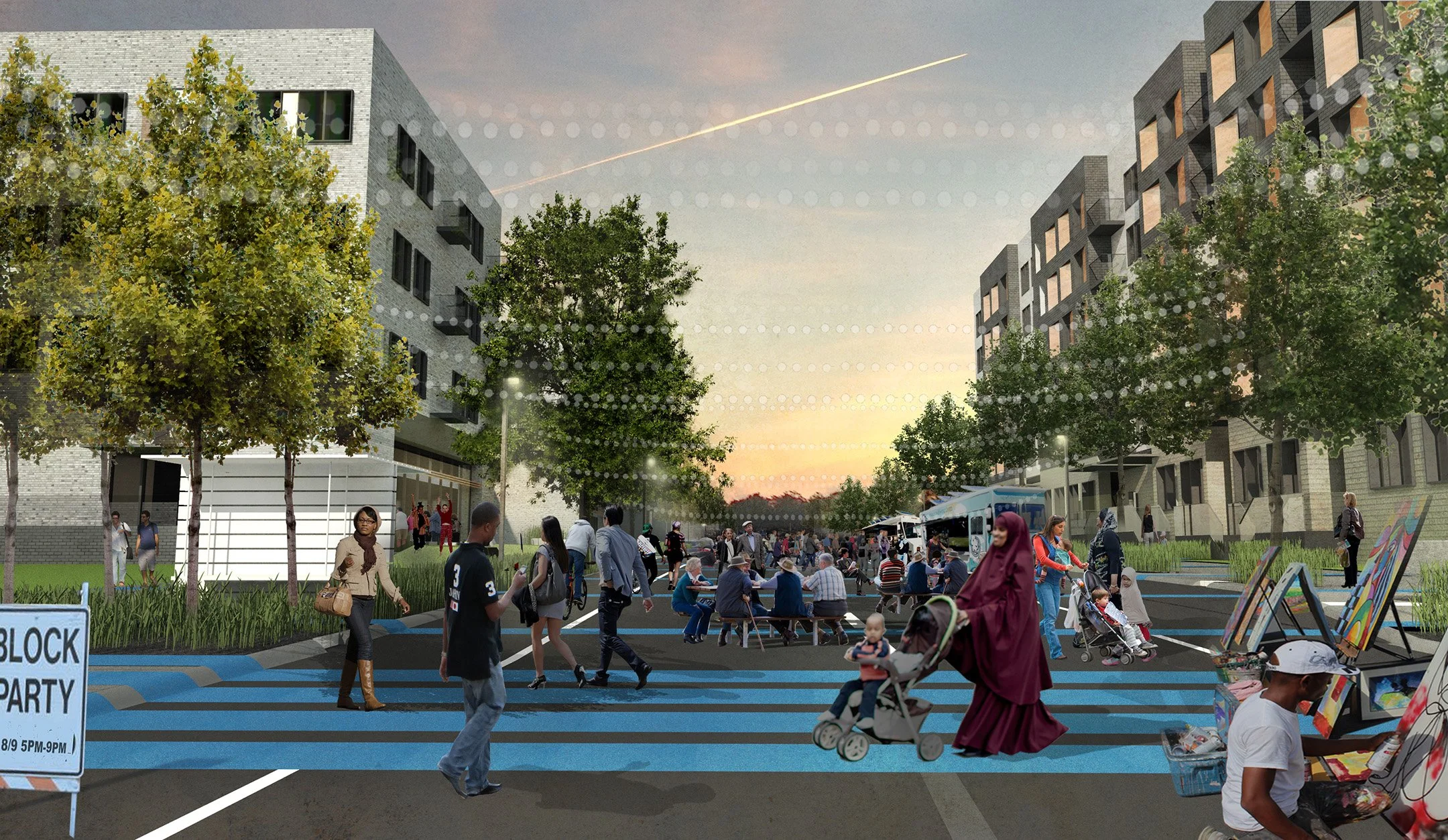
Rendering of proposed Green 4th Street Enhancements
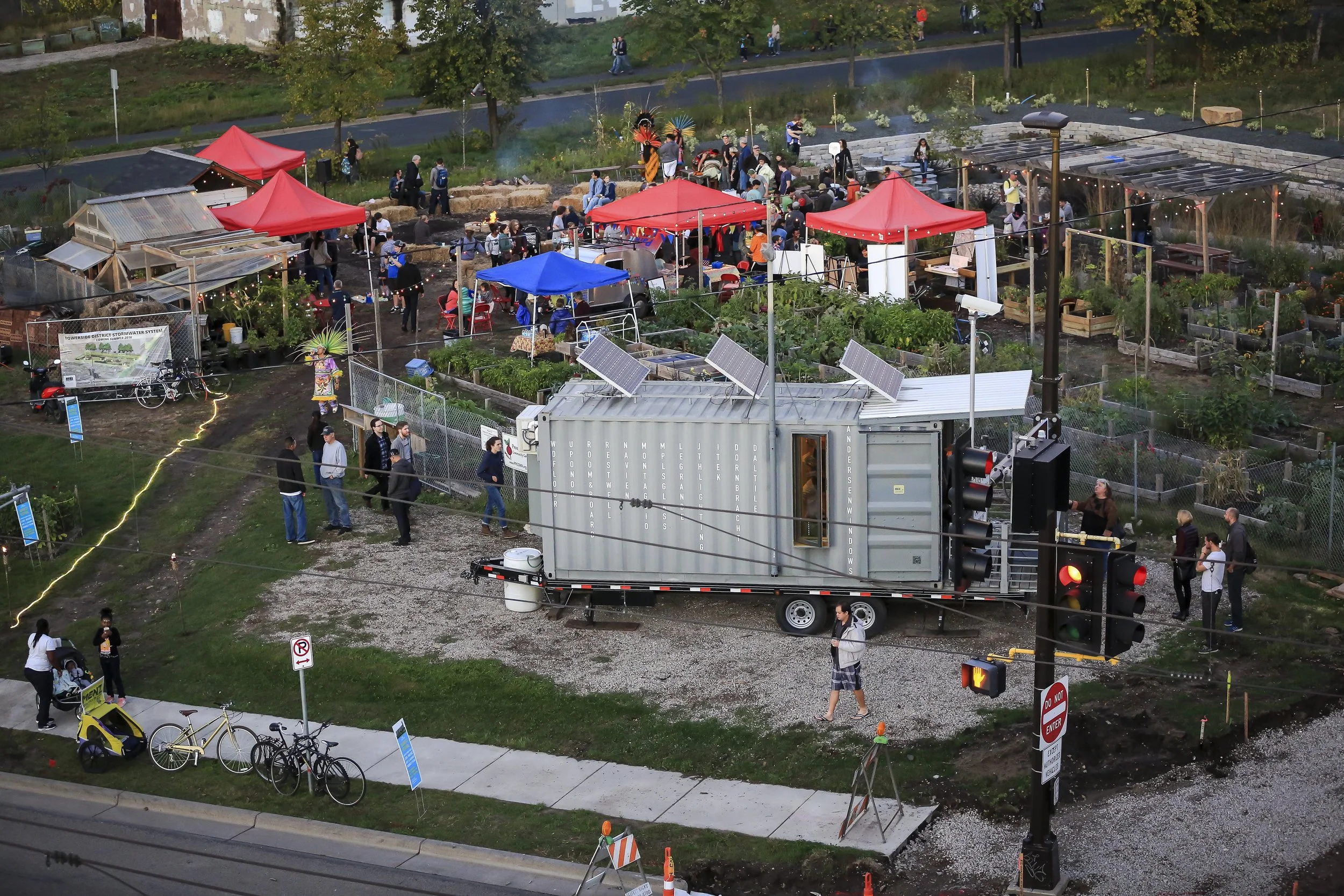
Annual Harvest Festival Pop-Up at future Bridal Veil Gardens site
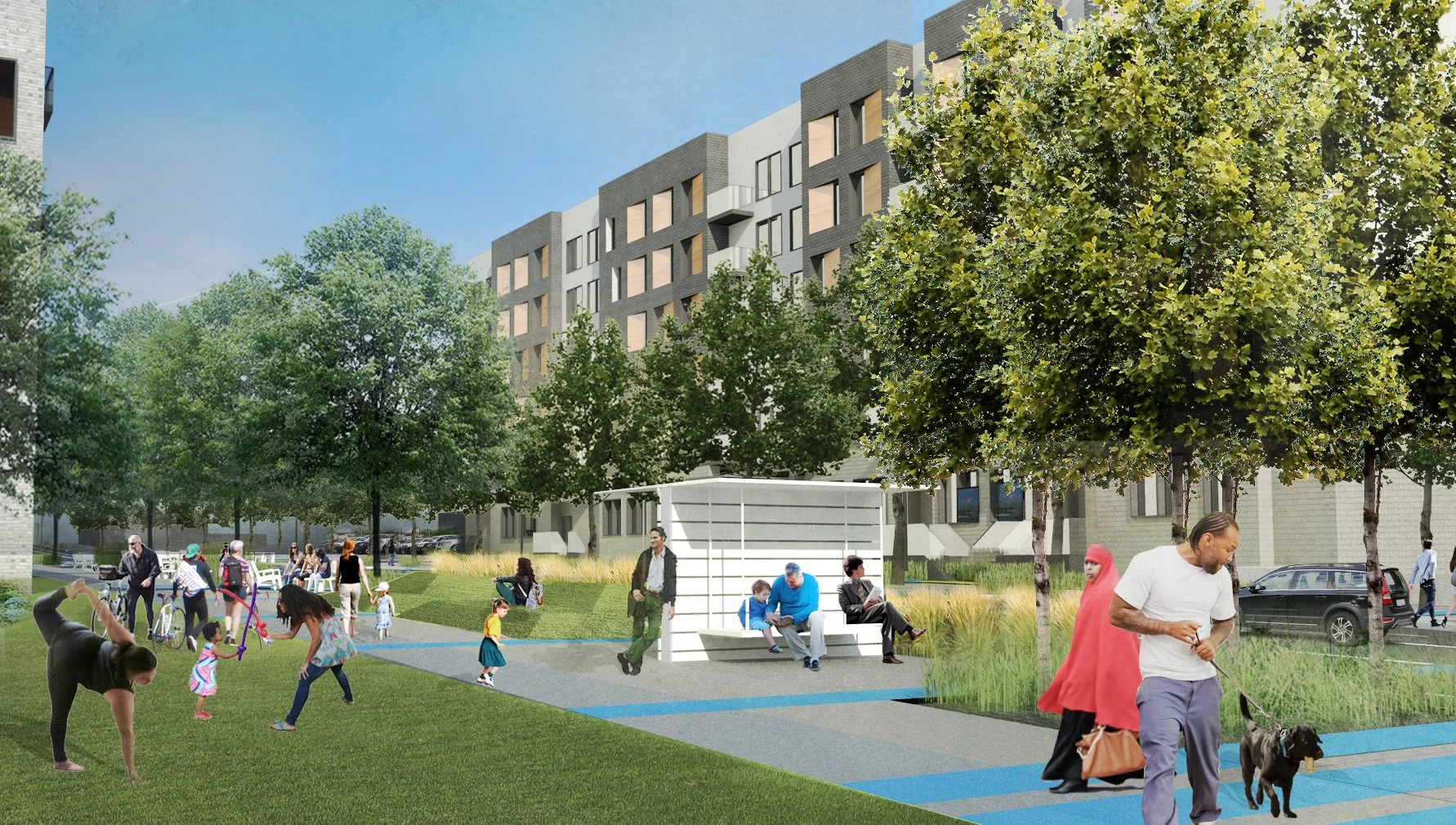
Rendering of proposed Green 4th Street Enhancements
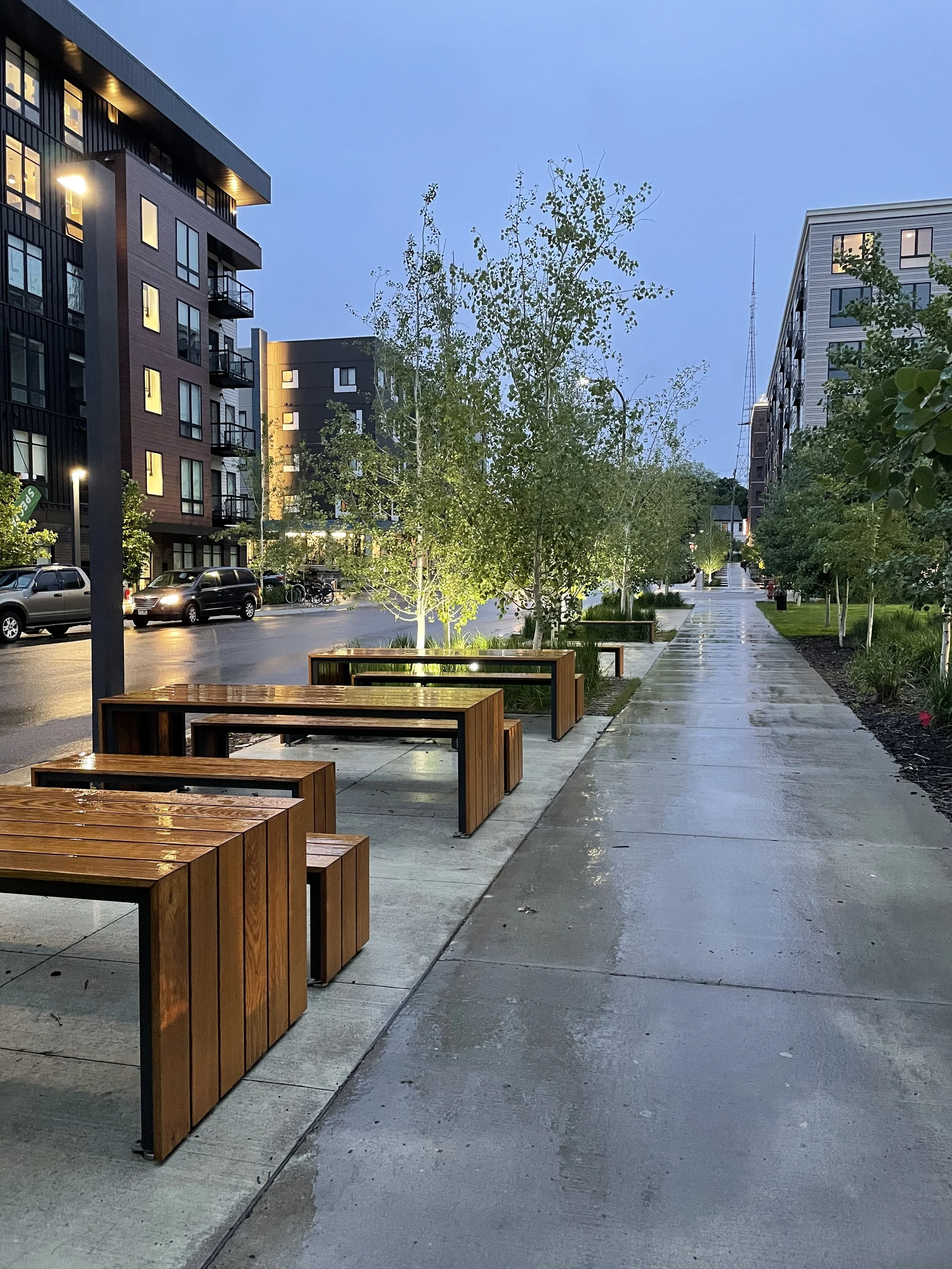
Green 4th Street Pedestrian Enhancements - 2020
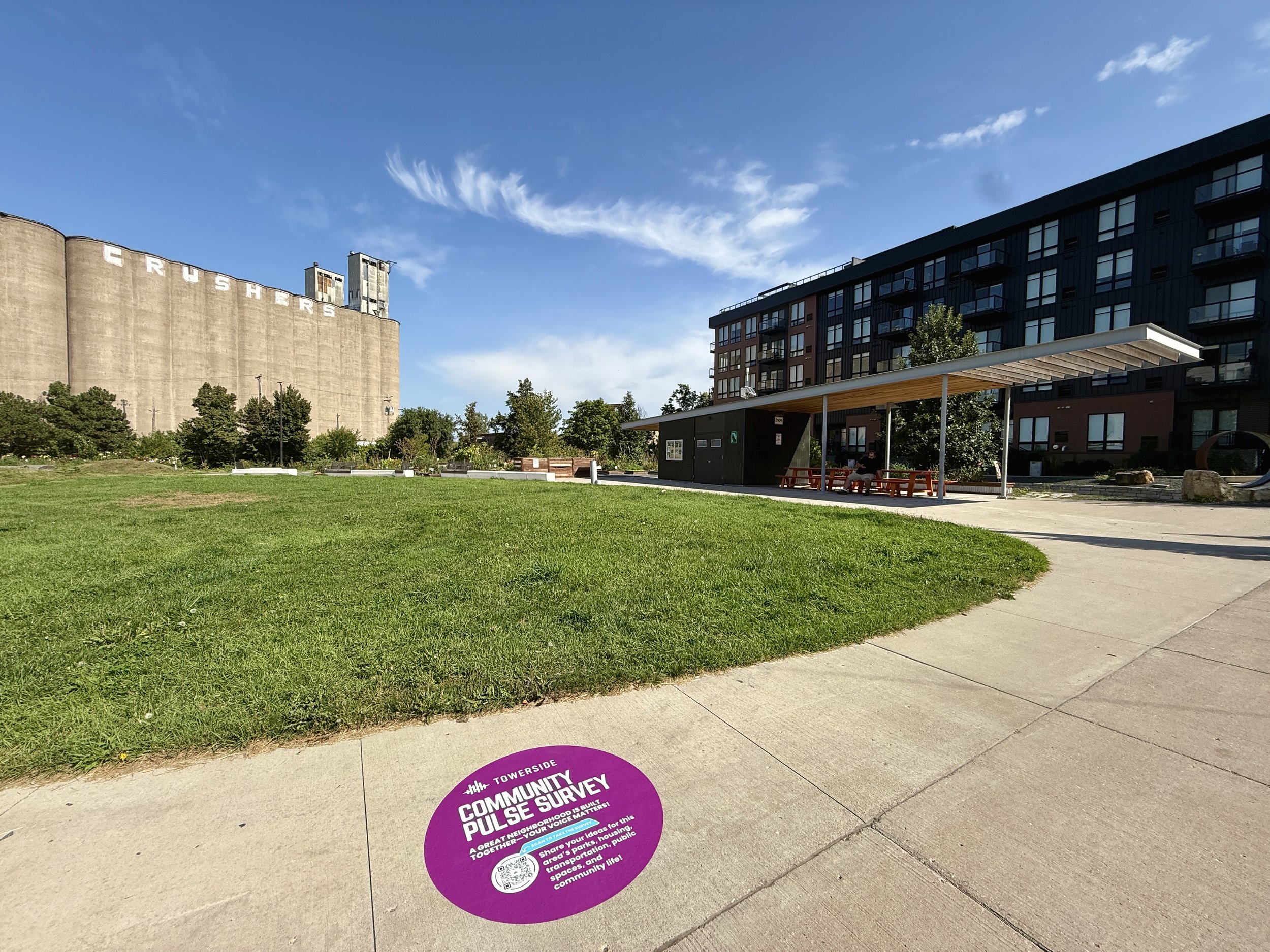
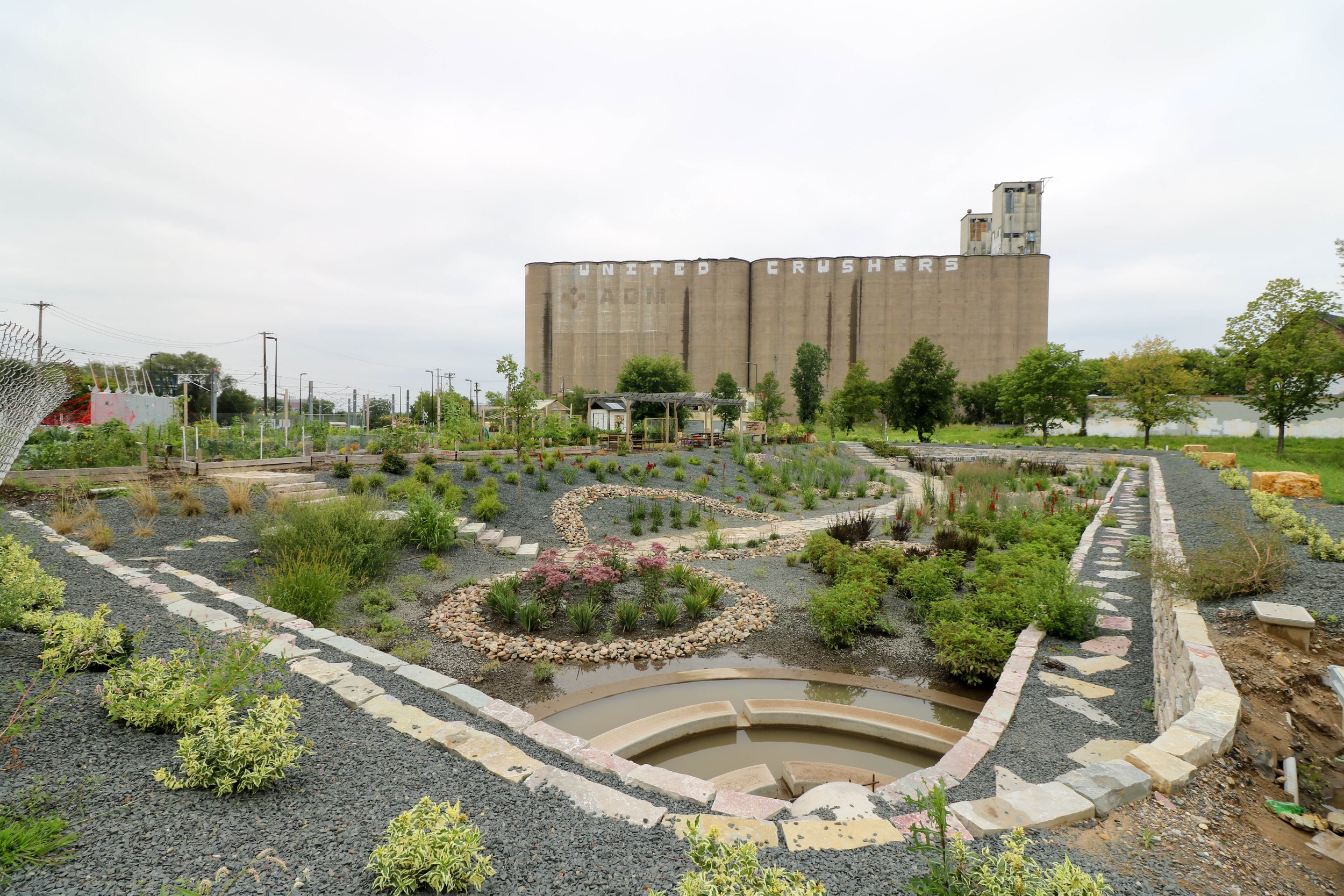
Integrated public realm of District Stormwater System, Bridal Veil Gardens Park, and Green 4th Street - 2024
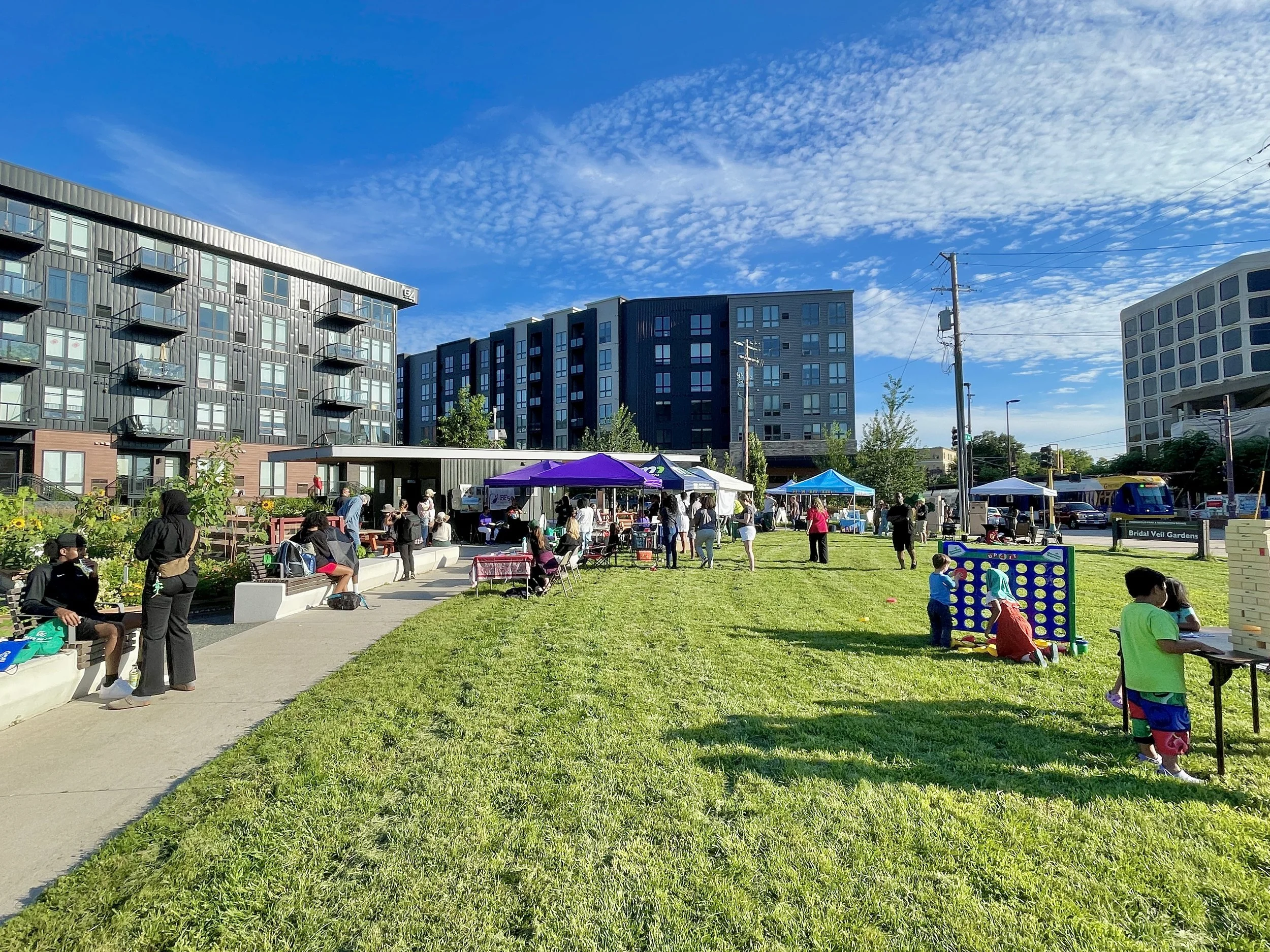
Integrated public realm of District Stormwater System, Bridal Veil Gardens Park, and Green 4th Street - 2024
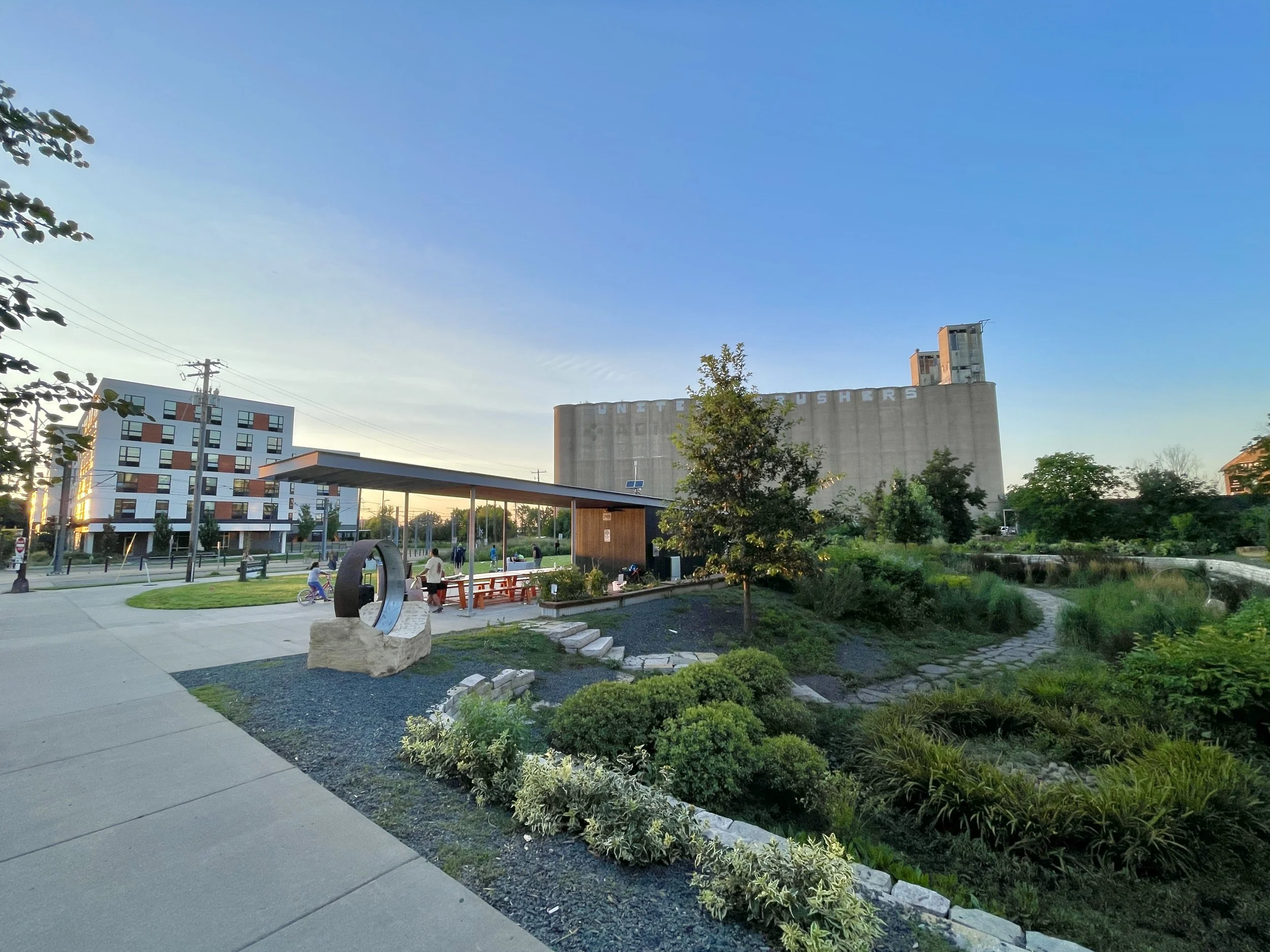
Integrated public realm of District Stormwater System, Bridal Veil Gardens Park, and Green 4th Street - 2024
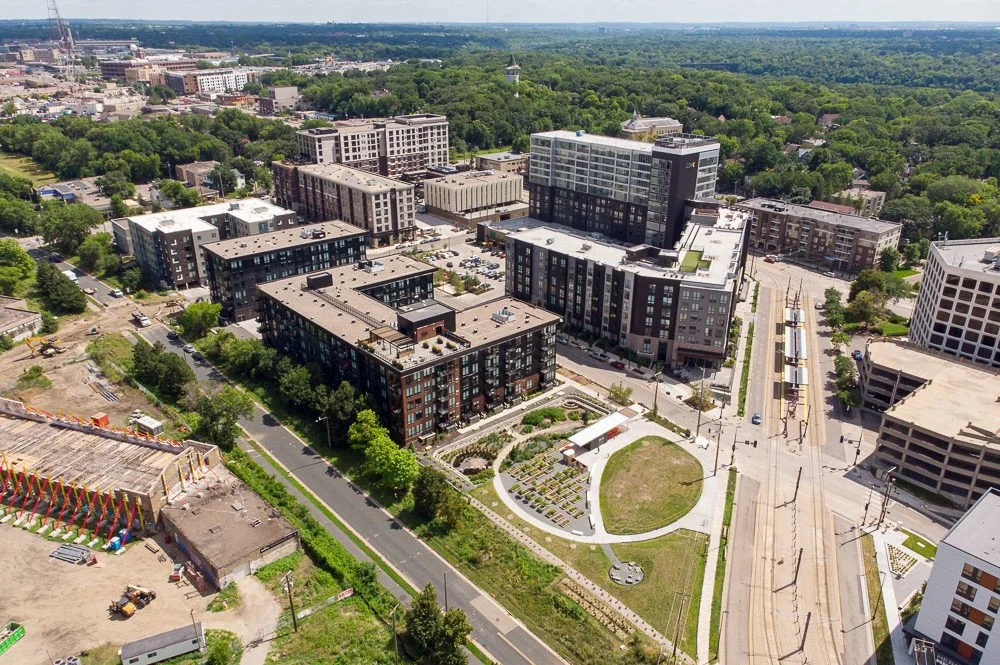
Integrated public realm of District Stormwater System, Bridal Veil Gardens Park, and Green 4th Street - 2024
Approach
The district sits within one of the region’s long-standing concentrations of research, healthcare, and employment. As a result, significant growth pressures—housing, mobility, sustainability, and economic development—were accelerating across the area. However, there was a lack of coordinated infrastructure and development strategy across institutional and neighborhood boundaries.
The opportunity in Towerside has been to move beyond individual projects toward a more coordinated approach to the district’s evolution. This work has focused on building alignment across systems that are typically planned and delivered separately. This includes:
infrastructure systems (water, energy, mobility, public realm)
real estate development
institutional priorities
community needs and partnerships
Rather than treating these as independent efforts, the district was approached as an interconnected system where coordination could unlock greater long-term value. A central focus of the work was understanding how multiple systems overlap within the district and where coordination could create leverage. These frameworks helped shift conversations from individual projects to how the district functions as a whole.
Key contributions
My work included:
Executive leadership of all organizational development, formed a strategic business plan, managed board and partner engagement, budgeting and reporting, staff oversight, and project direction.
Led development of district-scale infrastructure strategies for Green 4th Street and integrations with Towerside District Stormwater System and Bridal Veil Gardens Park.
Designed and implemented collaborative models for Green 4th Street’s shared public realm maintenance and stewardship.
Coordinated multi-agency funding and support for pre-development planning of several major long-term infrastructure projects as well as ongoing district framework plans.
Built and facilitated working partnerships across area residents, landowners and developers, public agencies, and neighboring institutions.
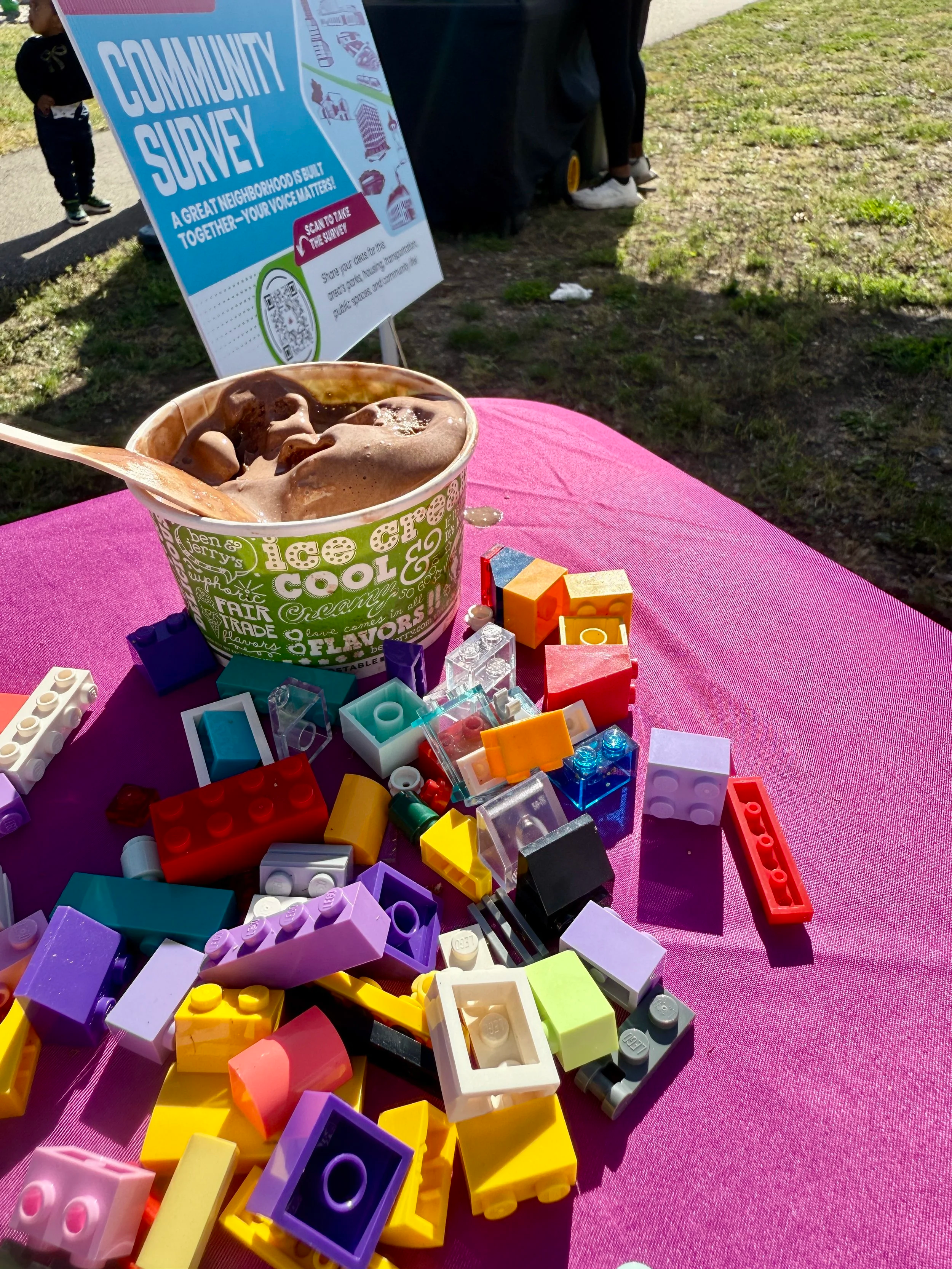
Created and launched an equity action plan along with engagement strategies including resident placemaking events, student initiatives, and a community pulse initiative.
Established Towerside as a vehicle for coordinating long-term district investment.
-
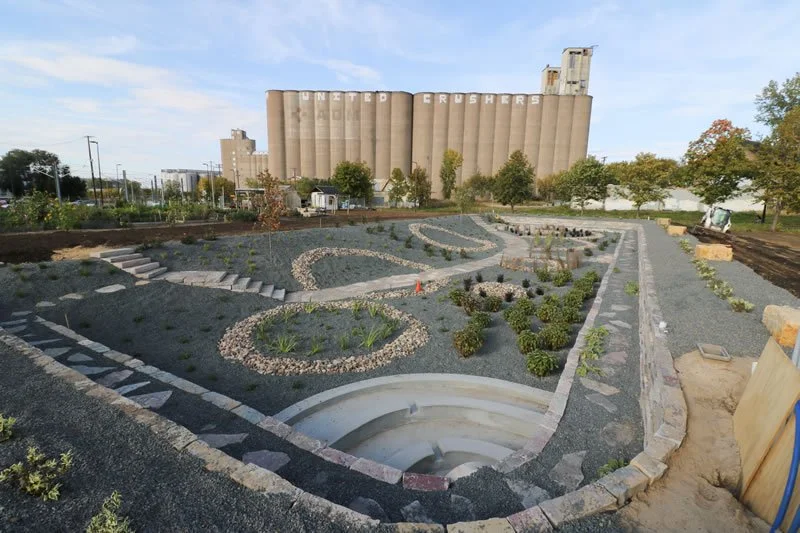
Advanced district-scale infrastructure and stacked systems
-
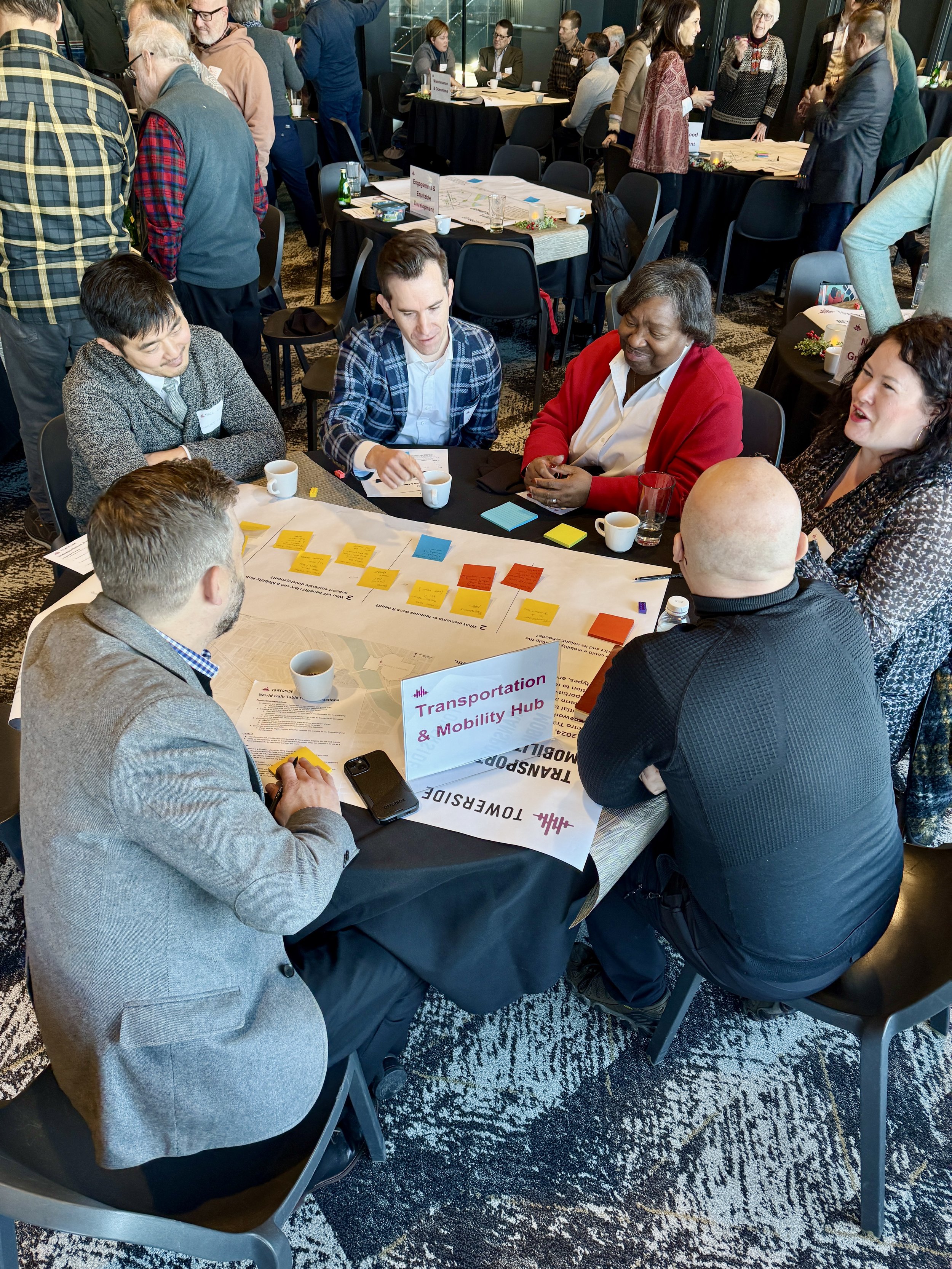
Built multi-agency & cross-institutional partnerships
-
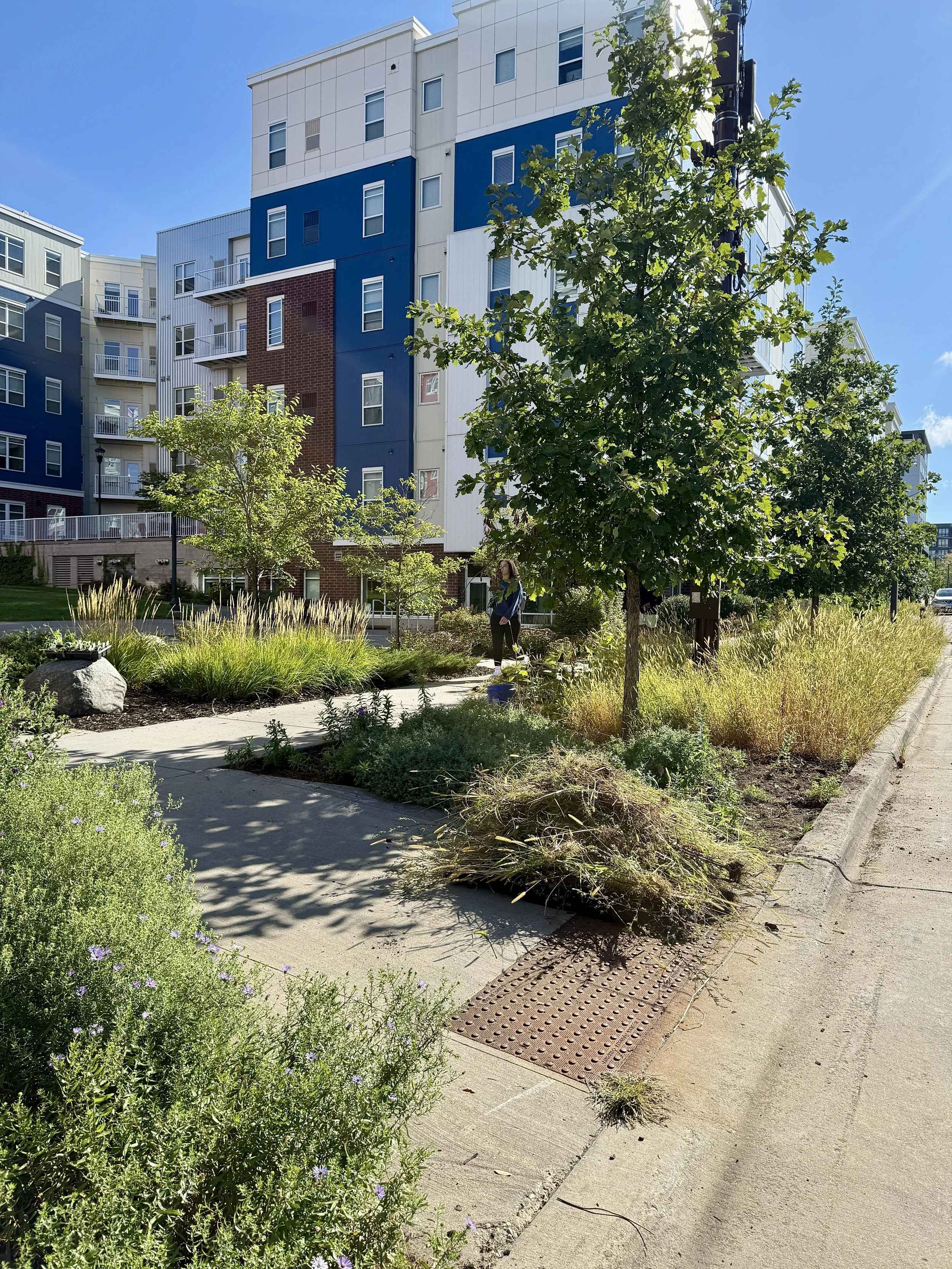
Designed shared district maintenance models
-
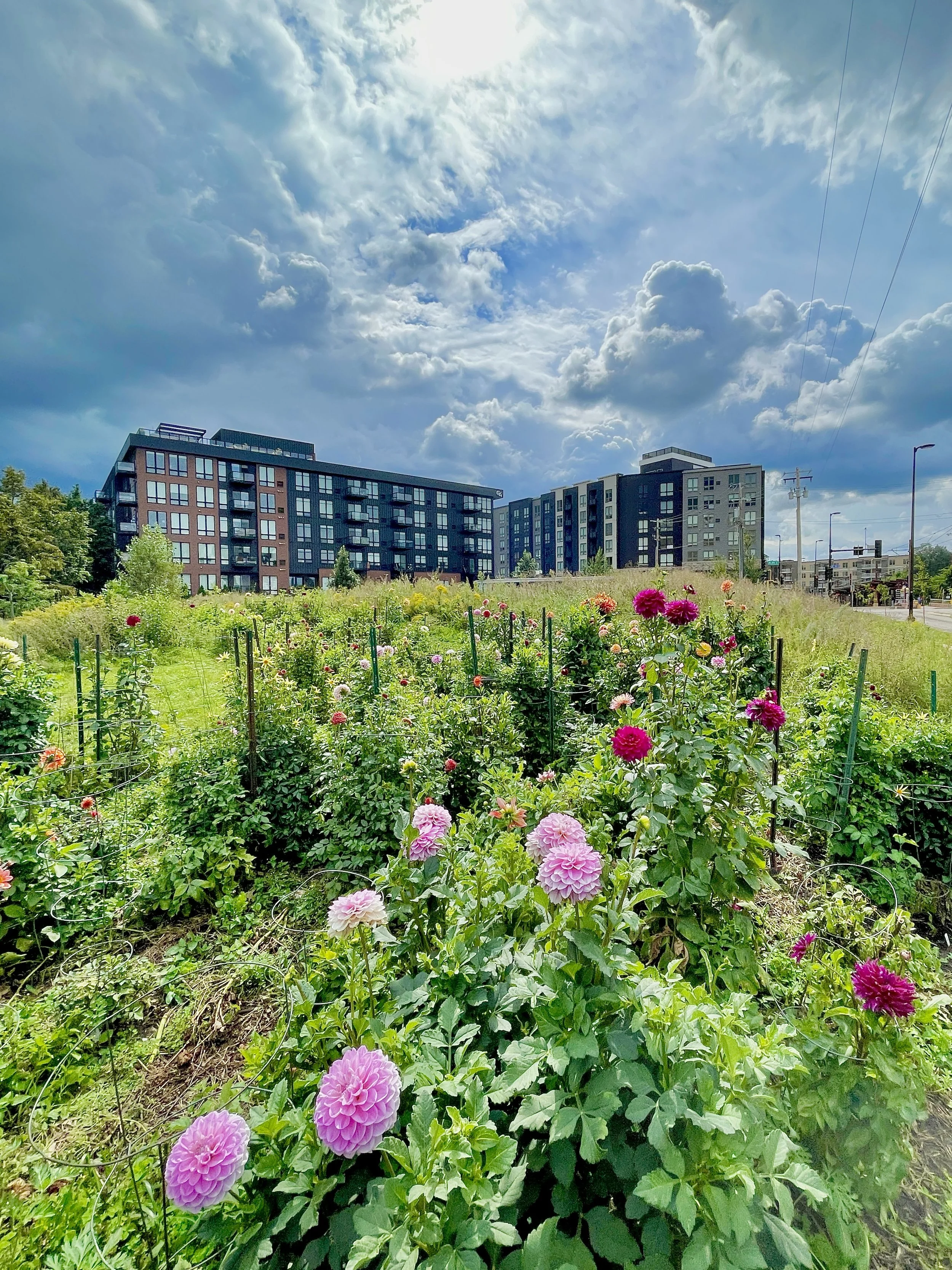
Integrated multiple public realm space & systems
-
Coordinated long-term public & private investment
Outcomes
City building changes transforming the district’s landscape
4000+ new housing units built since Green Line LRT operations, boasting a full range of options including market rate, affordable, mixed-income, student, and senior.
Affordable housing units at or below 60% AMI make up 20% of new construction across five projects.
New 20,000 sqft full-service urban grocery store, an anchor arts institution, and a growing entertainment district home to 3 major destinations together draw millions of people each year.
Growing mixed-use district with commercial and industrial, supporting 100’s of professional and service job opportunities.
$5.6M in public realm investment, creating 2+ acres of new park & green spaces, including the first Complete Street in the city and a first-of-its-kind in the country district stormwater management system.
$951.7M of permit value from real estate investments.
Related Project Profiles
-
![]()
Green 4th Street
Green 4th Street reimagines a key urban corridor as integrated public infrastructure—combining mobility, green systems, placemaking, and development to support a walkable, transit-oriented district.
-
![]()
Community Pulse Project
The Community Pulse Project created a district-wide engagement framework for understanding how people experience the district and identifying priorities for public space, mobility, amenities, and community life.
-
![]()
District Stormwater System
The Towerside District Stormwater System advanced a district-scale, stacked-system green infrastructure approach that integrated stormwater management, public space, and redevelopment to support long-term environmental and economic resilience.
-
![]()
District Mobility & Grand Rounds Missing Link
The Granary Crossing initiative and related District Mobility Framework update explore how coordinated transportation, parking, and public realm systems can reconnect fragmented neighborhoods while supporting long-term growth, access, and multimodal movement across the Innovation District.
Insights
We don’t just need new projects— we need new systems for working together
Bringing a multifaceted opportunity like Towerside to life, along with similar transit-oriented urban neighborhoods, requires an asset-based approach to community development.
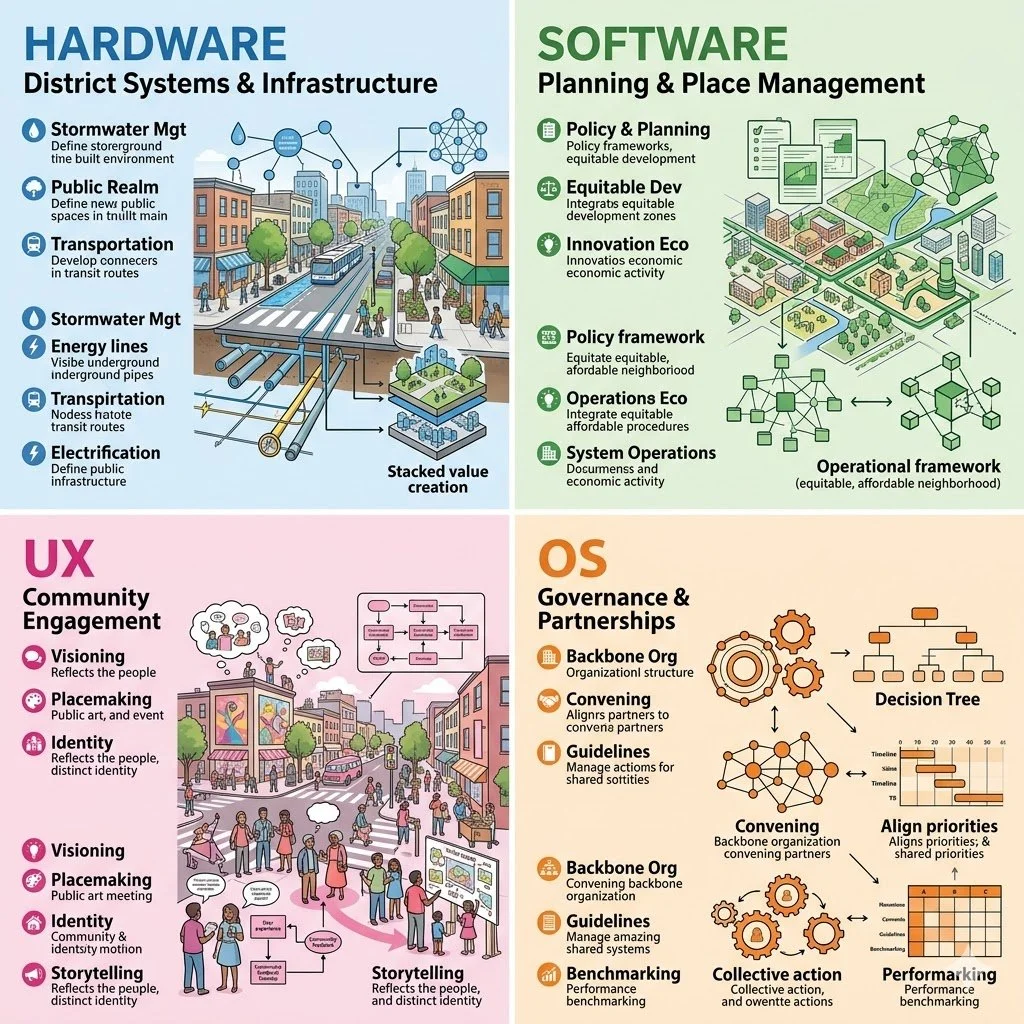
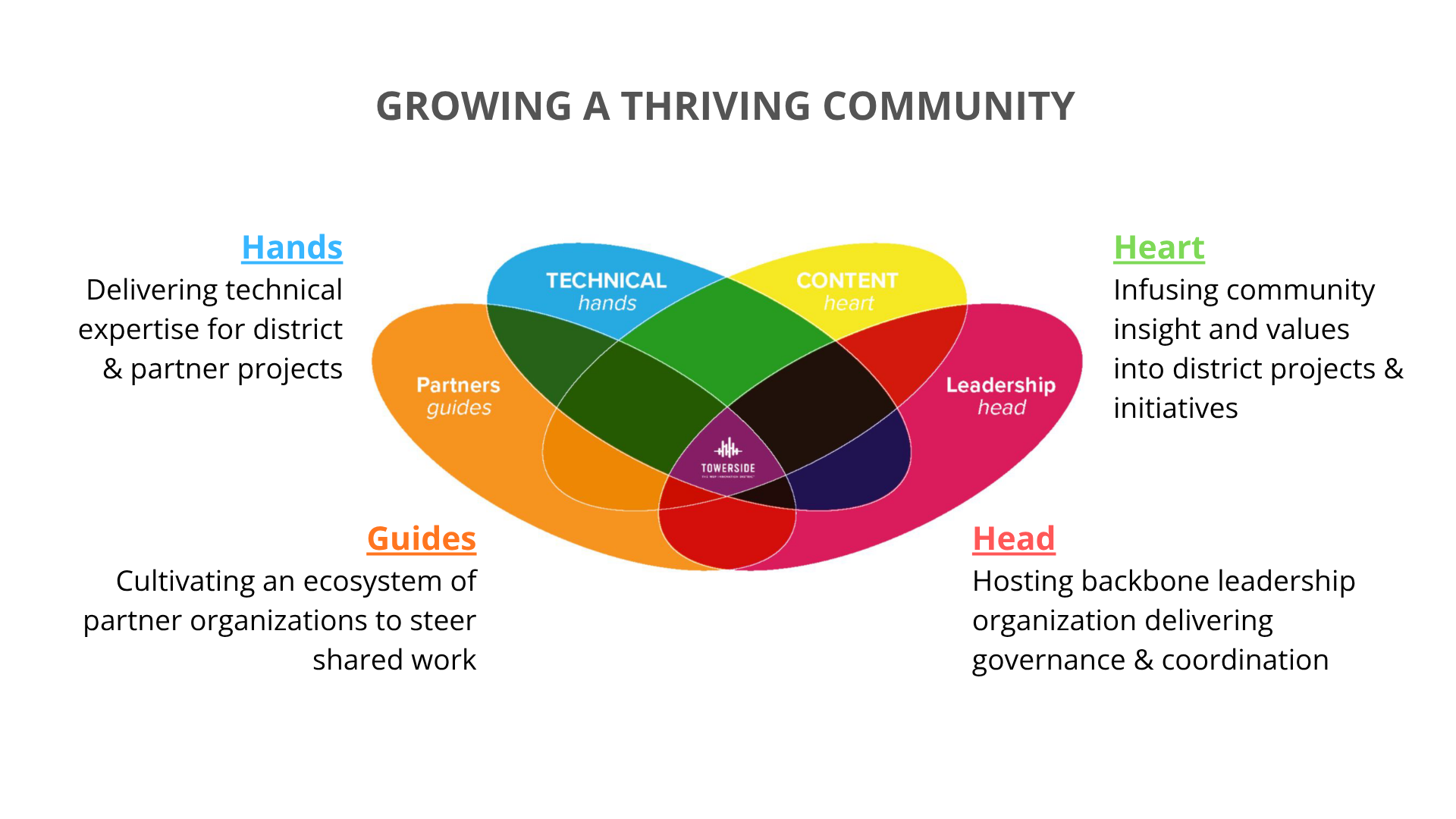
Through this work, I’ve come to understand that a thriving place depends on aligning four distinct but interdependent roles: leadership (head), community (heart), technical delivery (hands), and partners (guides). No single element is sufficient on its own. Real progress happens in their overlap, where governance, community insight, technical execution, and partnership ecosystems operate in coordination.
Many place-based efforts over-index on one or two of these roles, often technical delivery or leadership, while underinvesting in community insight and partnership infrastructure—or vice versa. The result is fragmentation, even when individual projects succeed.
Thriving places are not built by a single discipline. They emerge from the sustained alignment of these roles over time.
Takeaways
This work reinforced a set of recurring principles for place-based development, particularly in complex, transit-oriented districts
-
Coordinating infrastructure systems such as stormwater, energy, and public realm can generate compounded economic, environmental, and social value beyond individual projects.
-
Successful districts depend on sustained coordination across institutions. Shared vision alone is not enough; alignment requires ongoing facilitation, trust-building, and clearly defined roles.
-
Human-centered approaches such as adaptive reuse, historic integration, and creative placemaking help anchor development in lived experience and long-term relevance.
-
Engagement is most effective when communities actively shape outcomes, rather than being positioned as audiences to pre-defined plans.
-
Even in lower-density or emerging districts, asset-based framing and strategic public realm investment can establish a strong sense of place and identity.
I think about effective place-based work operating across four interconnected layers that must reinforce one another, by design