Building and Stewarding a District Commons
Minneapolis
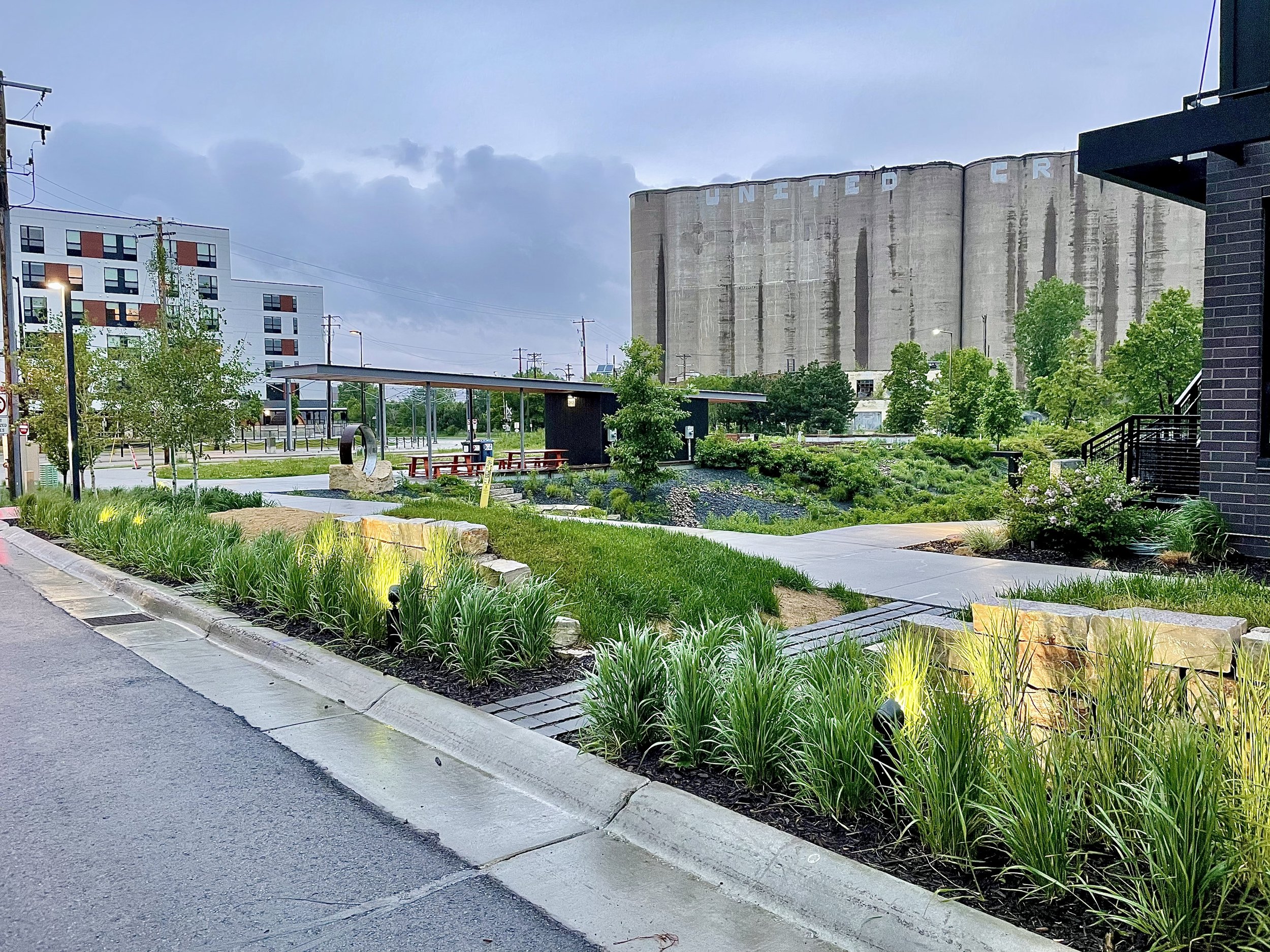
Green 4th Street
Green 4th Street
A multi-institutional effort to coordinate infrastructure, development, and investment at the district scale
Minneapolis–Saint Paul
Overview
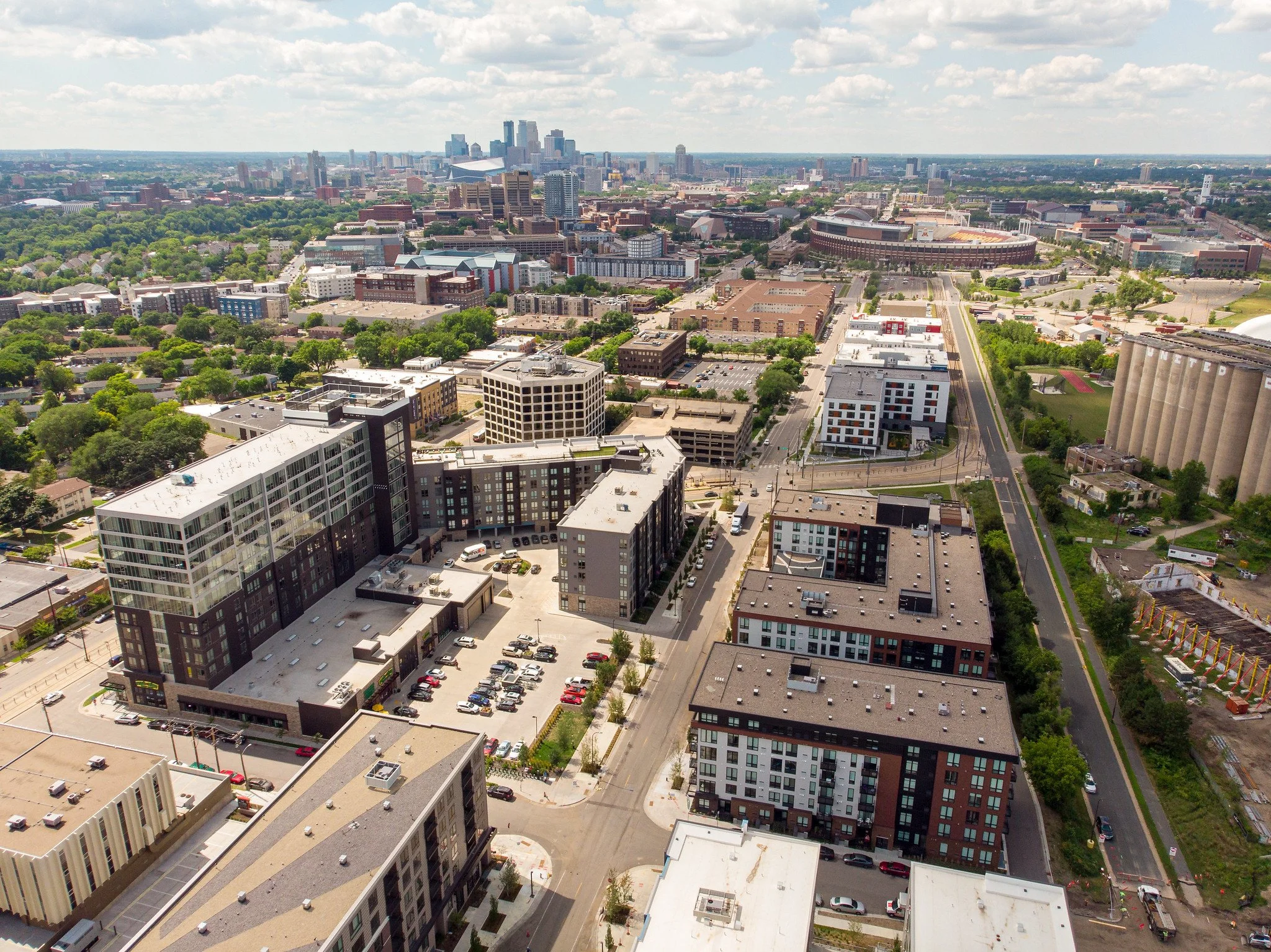
As development interest accelerated around the Green Line LRT Prospect Park Station after its opening in 2014, the area faced a fundamental question: How could a collection of individual projects become a cohesive neighborhood?
The Green Line had created the conditions for growth, but transit alone does not create community. New housing, public infrastructure, environmental systems, and public spaces were being planned simultaneously across multiple parcels, agencies, and ownership groups. Without coordination, the result could easily have become a collection of disconnected investments rather than a connected district.
Green 4th Street emerged as an opportunity to create a shared public realm that could connect these investments together, while establishing the civic identity of the district.
More than a street reconstruction project, Green 4th was envisioned as the backbone of a larger district strategy integrating mobility, ecology, development, and public life.
Roles: Executive Director, Project Manager, Owners Representative
Organizations: The Cornerstone Group, Towerside Innovation District, Towerside Maintenance District
Timeline: 2015–2025
Scale:
4,000 linear feet of streetscape improvements
5 participating landowners
7 adjacent development parcels across two blocks
~80 trees and enhanced landscape systems
~1,000 housing units connected
~$1.1M enhanced public realm investment
~$2M+ public funding aligned
~$1.6M district stormwater system
~$1.4M Bridal Veil Gardens Park
~$35,000 annual stewardship budget
Focus Areas:
Public realm strategy
Transit-oriented development
Green infrastructure
District stewardship
Place management
Location: Minneapolis, MN
Building a District Commons
Green 4th began as a streetscape project, but ultimately became a platform for coordinating public and private infrastructure, real estate development, ecology, and public life.
Shared investment created shared stewardship, and shared stewardship created long-term district capacity.
The corridor served as both a proof of concept and organizing spine for the emerging district, demonstrating how coordinated investments in the public realm, infrastructure, and development could create value greater than any individual project alone.
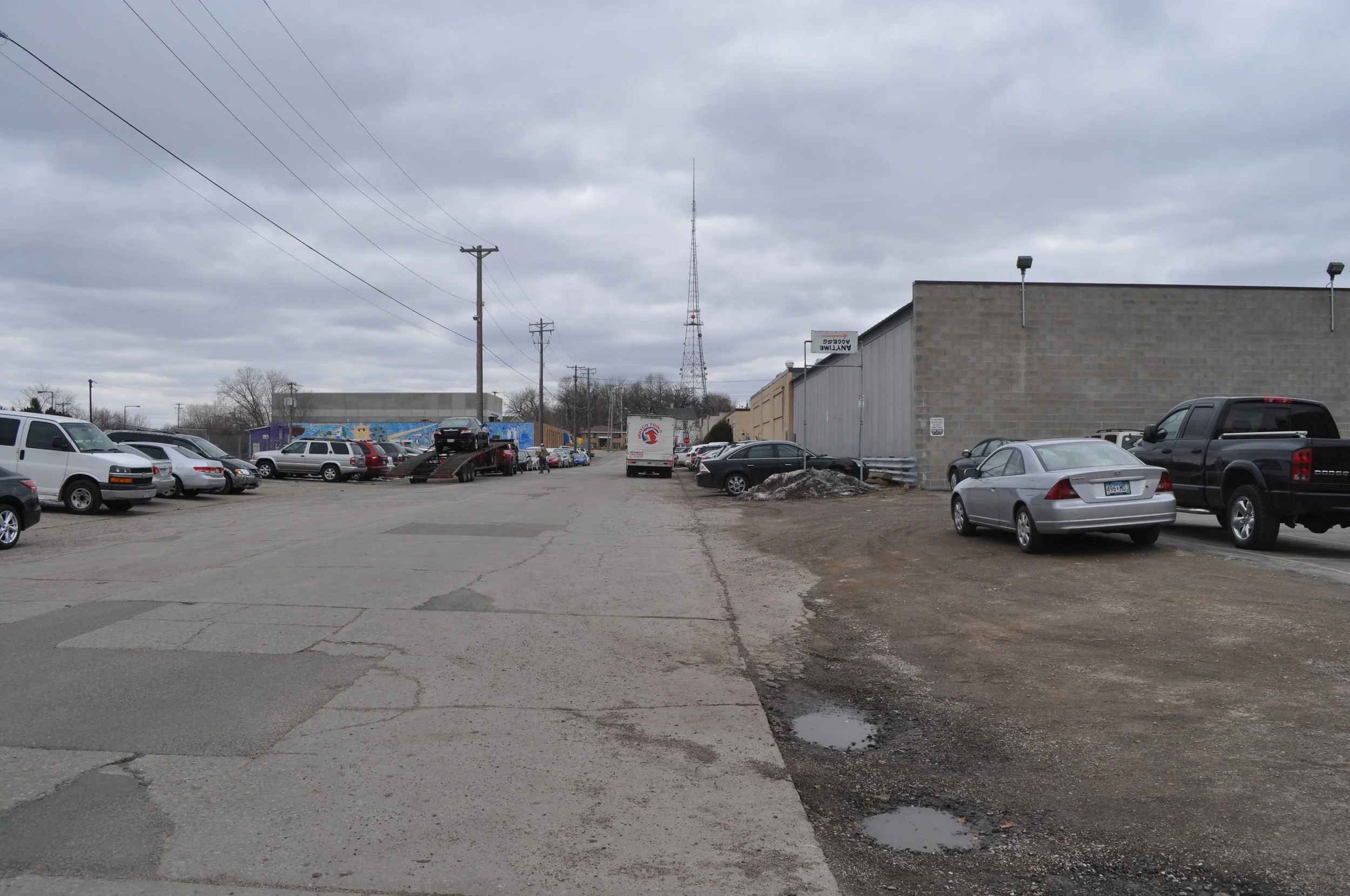
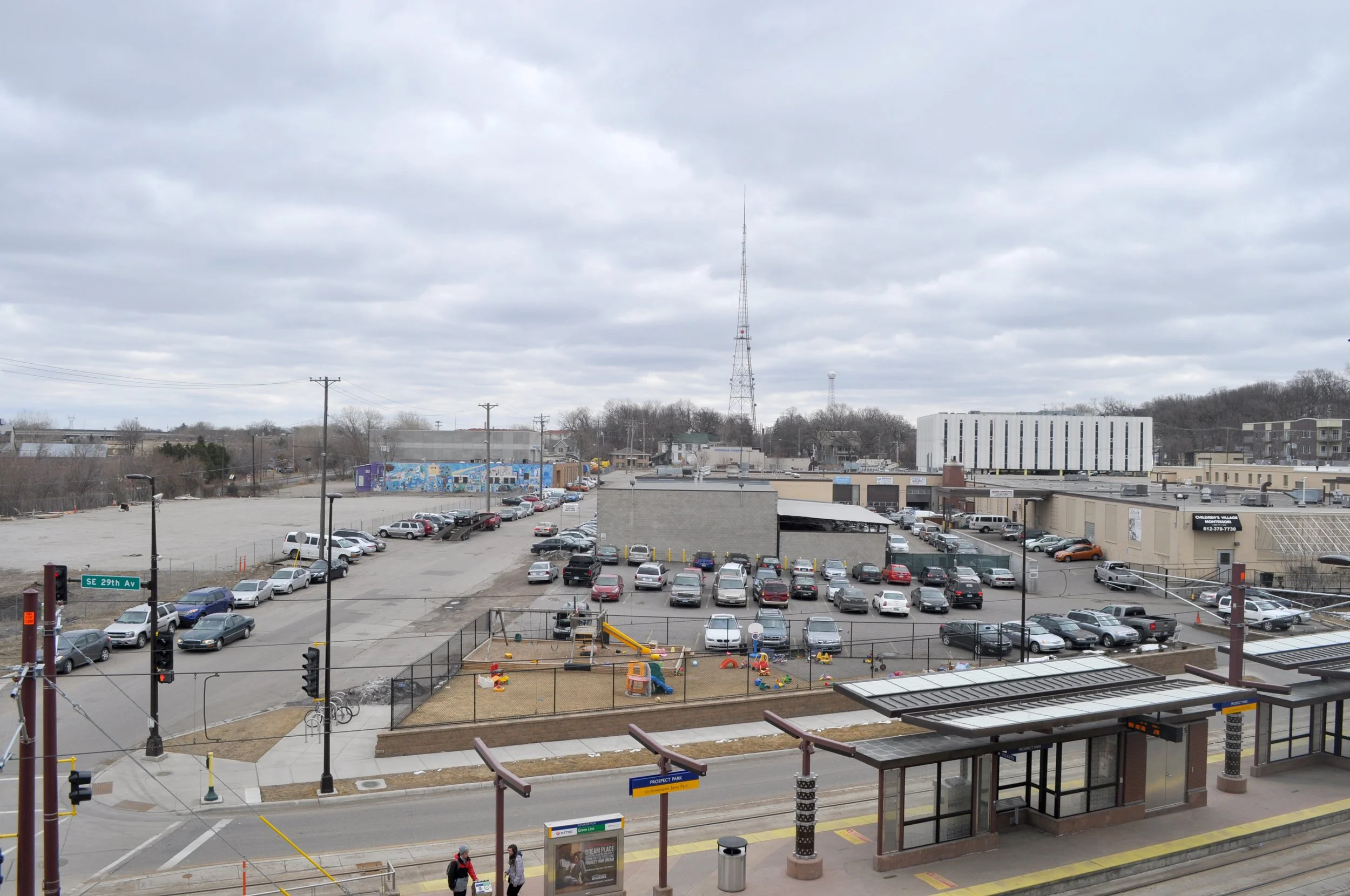
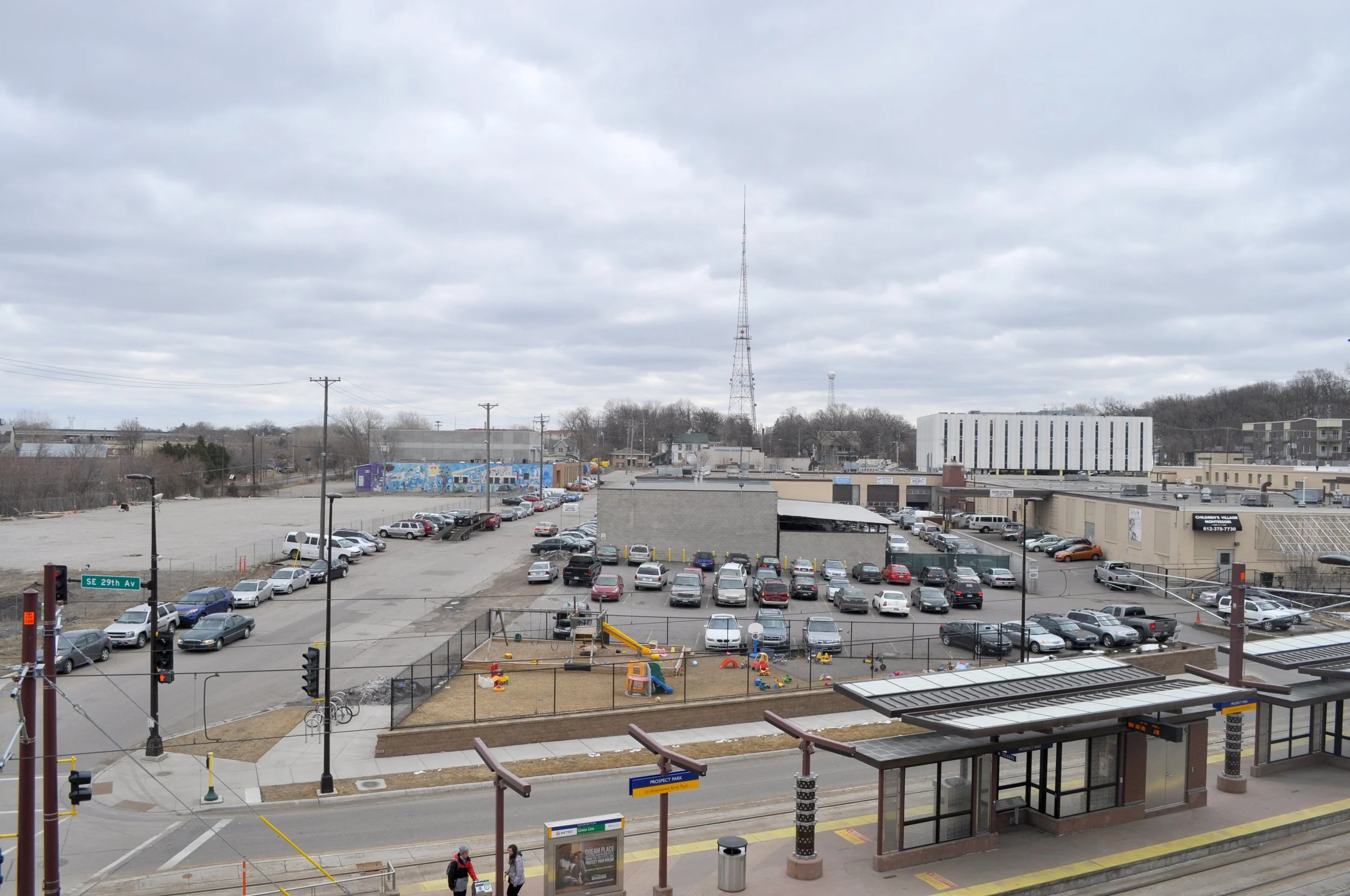
Prospect Park Station Area - 2015
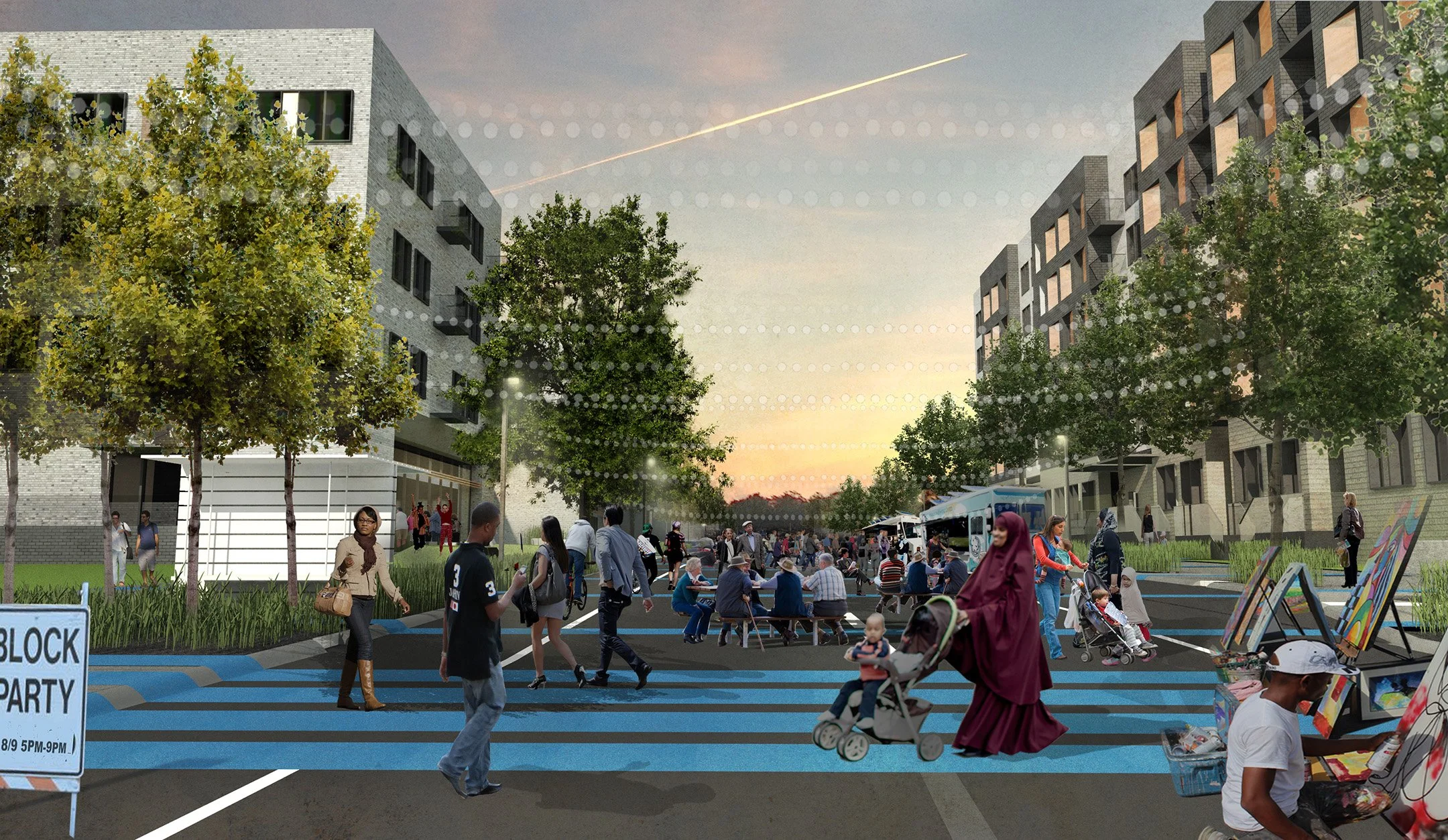
Rendering of proposed Green 4th Street Enhancements - Snow Kreilich Architects
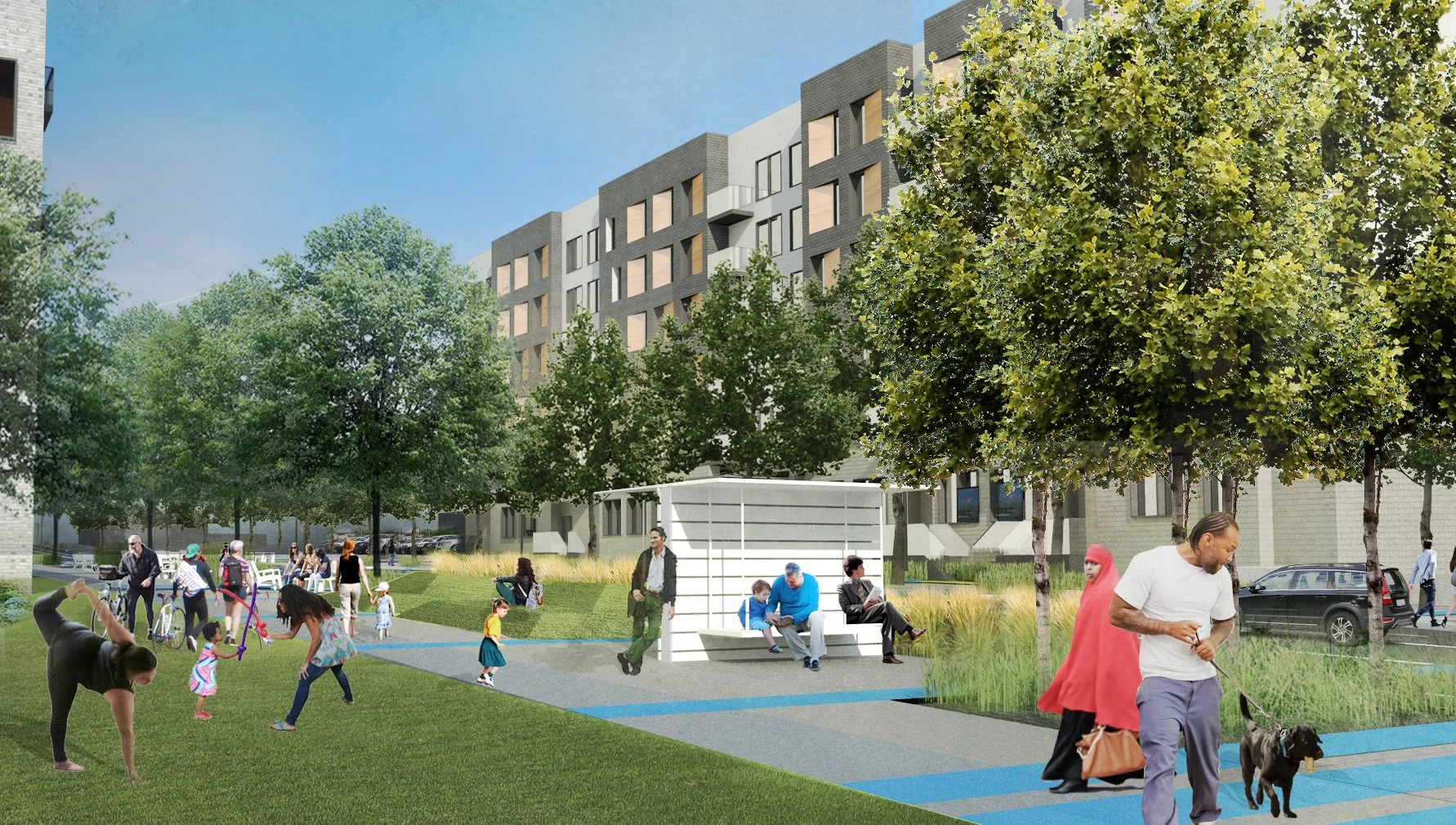
Rendering of proposed Green 4th Street Enhancements - Snow Kreilich Architects
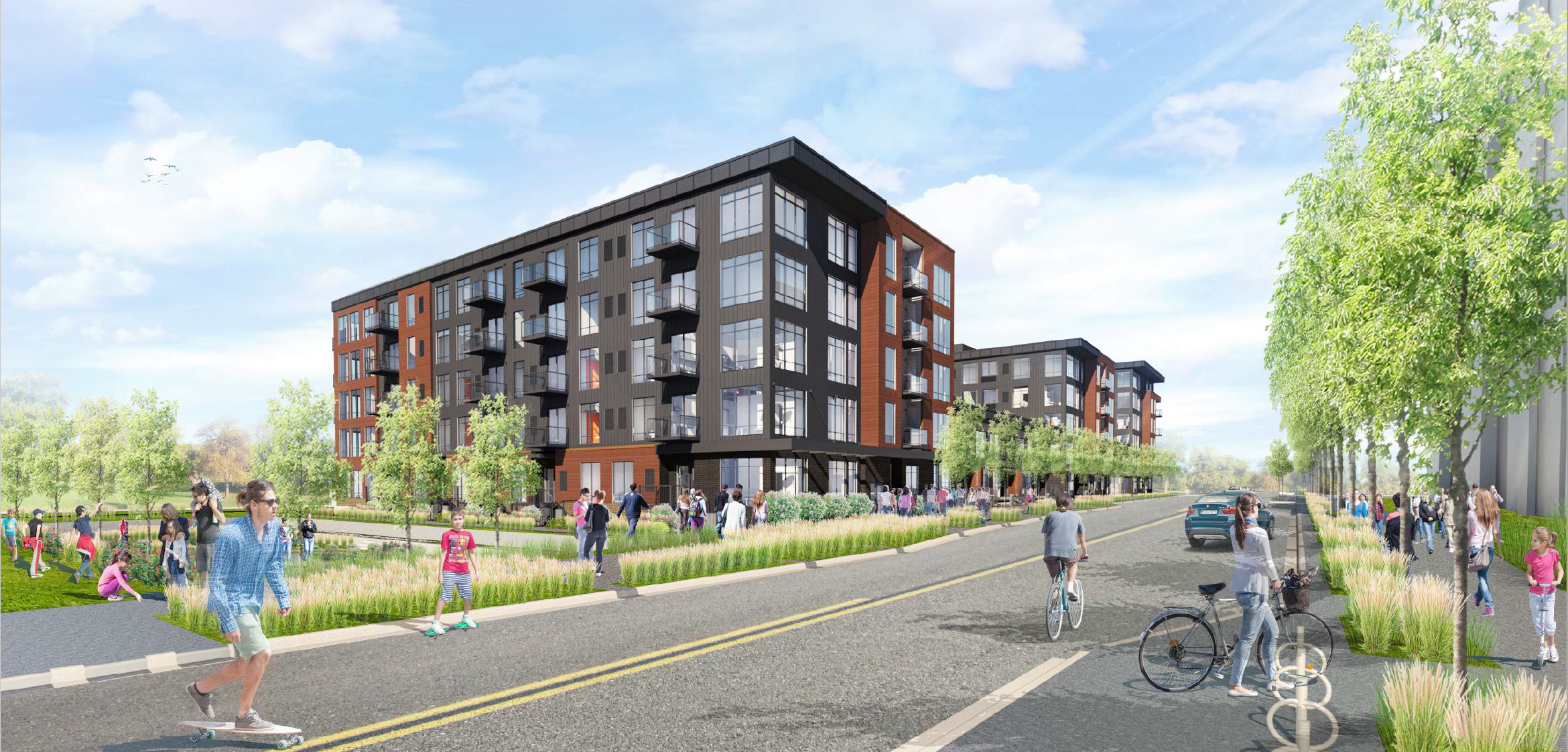
Rendering of Green 4th Street Enhancements & Green on 4th Apartments - Tushie Montgomery Architects
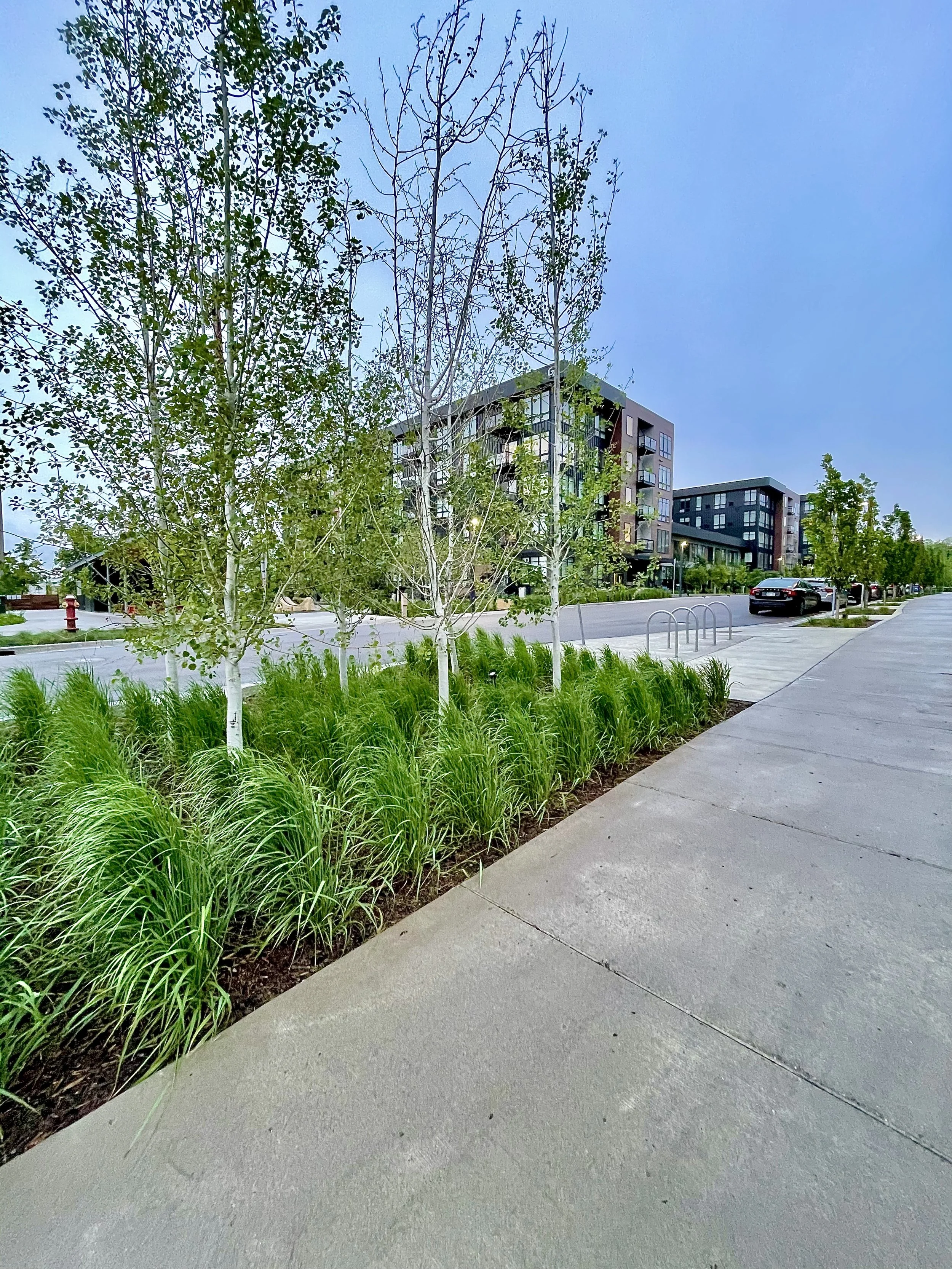
Plantings & Green on 4th Apartments
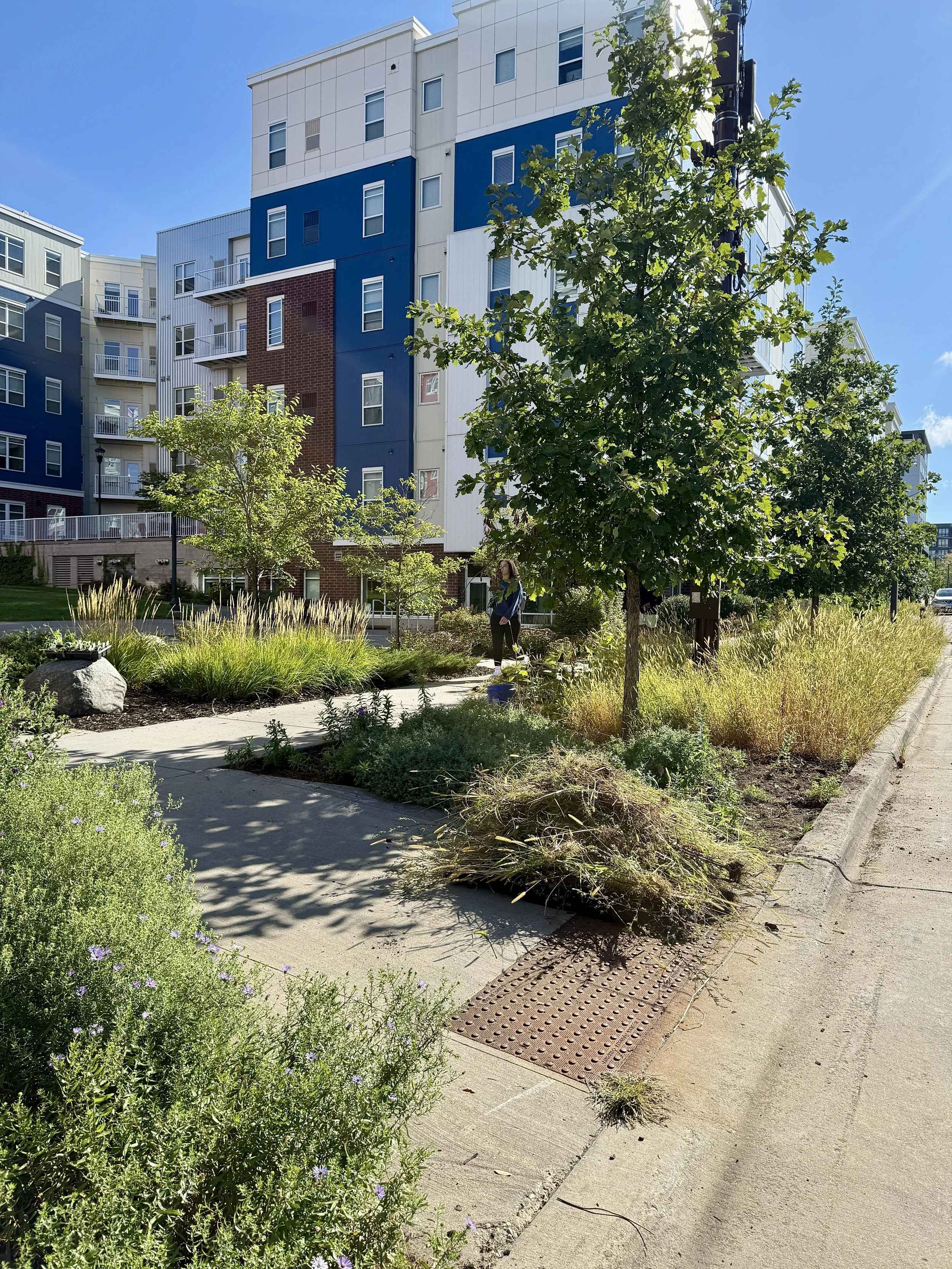
Landform berms and plantings adjacent to Stormwater System and Park
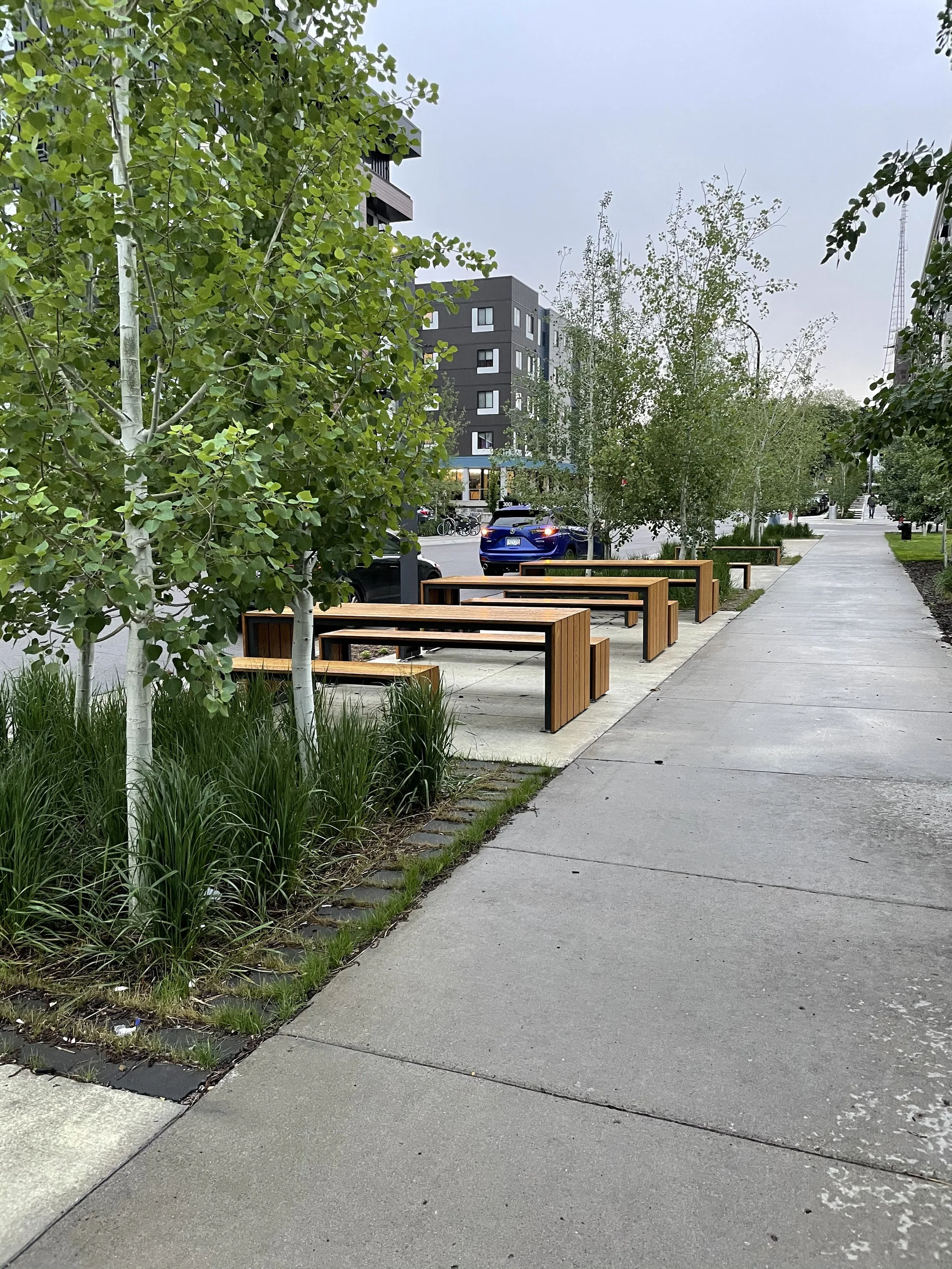
Pedestrian Enhancements including tables, benches, and lighting
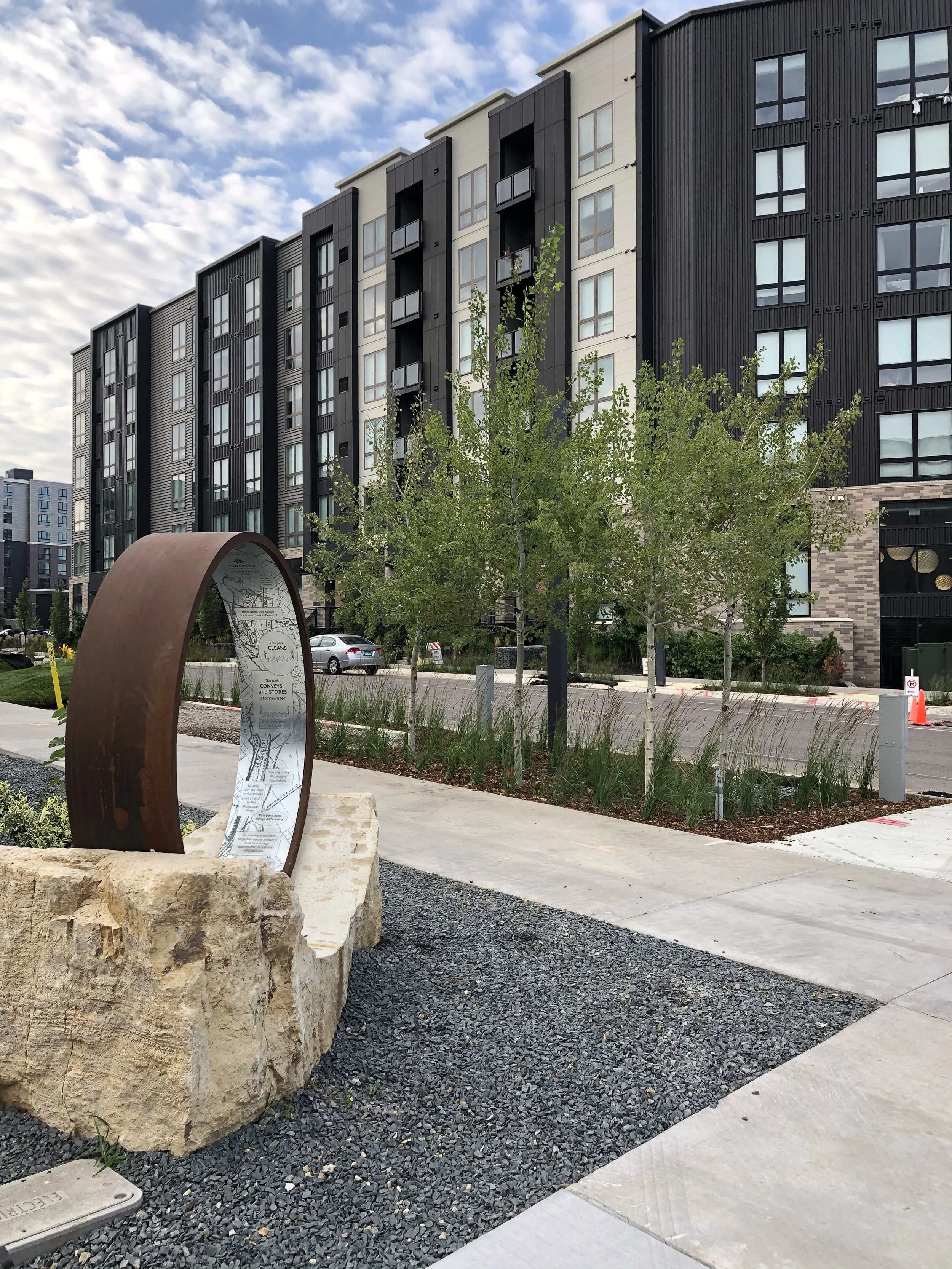
Plantings adjacent to Stormwater System and Park near The Link Apartments
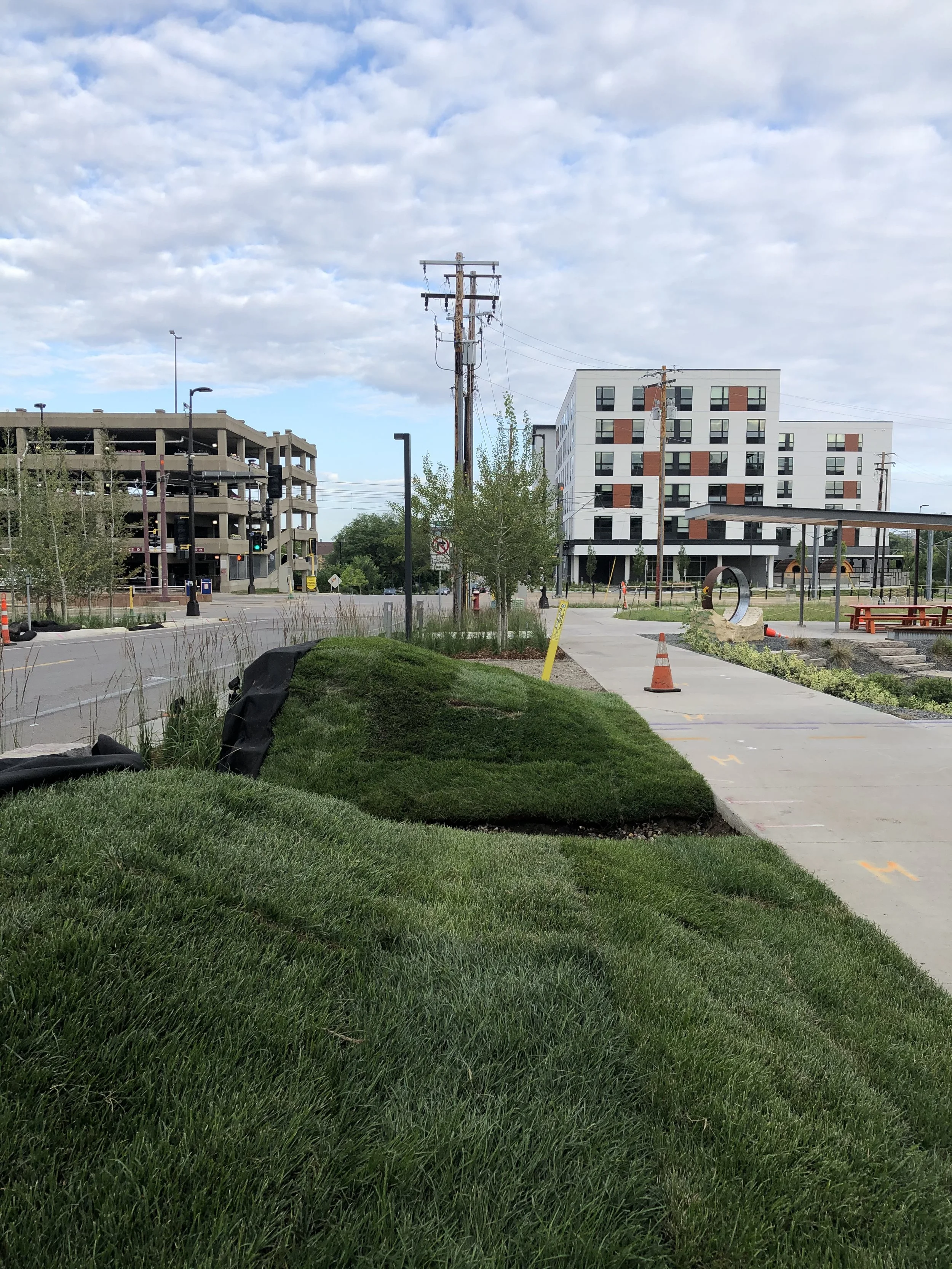
Landform berms and plantings adjacent to Stormwater System and Park
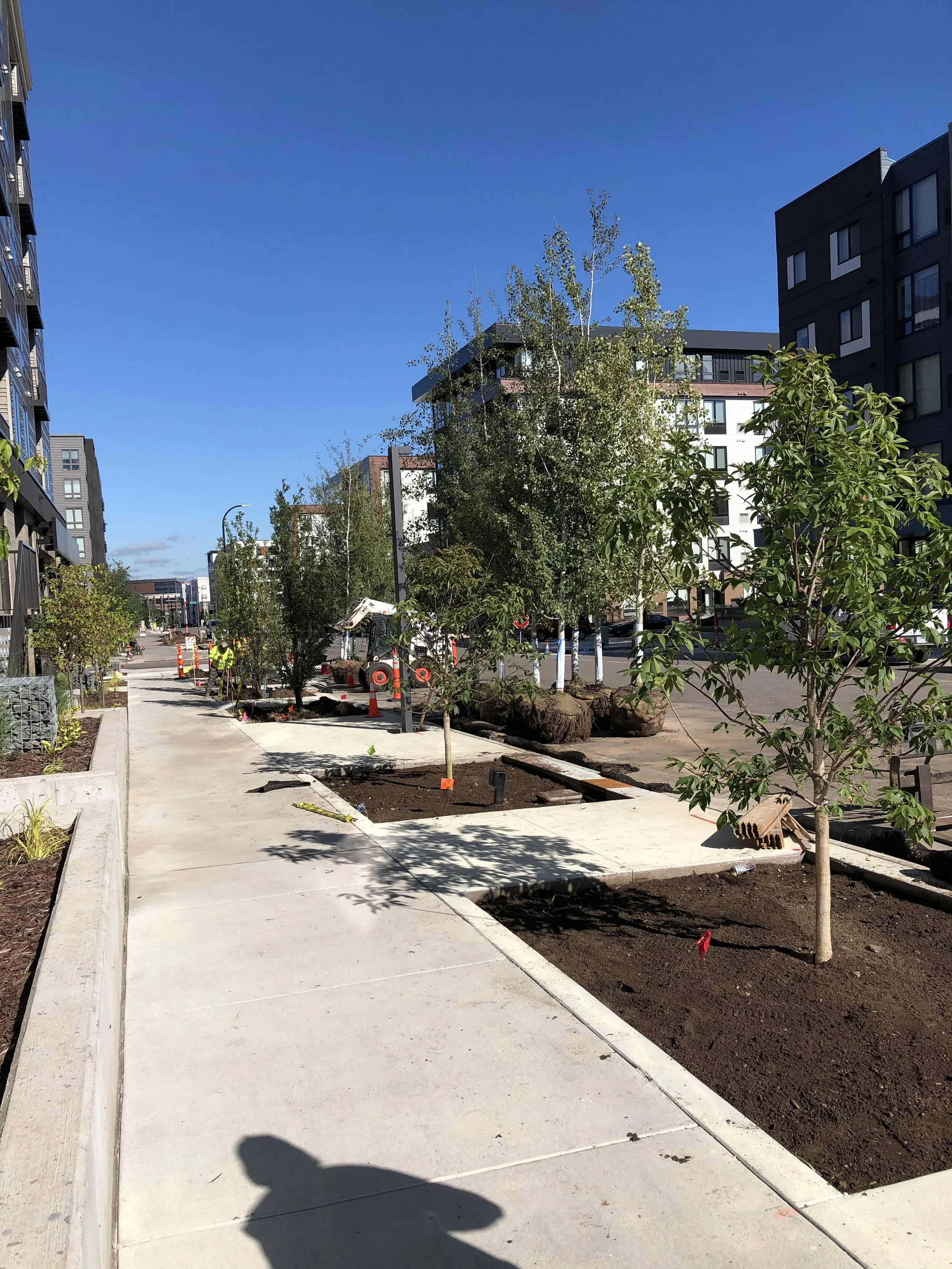
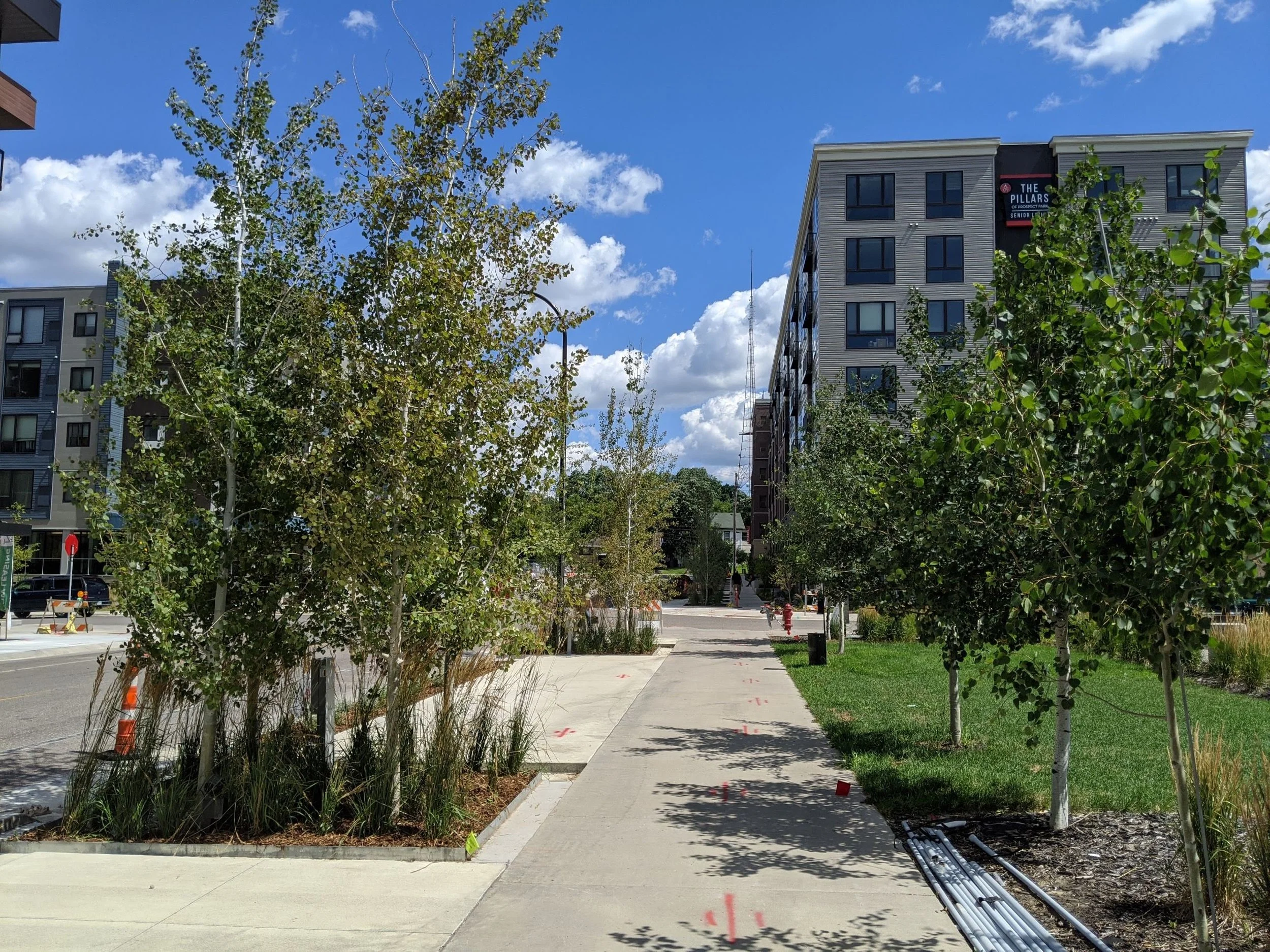
Newly planted trees
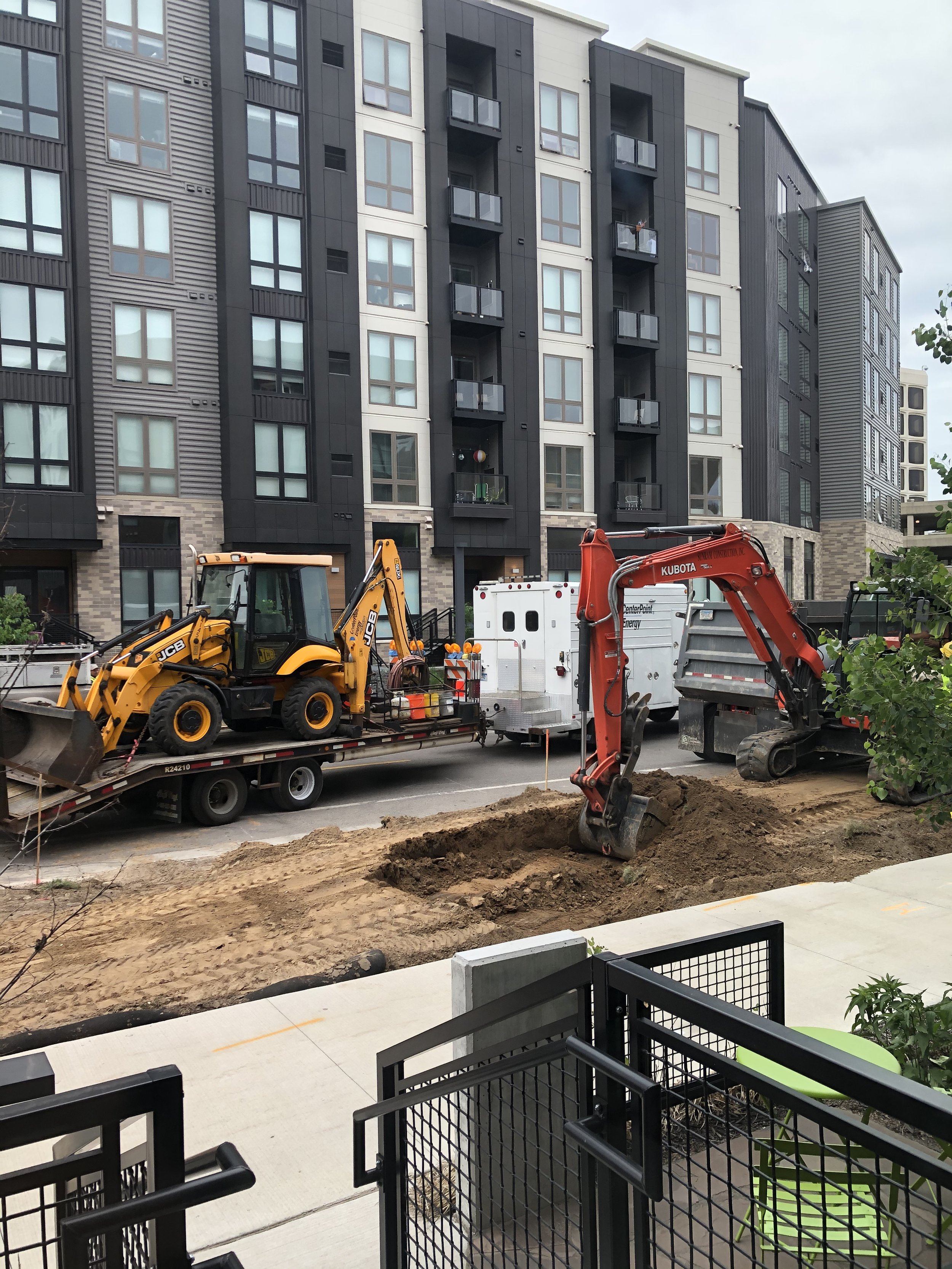
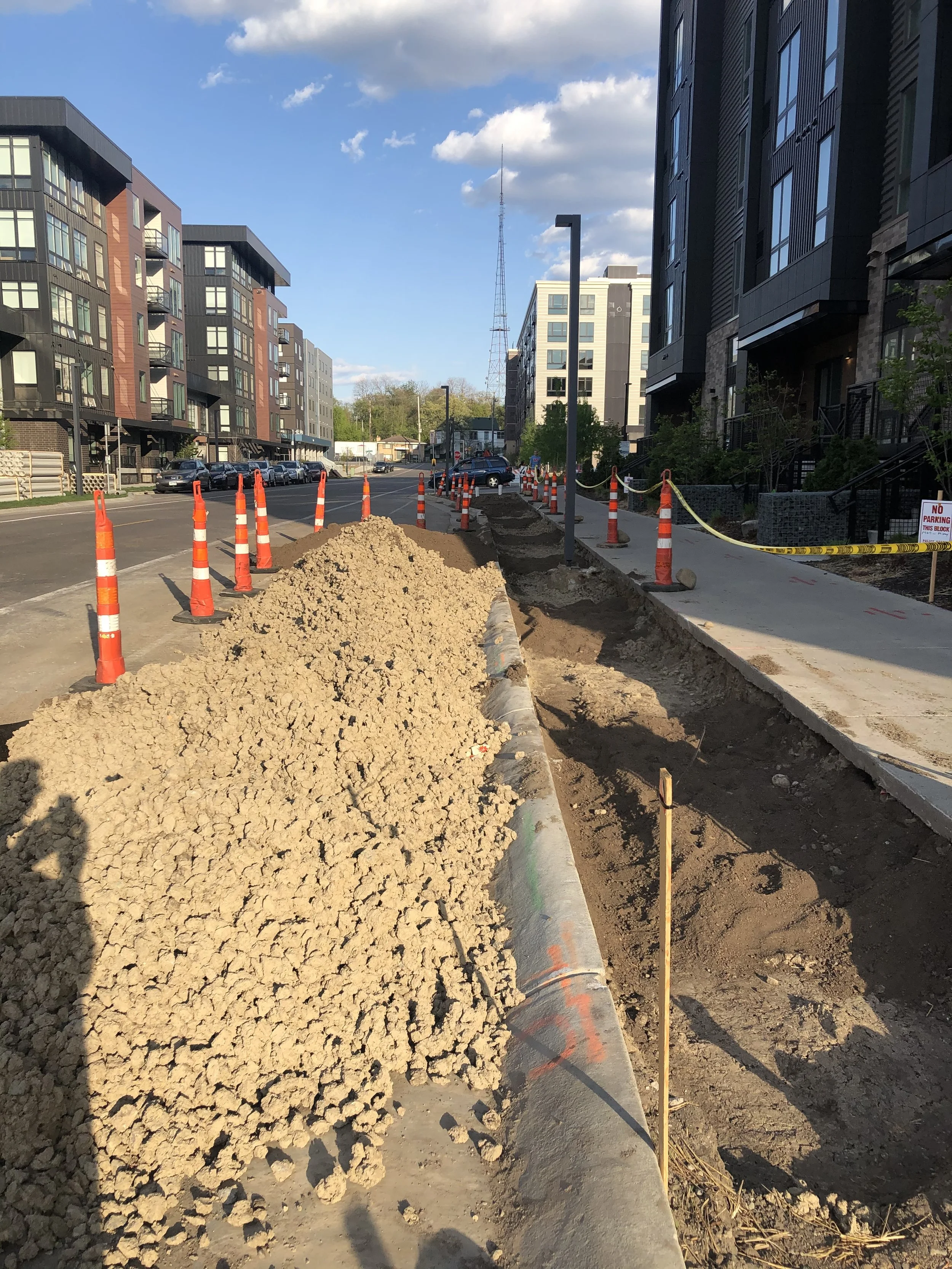
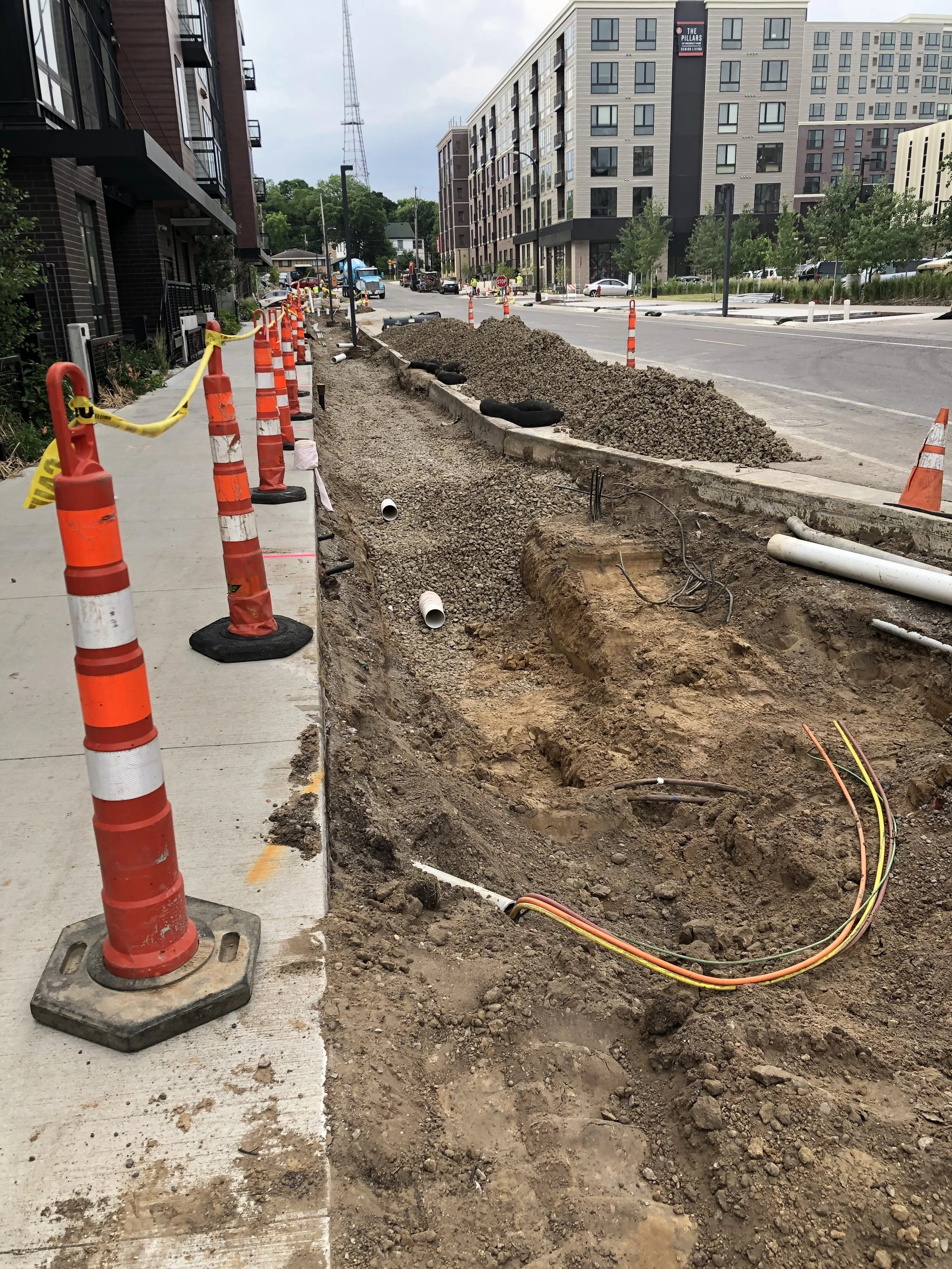
Tree trench construction
Tree trench construction with drainage and electrical
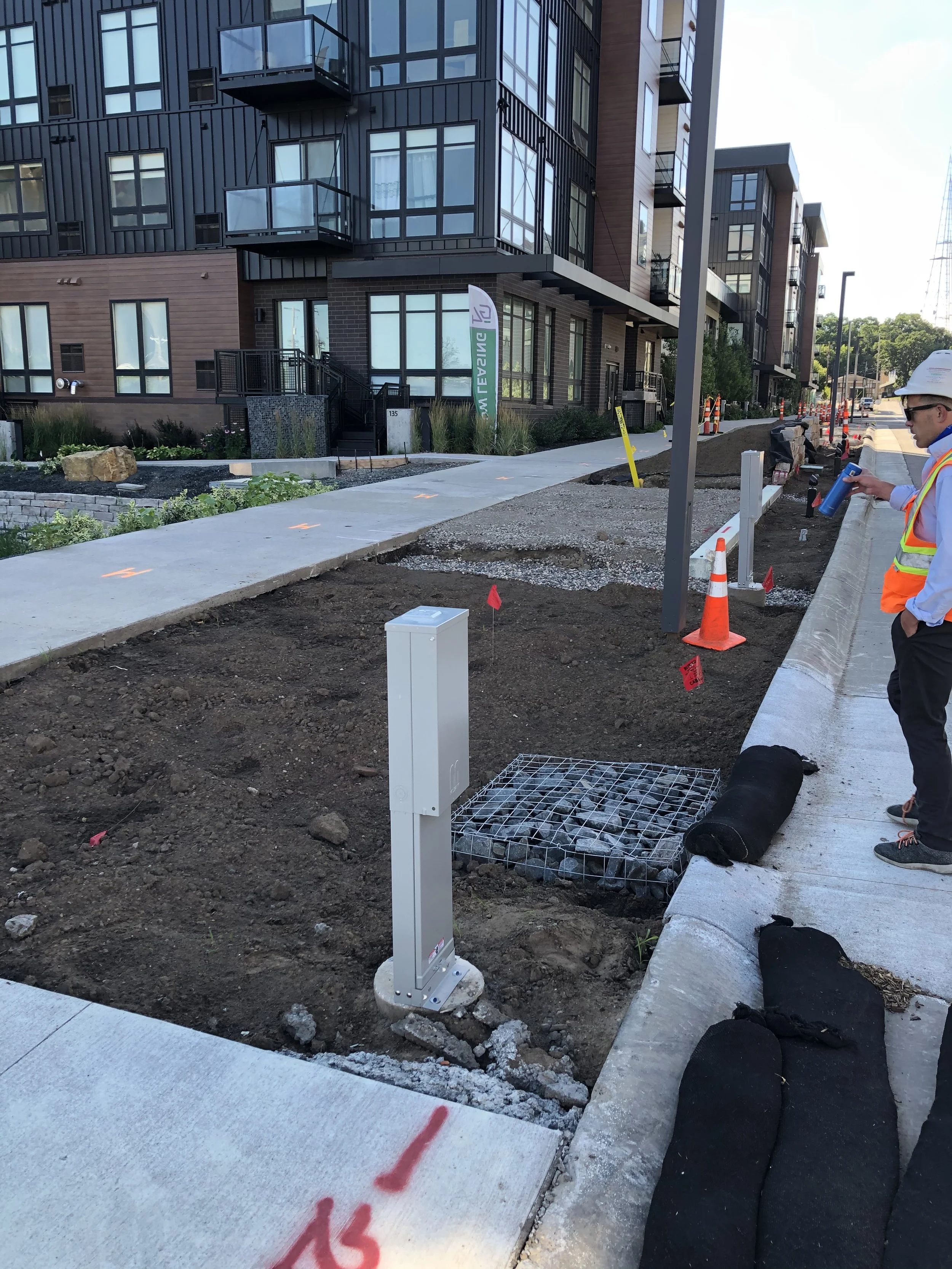
Tree trench construction with curb cut and electrical access for events
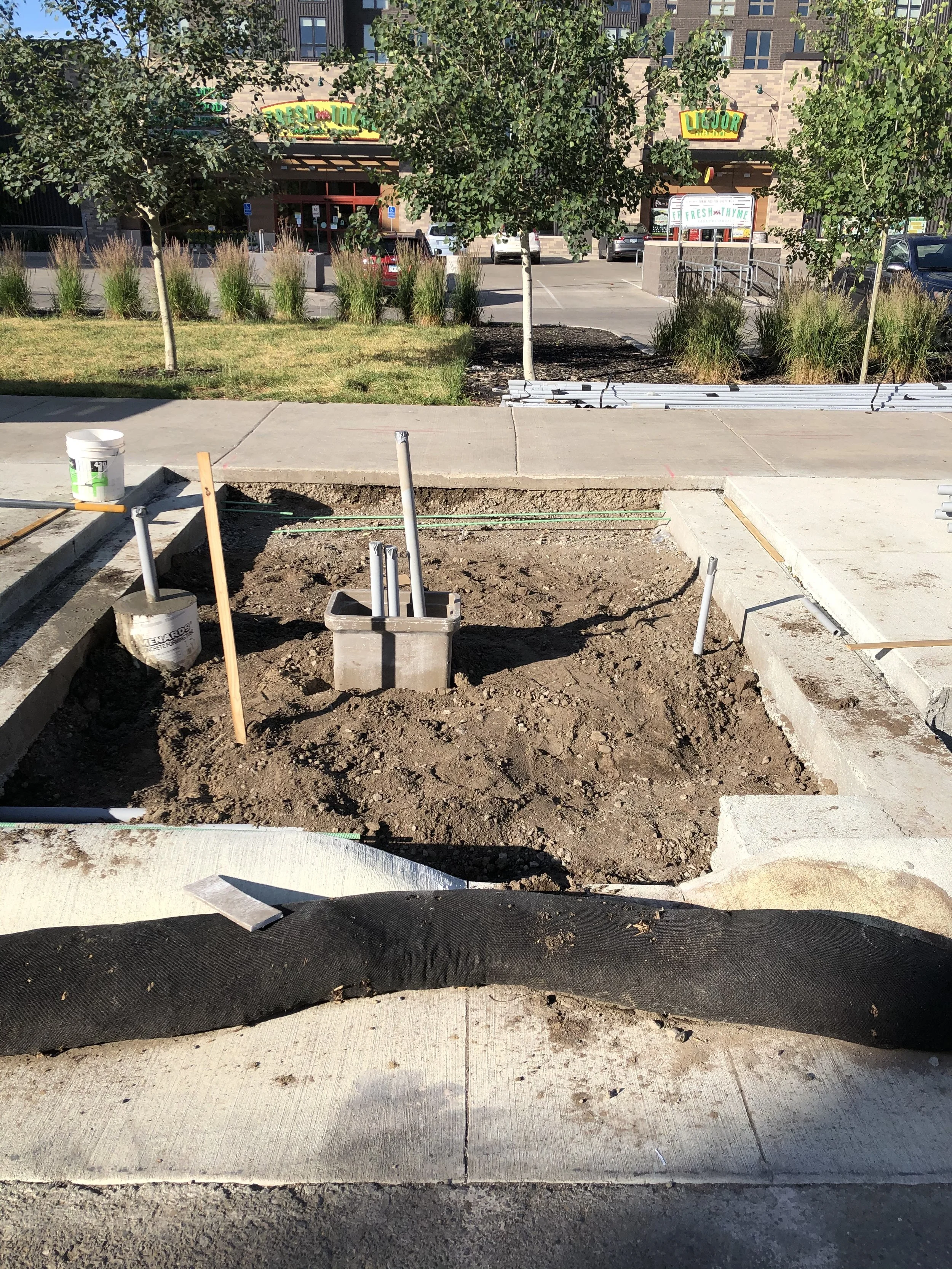
Tree trench construction with curb cut and electrical access for events
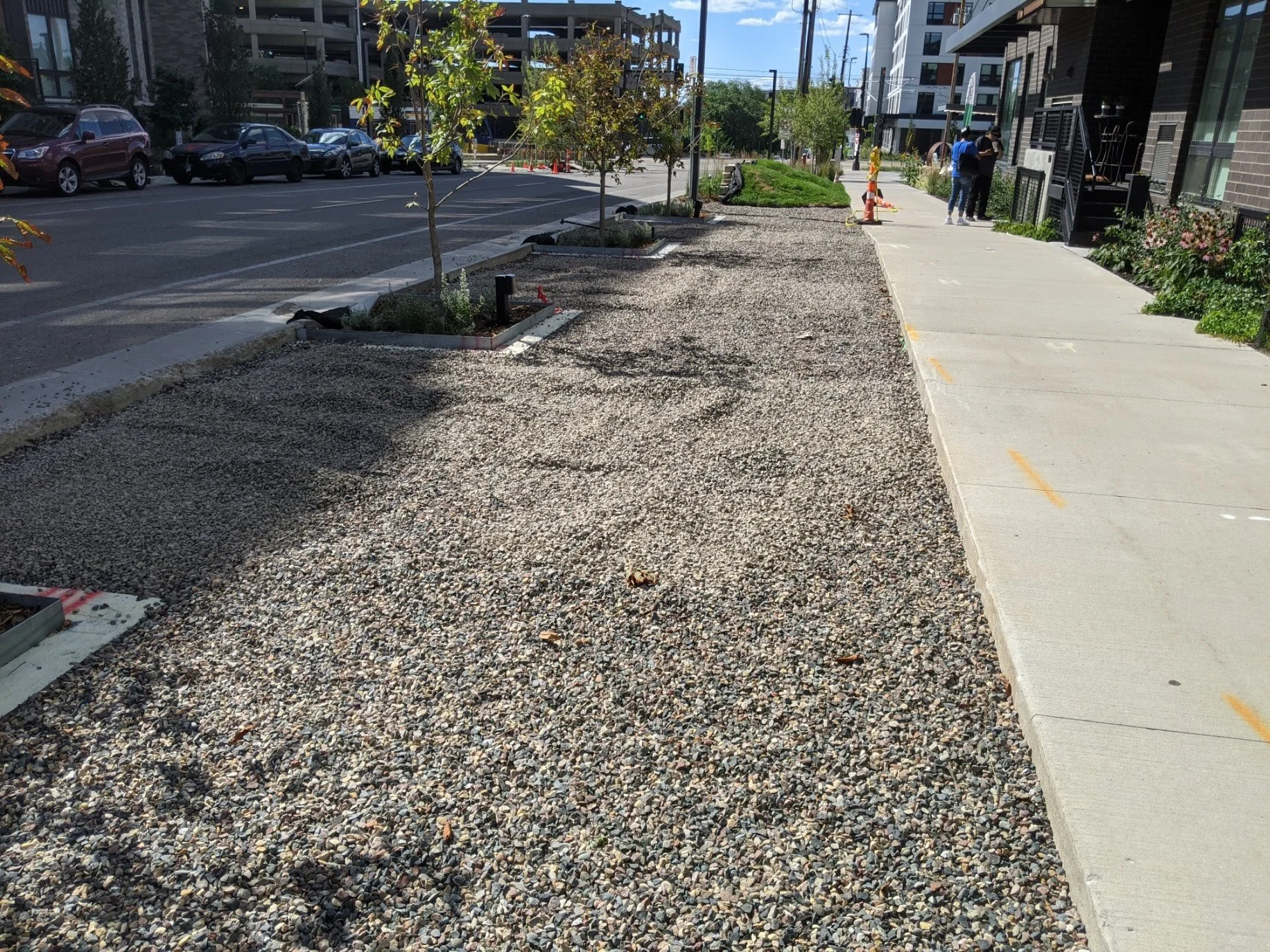
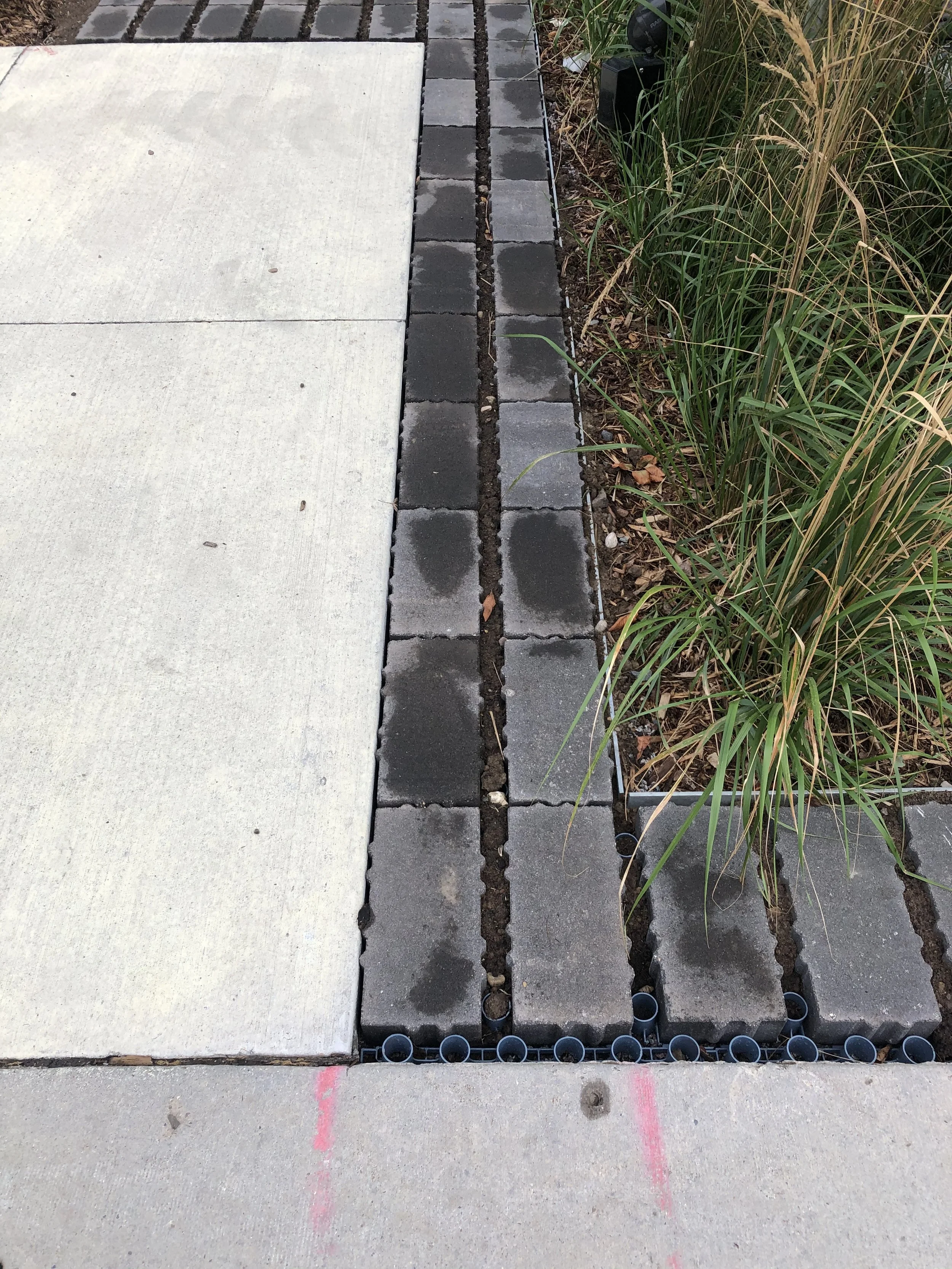
Permeable paver substrate for social area
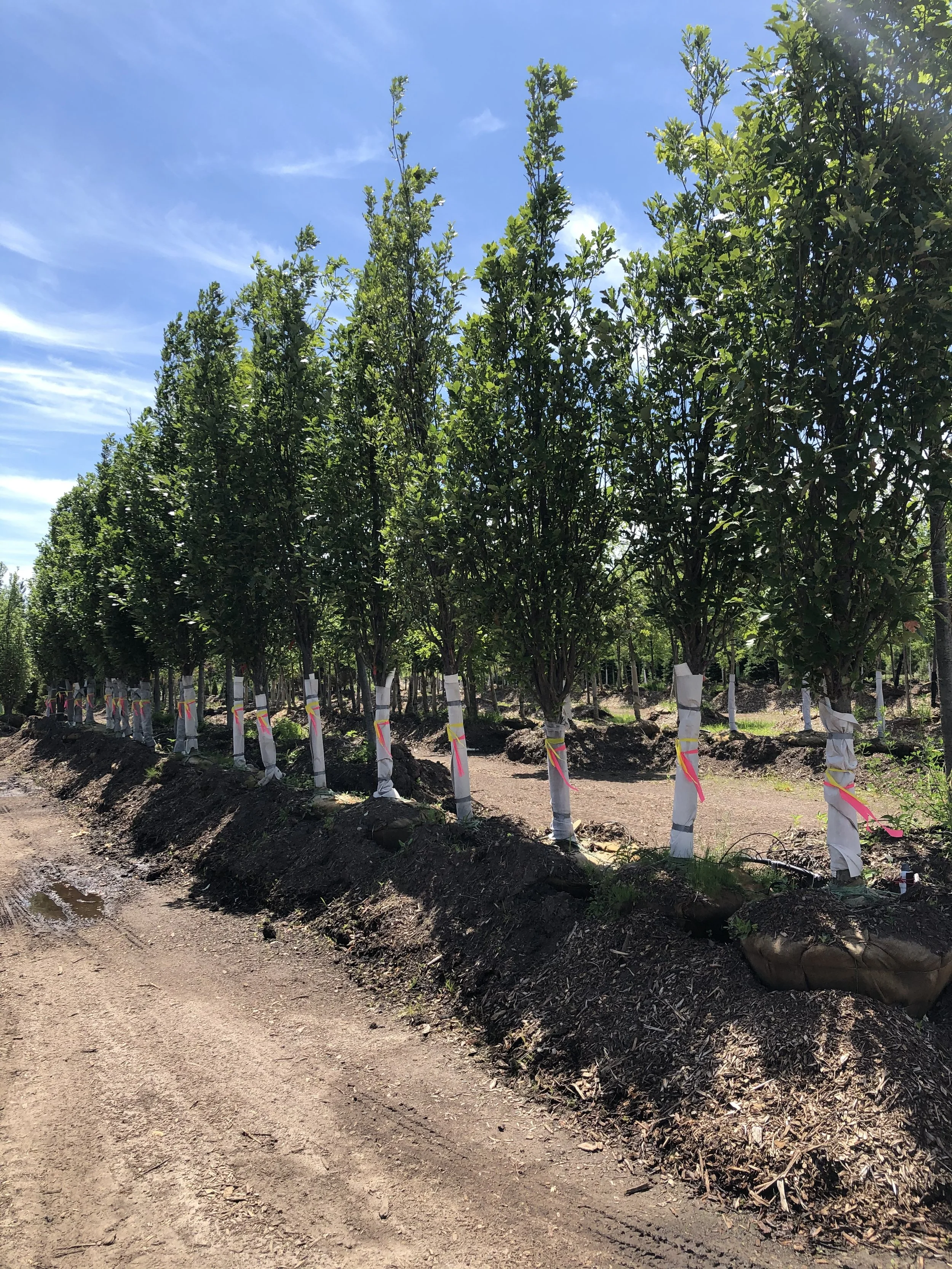
High caliper trees selected for 4th Street
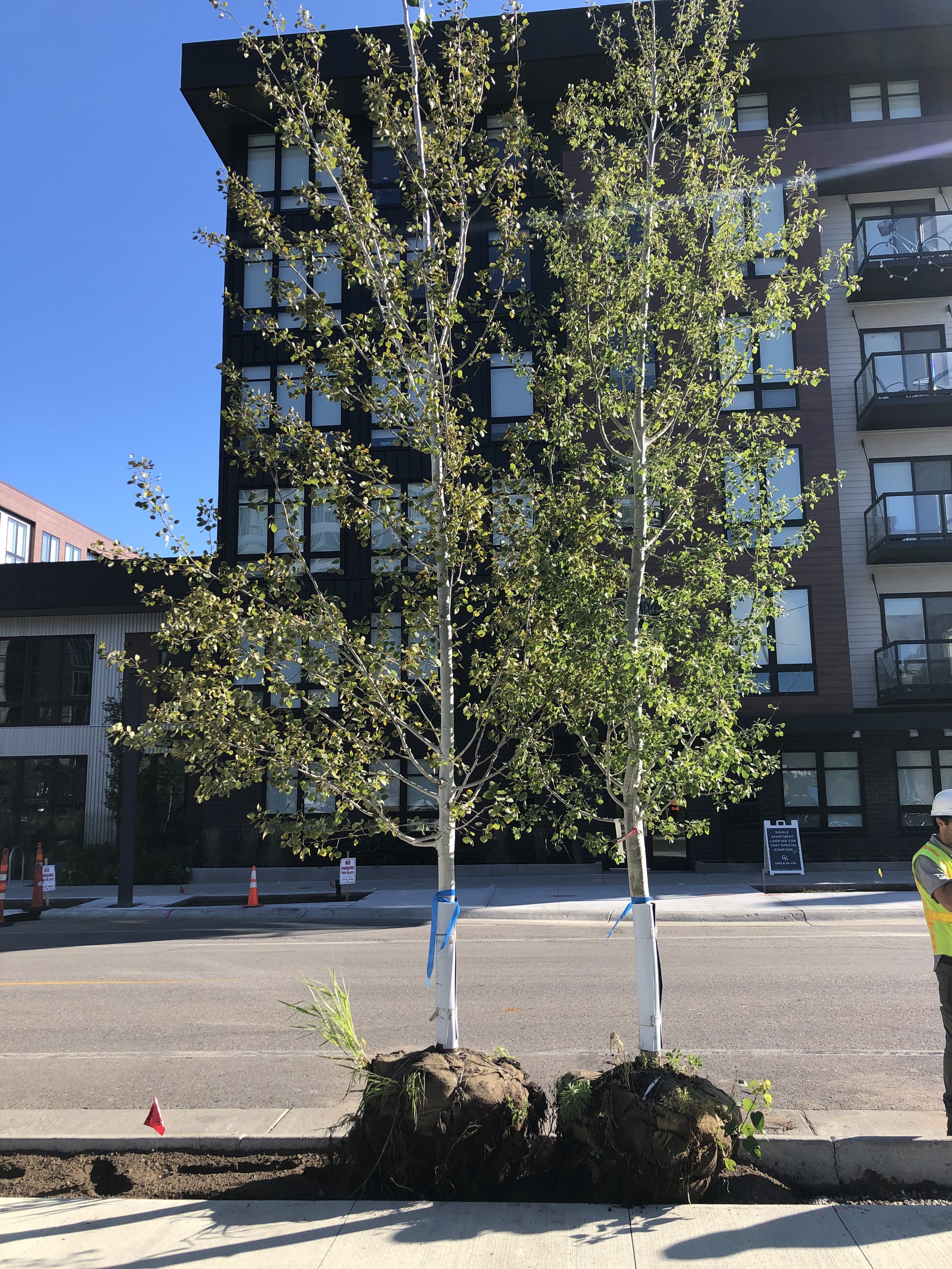
High caliper trees selected for 4th Street
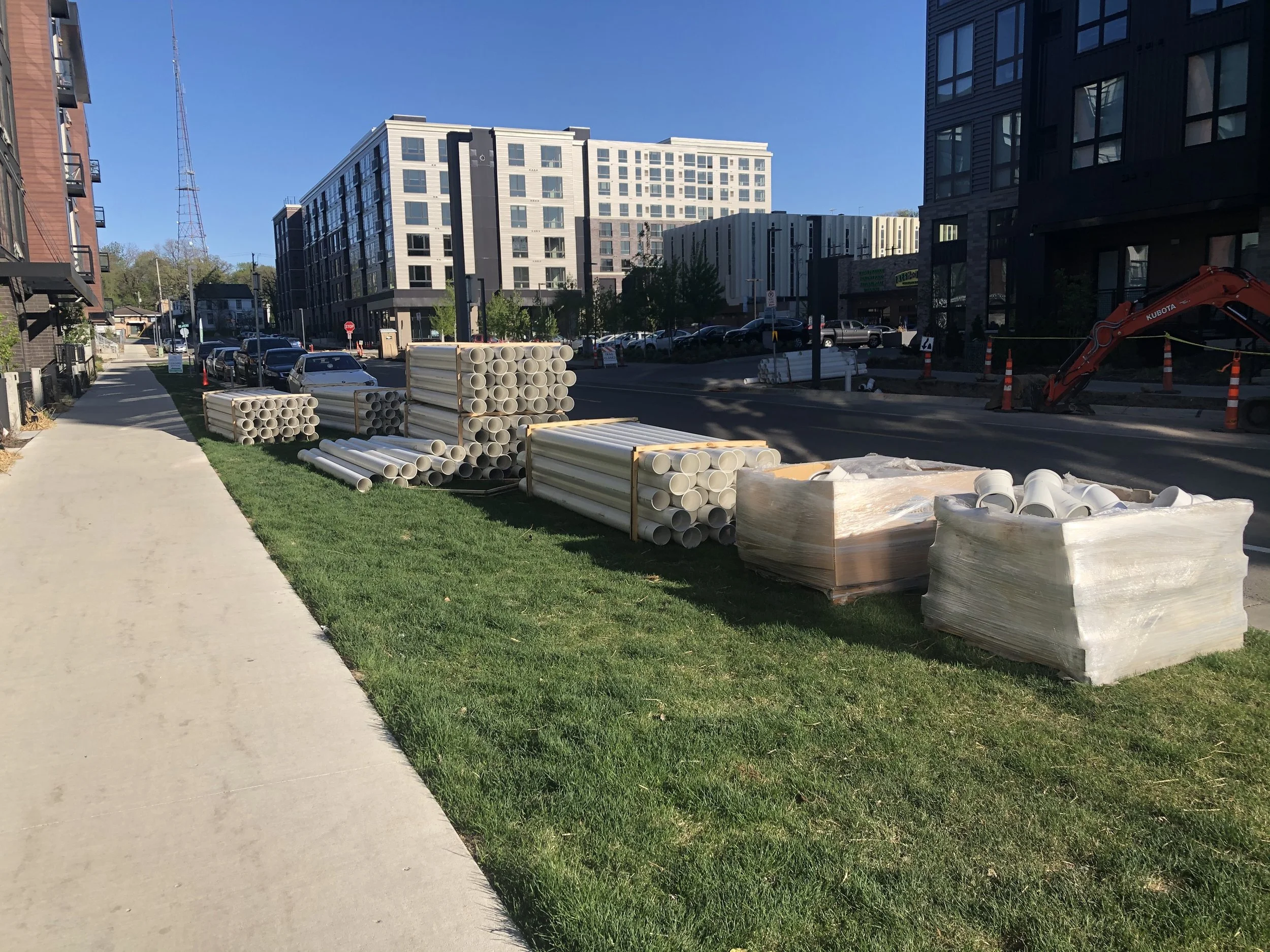
Stormwater management infrastructure construction
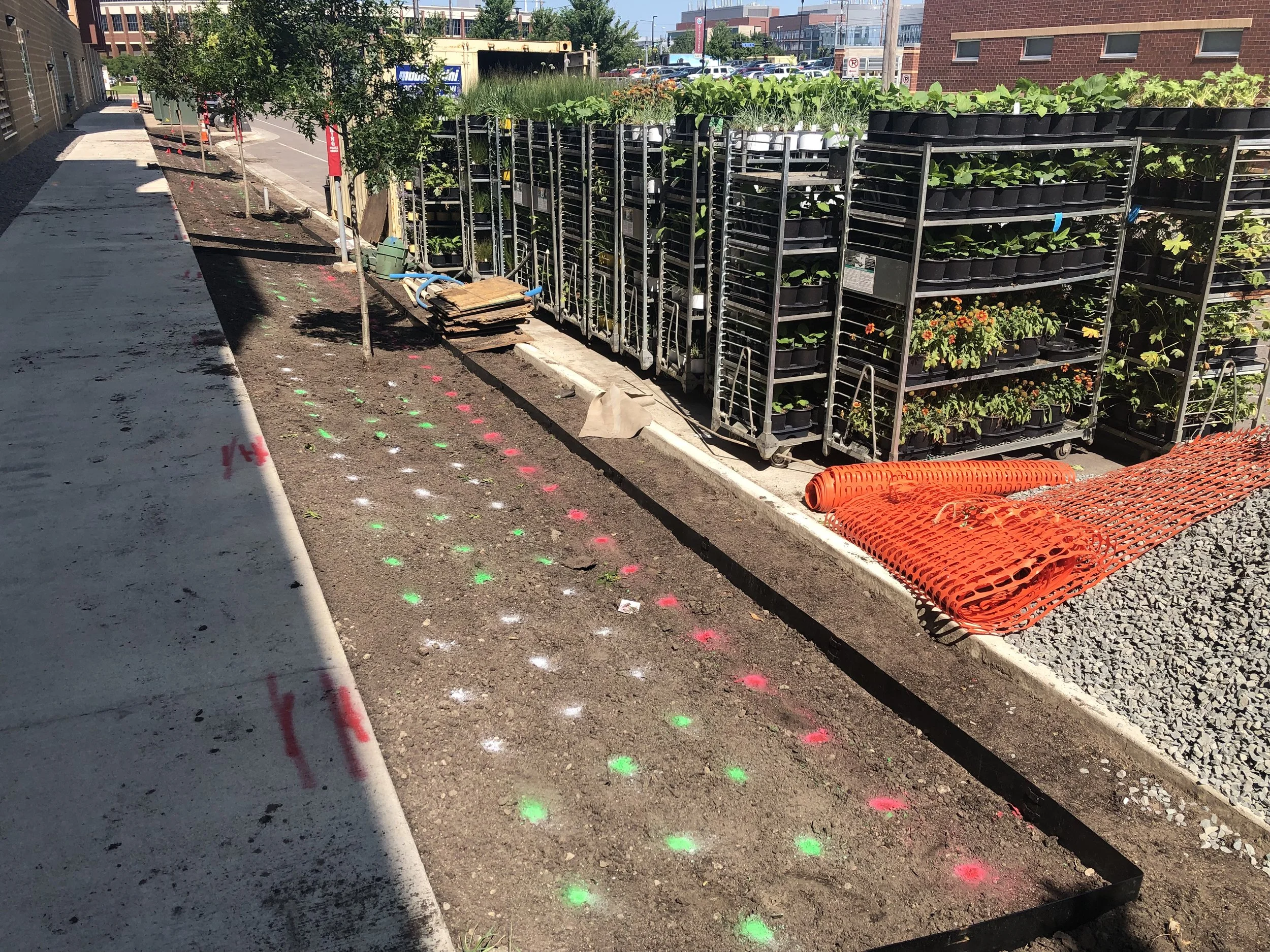
Habitat landscape planting
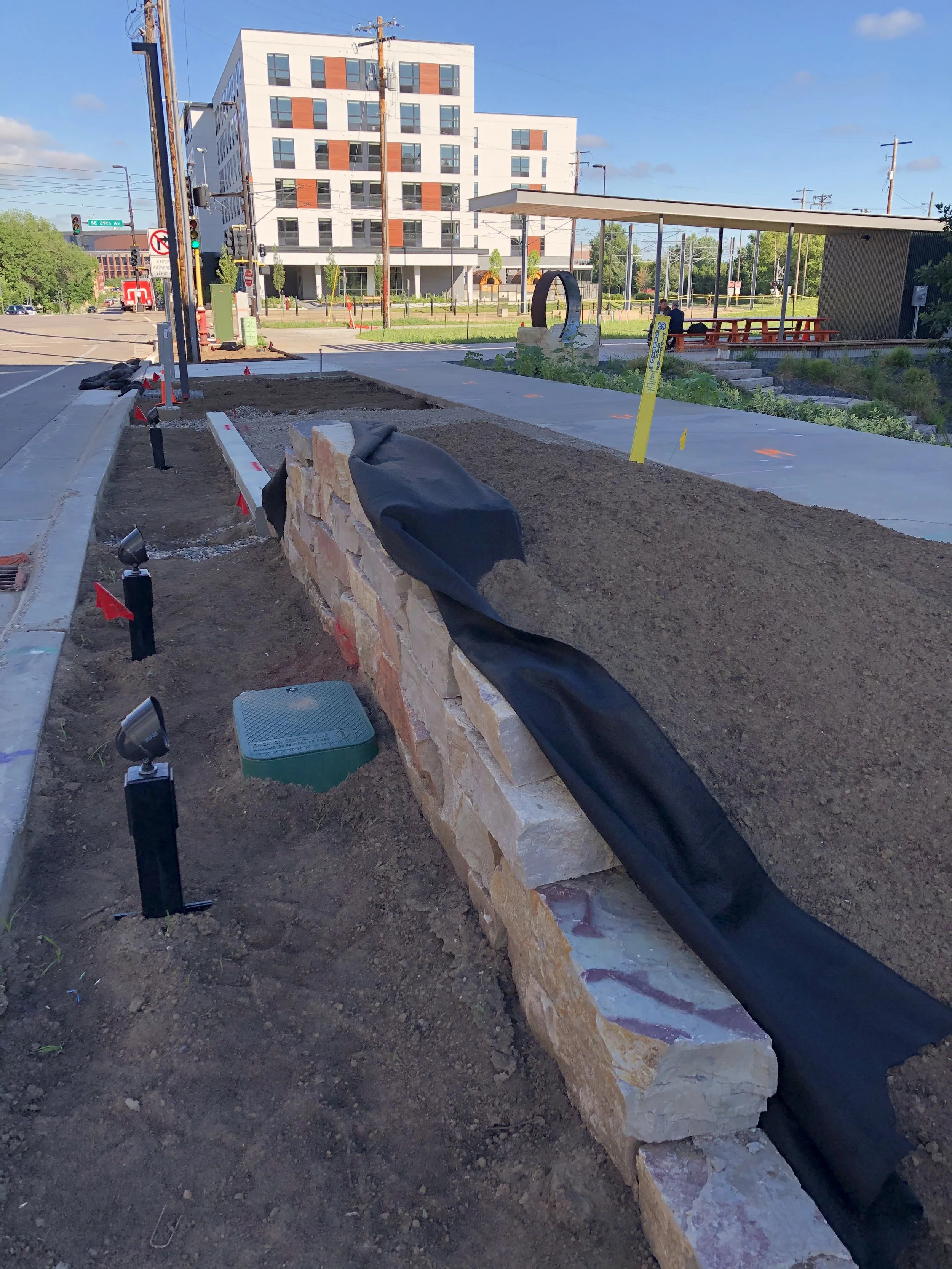
Landform berms under construction
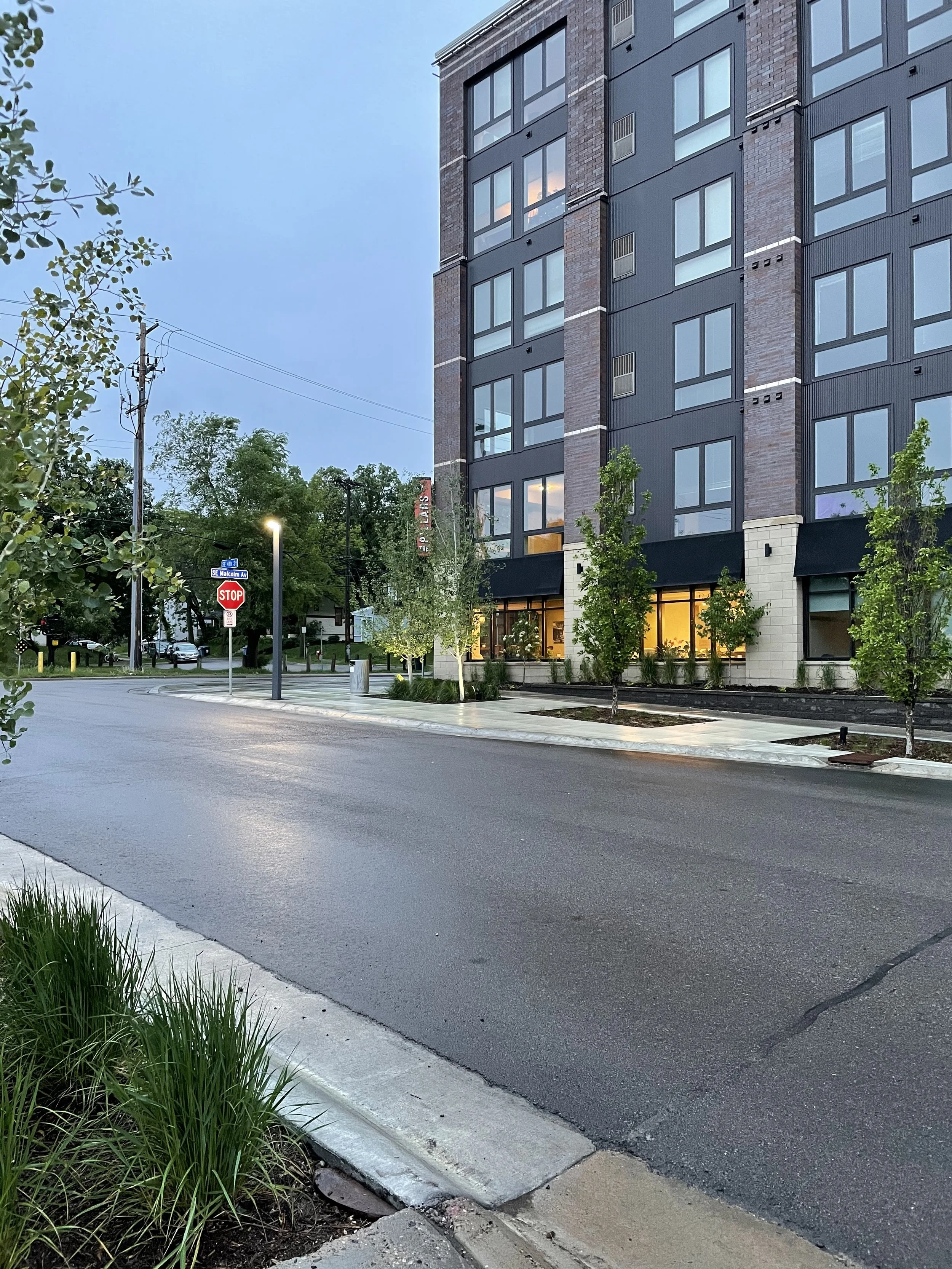
4th Street at Malcolm Ave at The Pillars of Prospect Park Apartments
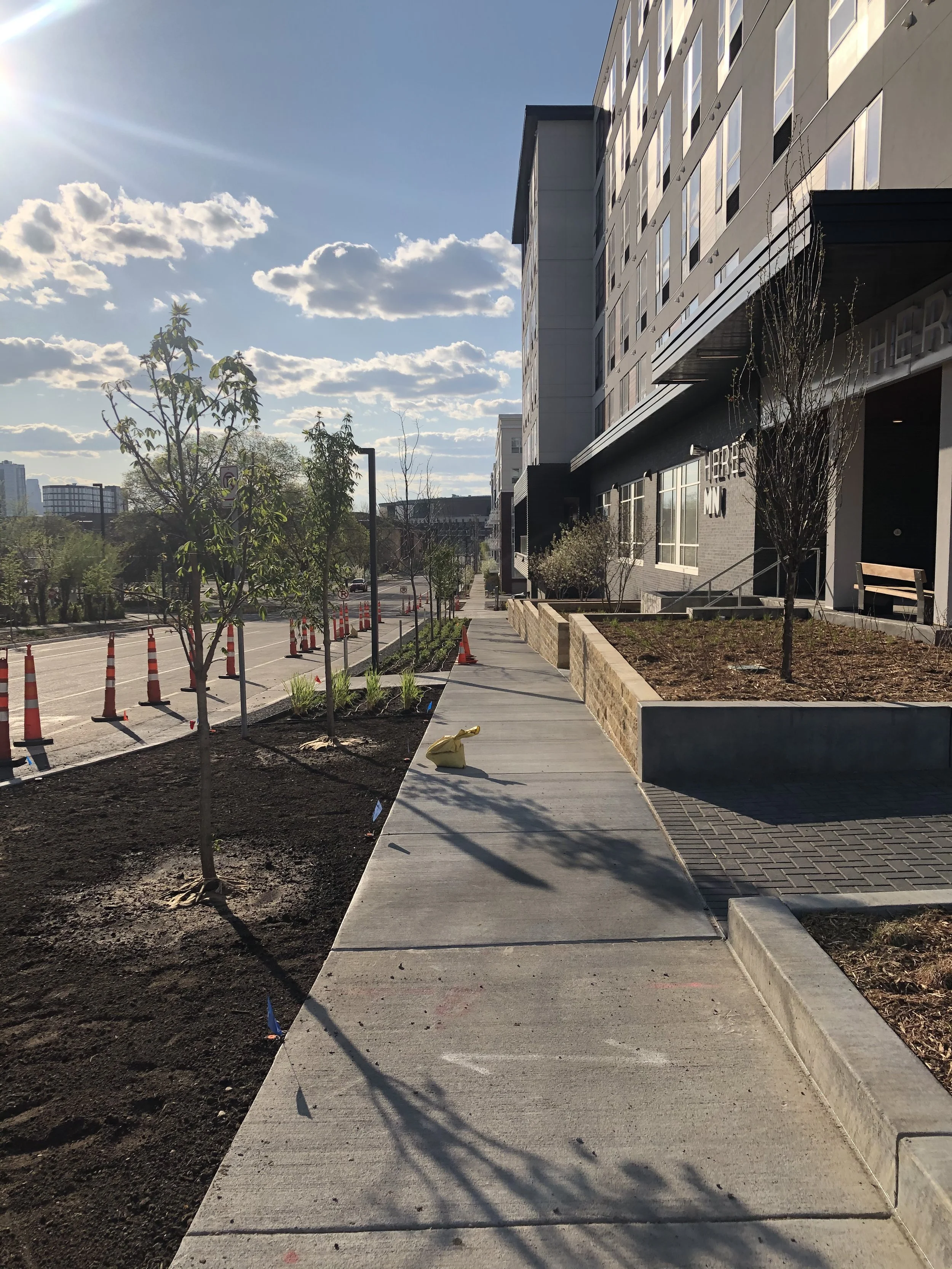
4th Street and 29th Ave at HERE Minneapolis Apartments
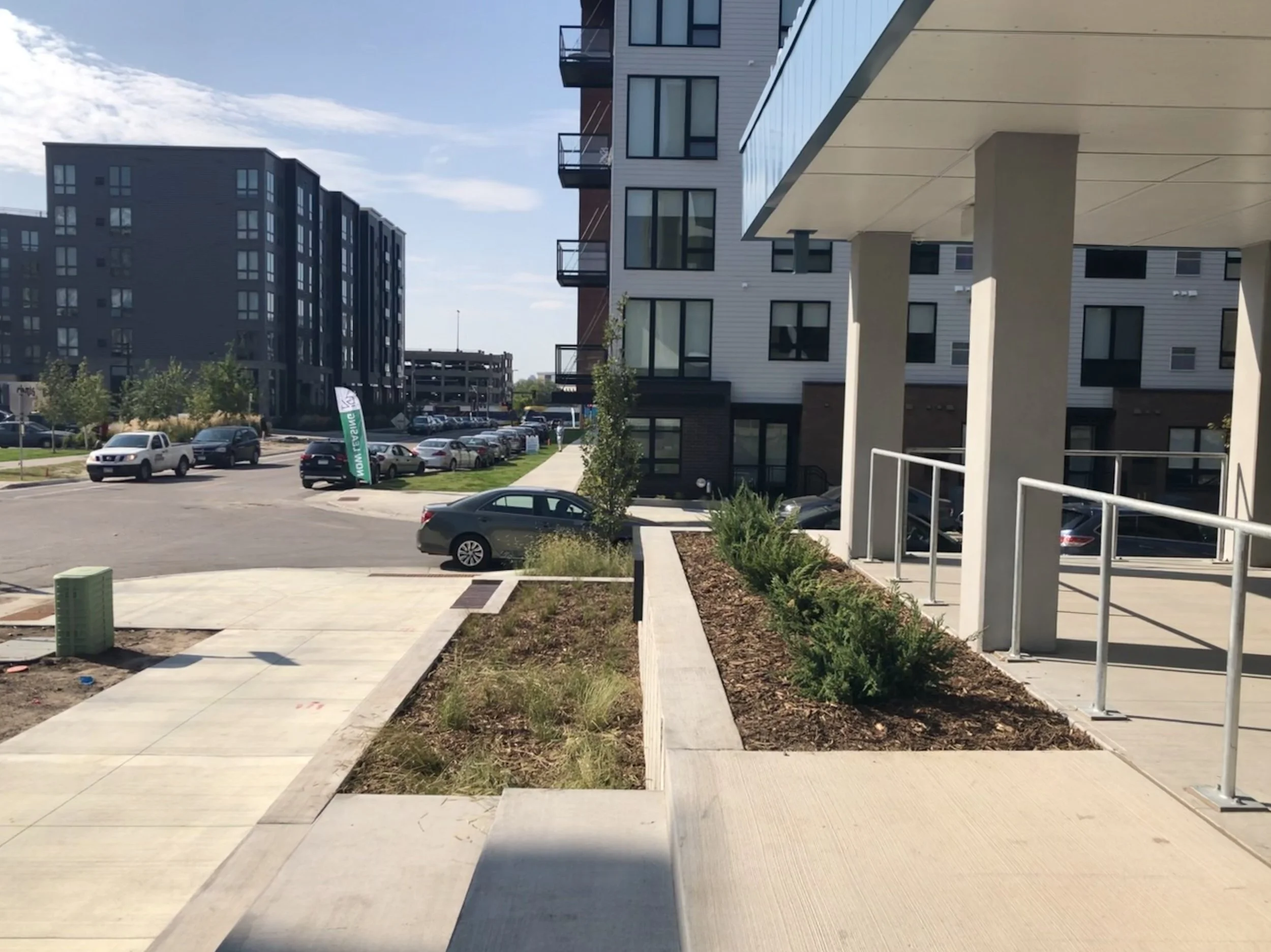
4th Street and 30th Ave at The Link Apartments
Approach
Aligning Shared Investments
One of the greatest challenges was not designing the street itself, but aligning multiple funding sources, project goals, and implementation requirements into a single coordinated investment.
Different stakeholders saw different priorities:
The City sought roadway reconstruction and safety improvements
Environmental partners prioritized stormwater performance and habitat
Developers wanted attractive and marketable frontage
Residents wanted gathering spaces and amenities
Property owners needed a realistic long-term maintenance strategy
The project required continuously identifying where these priorities overlapped and structuring investments to create mutual benefit.
Key contributions
I supported Green 4th from its early planning and funding stages beginning in 2015 and ultimately served as the lead project manager through implementation and long-term stewardship development. My work included:
Coordinating design consultants, public agencies, developers, and utility partners
Managing grant funding and implementation budgets
Supporting additional public and philanthropic funding strategies
Aligning project priorities across multiple stakeholders
Overseeing the implementation of public realm improvements
Developing the long-term maintenance district framework
Supporting stewardship agreements among participating landowners
Coordinating ongoing district operations and maintenance
The project required navigating the intersection of planning, engineering, ecology, development, governance, and operations simultaneously.
-
Ecology & Habitat Landscapes
-
Stormwater Runoff Management
-
Pedestrian Experience
-
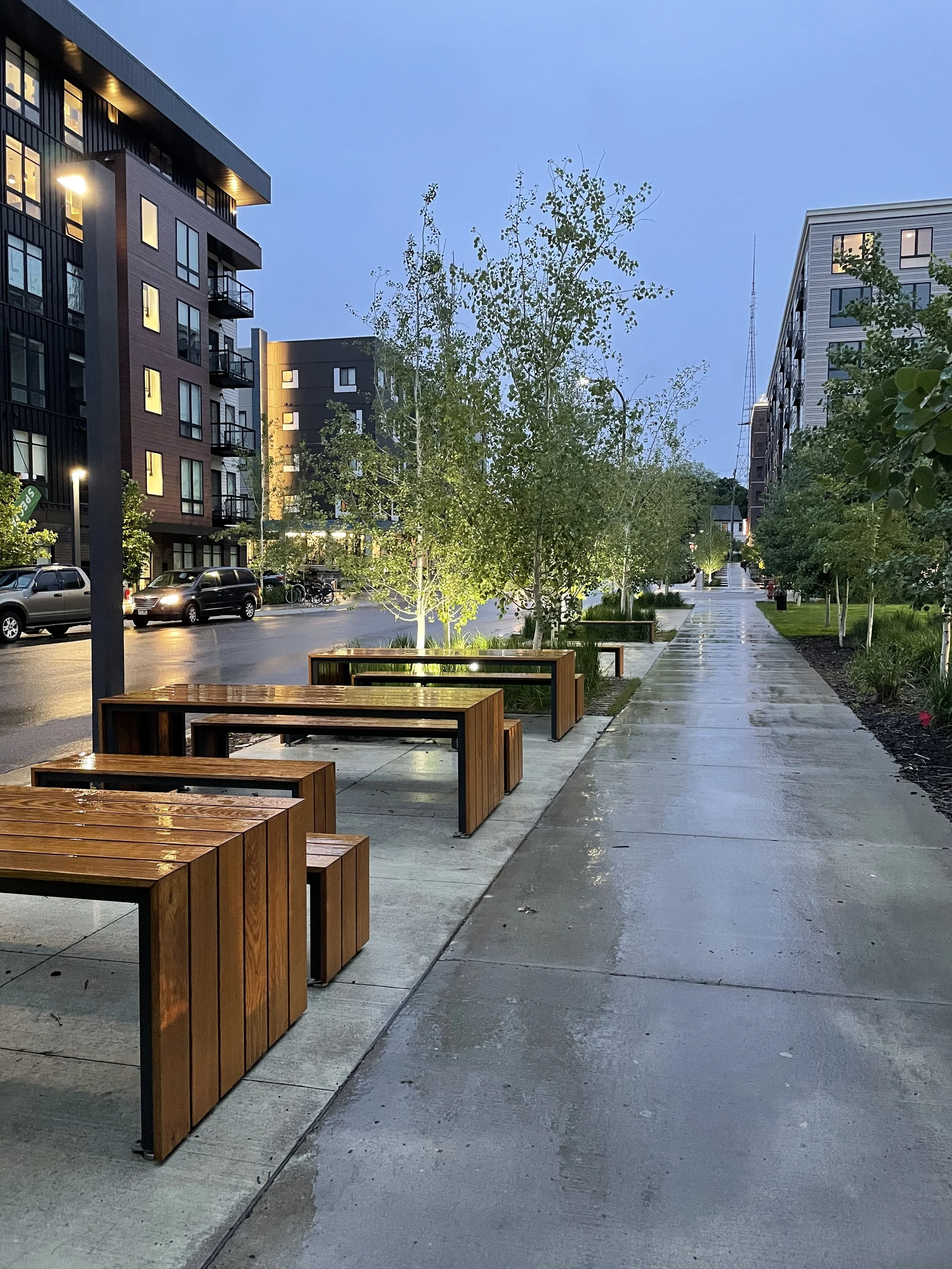
Space for people over cars
-
Shared Operations & Maintenance
Connecting District Systems
Green 4th was implemented alongside several complementary district investments:
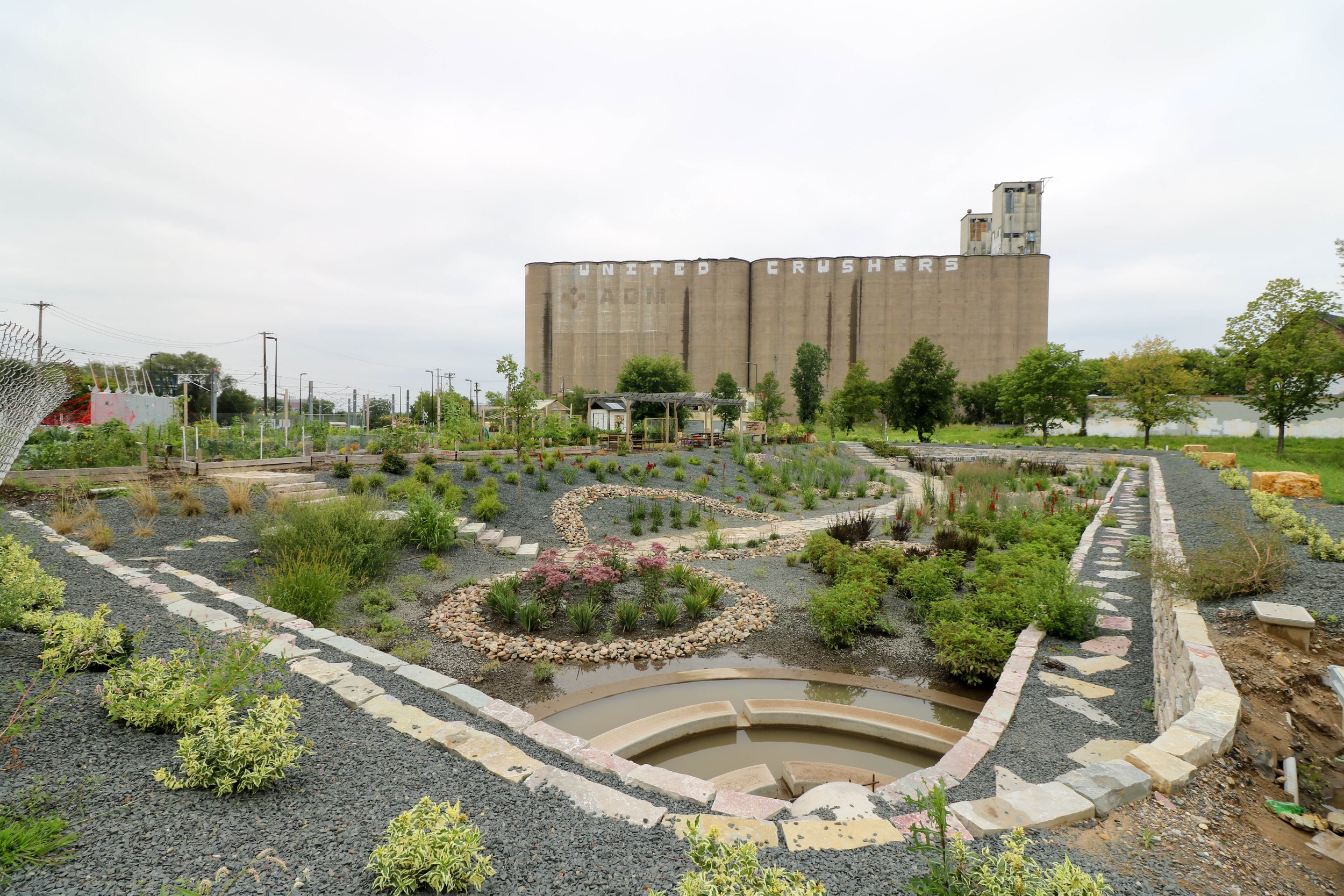
Towerside District Stormwater System
Bridal Veil Gardens Park
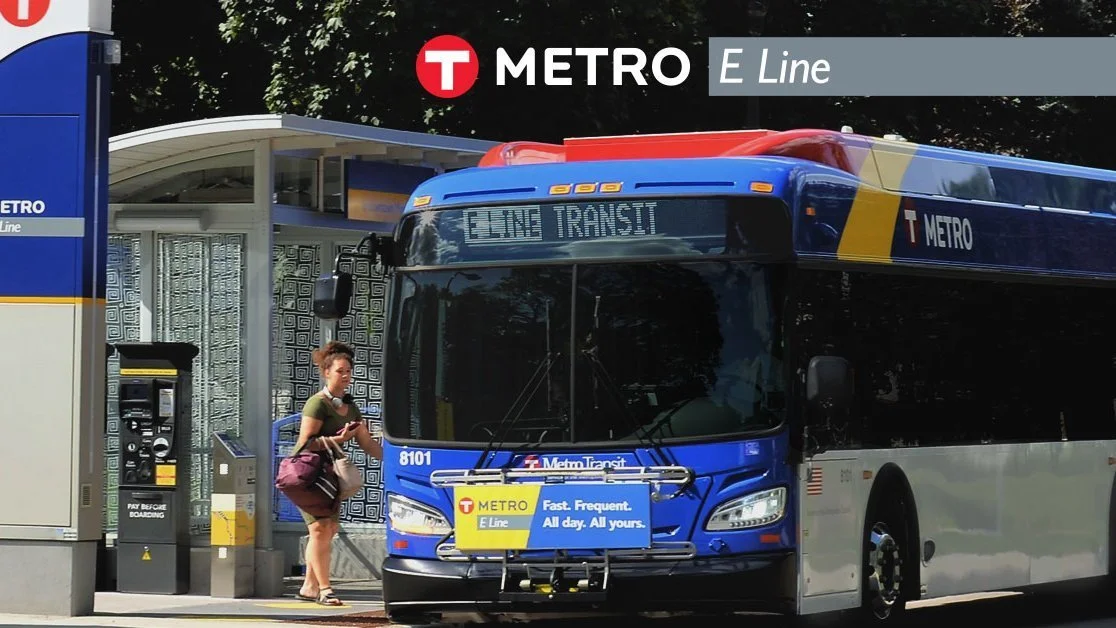
Green Line Transit Access
Mixed-income housing development
Senior and assisted living housing
Student housing
Market-rate residential development
Together, these investments created a connected public realm experience linking environmental systems, transportation, housing, and community life.
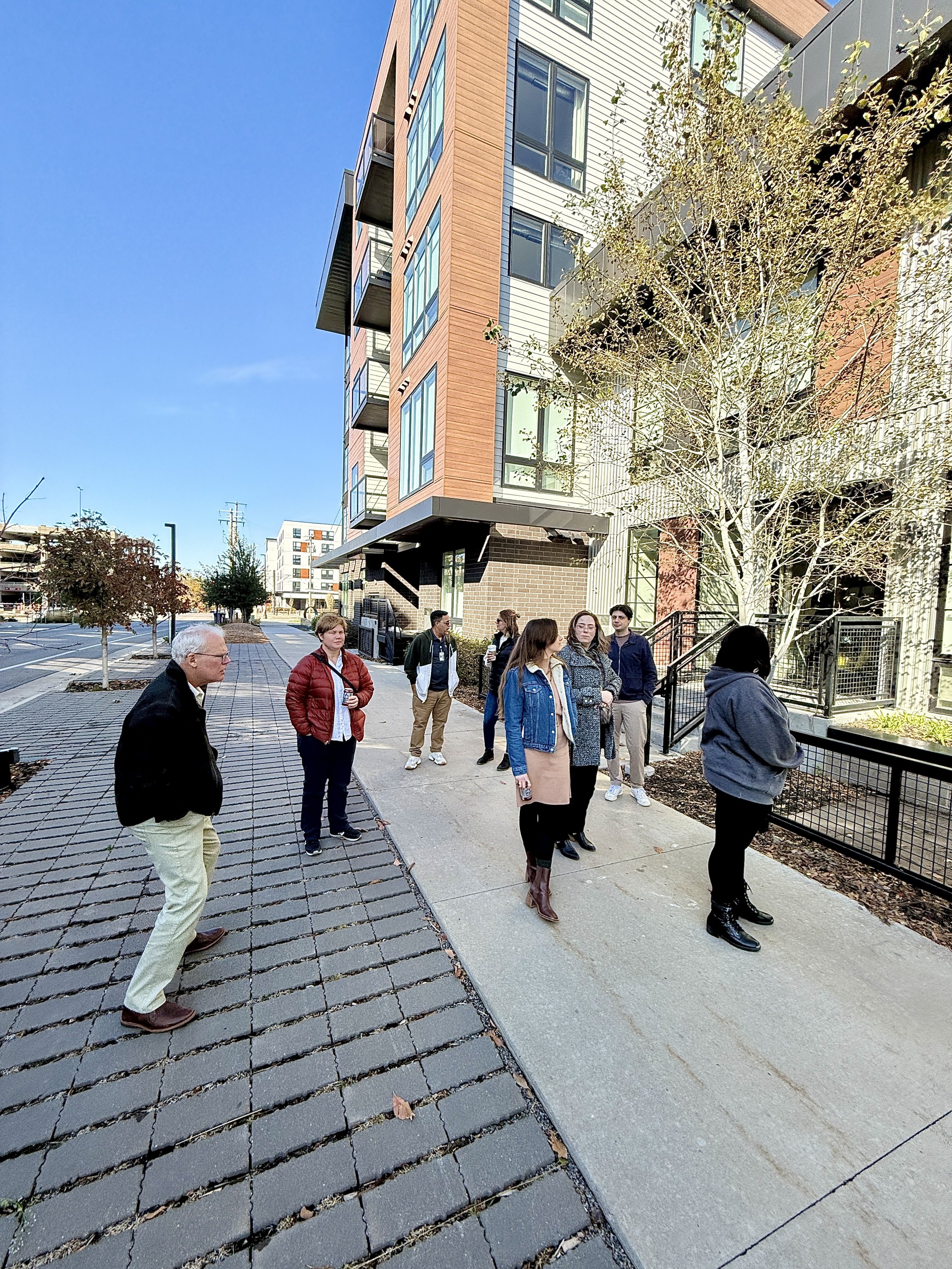
The corridor now serves as a shared front yard for nearly 1,000 residents and thousands of daily users.
Establishing a Stewardship Model
Perhaps the most innovative aspect of the project emerged after construction.
Because many streetscape elements exceeded standard municipal maintenance practices, participating landowners created a shared maintenance district to fund and steward the public realm collectively.
Today, the Maintenance District:
Maintains enhanced landscape systems
Oversees replacement and repair needs
Coordinates annual maintenance budgets
Provides ongoing operational feedback
Creates a forum for collaboration among property managers and owners
What began as a maintenance structure evolved into a platform for relationship-building and collective problem-solving.
The public realm became a shared asset around which stakeholders could continue to collaborate.
Outcomes
Delivering an Integrated Public Realm
Green 4th transformed a conventional street corridor into a multi-functional public realm connecting housing, transit, parks, ecology, and daily activity.
Improvements included:
Expanded pedestrian environments
Enhanced landscape systems
Tree canopy and habitat improvements
Pedestrian-scale lighting
Social gathering spaces
Bicycle facilities and amenities
Green infrastructure integration
Direct connections to transit and trails
Street parking was strategically reduced to create additional public space, landscape capacity, and social amenities. The result is a corridor designed not simply for movement, but for everyday use and interaction.
Insights
Challenges & Lessons from Implementation
Like any ambitious public realm project, Green 4th revealed important lessons between design intent and operational reality.
Some plant species proved vulnerable to concentrated pet activity near building entrances. Certain landscape strategies performed exceptionally well while others required adaptation and replacement.
Custom-designed site furnishings ultimately proved difficult to fabricate and maintain within budget constraints. In retrospect, more modular and durable solutions may have provided greater long-term value.
Coordinating multiple contractors across different scopes and ownership structures also created implementation challenges. Maintaining alignment between design documents and construction execution required constant attention.
The experience reinforced a simple lesson: Stewardship is a design constraint.
Long-term operations, maintenance, and adaptation must be considered from the beginning rather than after construction is complete.
Reflection
Green 4th Street fundamentally shaped how I think about place-based development.
The project demonstrated that successful neighborhoods are not built through individual projects alone. They emerge through the careful alignment of physical infrastructure, ecological systems, community life, development, and long-term stewardship.
More than a streetscape, Green 4th became a district commons: a shared investment that continues to support collaboration, identity, and community capacity long after construction was completed.
Its lessons continue to influence how I approach urban development, civic infrastructure, and district-scale systems work today.
Takeaways
Shared Investments Create Shared Stewardship
When multiple stakeholders invest in a common asset, they become more willing to participate in its long-term care and improvement.
-
Well-designed public spaces do more than improve aesthetics. They create opportunities for collaboration, relationship-building, and collective action.
-
Coordinating transportation, ecology, housing, and public space investments together creates outcomes that exceed what any one project could accomplish independently.
-
Long-term operations and maintenance shape how places perform over time. Designing for stewardship is as important as designing for construction.
-
Physical improvements create opportunities. Durable success depends on the relationships, agreements, and institutions that sustain them.
Related Project Profiles
-
![]()
Towerside Innovation District
A district-scale collaboration aligning infrastructure, development, governance, and community partnerships to advance a more connected, resilient, and inclusive model of transit-oriented urban development.
-
![]()
Community Pulse Project
The Community Pulse Project created a district-wide engagement initiative to capture and translate community experiences and aspirations into priorities for public realm investment, mobility, programming, and neighborhood development.
-
![]()
District Stormwater System
The Towerside District Stormwater System advanced a district-scale, stacked-system green infrastructure approach that integrated stormwater management, public space, and redevelopment to support long-term environmental and economic resilience.
-
![]()
District Mobility & Grand Rounds Missing Link
The Granary Crossing initiative and related District Mobility Framework update formed a long-term mobility and connectivity strategy that linked transit, trails, public space, and development opportunities to improve access within Towerside and reconnect surrounding neighborhoods.